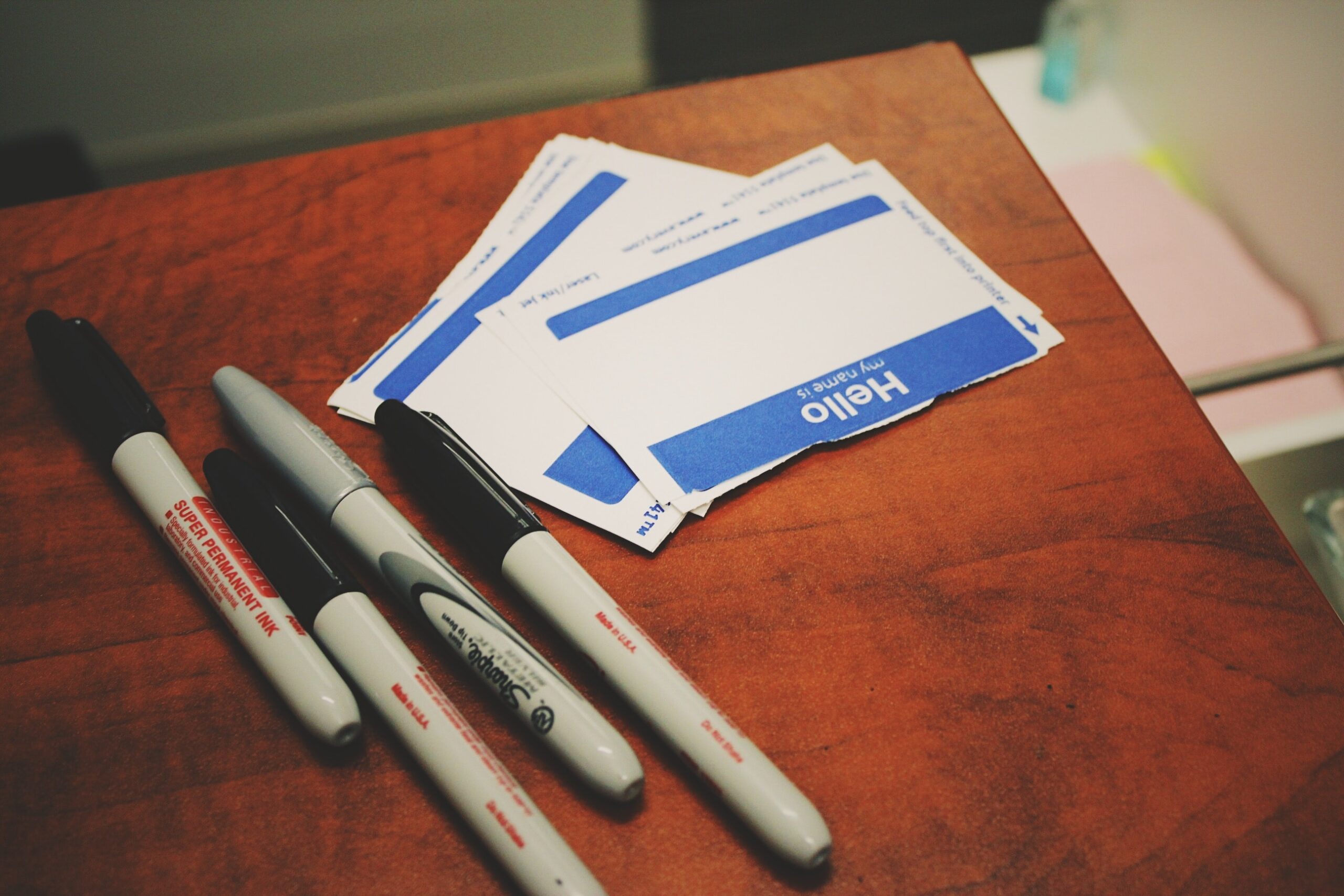
Photo by Jon Tyson on Unsplash

What’s in a Name?

Teaching

By: Antoinetta J. Rogers

“Schooling is the process by which you institutionalize people to accept their place in a society… Education is the process through which you teach them to transform it.”- Dr. Jeff Duncan-Andrade

What’s in a name? 

This is a very common and loaded question.  Asunción Cummings Hostin, Euphemia LatiQue Sumpter, Uzoamaka Nwanneka Aduba, and Antoinetta Jamika Rogers prove there is always a story behind a name.  

Asunción Hostin is an American lawyer and a very intelligent, articulate, and charismatic cohost of the Daytime Emmy Award winning talk show The View.  She is commonly known as Sunny Hostin.  During an interview with People Magazine, Sunny stated that when she began working on Court TV with Nancy Grace, the famed legal commentator, she had a difficult time pronouncing her name.  Acknowledging that Sunny was indeed quite talented, Nancy Grace feared that because most people may find it difficult to pronounce her name that she shorten it to make it easier to pronounce. So, instead of Asunción Hostin, Sunny Hostin is the famous household name.  Euphemia LatiQue Sumpter is an American actress.  Known for her flair, fortitude, and fascinating role on the highly acclaimed series Tyler Perry’s The Haves and Have Nots, she mentioned in an interview that although she was beautiful and talented the name Euphemia just was not “it.”  So, instead of Euphemia Sumpter, Tika Sumpter is the famous household name.

Uzoamaka Nwanneka Aduba is a dynamic, vibrant, and effervescent, Nigerian American actress who is best known for her roles in the Netflix series Orange is the New Black and the film Miss Virginia. She is commonly known as Uzo Aduba.  A video surfaced of Uzo stating that she hated her name.  The hate seemed to stem from other people having a difficult time pronouncing it. Growing up in a small New England town, she explained that there were not a lot of Nigerian Americans. Uzoamaka means “The road is good.”  What was quite noticeable in her candid oration was the visible mentioning of teachers finding it difficult to pronounce her name.  One day upon returning home from school, she casually asked her mom to call her Zoey. Her mom simply stated that if people can learn to say Tchaikovsky, people will and would learn to pronounce Uzoamaka.

So, what does an English teacher from a small rural town in South Carolina have in common with the aforementioned Hollywood stars?  Antoinetta Jamika Rogers is my name.  Nobody calls me by my first name Antoinetta, instead I go by Jamie.  Antoinetta has ten letters, four syllables and is often pronounced as (An-tw-un-Et) instead of (An-tw-un-Et-Uh).  So, growing up Jamie was more adaptable and easier than Antoinetta.  It became my nickname. Nicknames are convenient, but seldom created as a courtesy or in favor of the person in which the shortened name is given.  What’s in a name? Absolutely everything! A person’s name is a huge and important part of a person’s cultural identity; therefore culturally responsive teaching is very imperative and quite a necessity to say the least in an ever changing and evolving world.

Culturally Responsive Teaching
Photo by sydney Rae on Unsplash

Culturally Responsive Teaching is the practice of teaching cultural competence.  States and school districts already have educational standards and curriculums established that are usually adjusted and molded according to society’s norms.  However, in the classroom it is so important that teachers make it a norm to not only teach, but practice cultural competence. Cultural competence is the ability to understand, communicate with, and effectively interact with people across cultures. One’s own awareness of cultural competence includes developing positive attitudes towards cultural differences and gaining knowledge of cultural practices and world views. I realized that regardless of the demographics of students I teach, classrooms should be increasingly diverse with diverse teaching materials, methods, and strategies.  If the demographics are all the same, this does not mean that cultural competence and sensitivity should not be inclusive. All students should feel welcomed into a learning environment that celebrates diversity and multiculturalism. Most curriculums and lessons include an aspect of diversity, but it should be woven into the atmosphere of the classroom.

Real World Implications

Photo by Markus Spiske on Unsplash

According to the Center for the Professional Education of Teachers (CPET), school practices currently reflect the norms of monolingual, white, middle class students, which often excludes students who come from diverse cultural and linguistic backgrounds. Students who are excluded from these norms are often viewed through a deficit lens.  South Carolina College and Career Ready Standards are the standards that I am required to use as a certified classroom teacher.  So, the overall goal is for students to be prepared to enter an institution of higher learning, the workforce, and/or the military.  Not only should students be academically prepared, but students should be culturally prepared as well.  Thus, a simple yet complex task of accepting and pronouncing an individual’s name can possibly have an everlasting positive impact.

Society has a habit of associating certain sounding names with certain races and ethnicities. According to the National Bureau of Economic Research Issue No. 9. “Employers’ Replies to Racial Names,” a job applicant with a name that sounds like it might belong to an African-American – say, Lakisha Washington or Jamal Jones – can find it harder to get a job. Despite laws against discrimination, affirmative action, a degree of employer enlightenment, and the desire by some businesses to enhance profits by hiring those most qualified regardless of race, African-Americans are twice as likely as whites to be unemployed and they earn nearly 25 percent less when they are employed.  Pronouncing an individual’s name correctly and accepting that the name may have cultural attachment to it is important for the advancement of society. 

Classroom Applications

I make sure that I pronounce a student’s name correctly as well as the student’s peers in my class because names represent a heritage, a lineage, and a legacy. This is also common courtesy and a sign of respect.  A name is a representation that we should be proud of and not something that anyone, in this case specifically students, should have to worry about changing or shortening in the future, because we live and exist in a society where certain names make people uncomfortable for a quick minute or two.  If teachers discuss or present this topic in the classroom and really show and teach through experiments, instructional strategies, and projects, this can begin to turn the tide and become the norm therefore possibly preventing society from having a perception of “racial names.”   

 The world is a colossal entity that embodies diverse, multicultural, racial, ethnic, and linguistic backgrounds.  If students are taught to be culturally competent and responsible people, then as the world continues to progress and move forward, teachers will be a major part of molding and shaping well- rounded culturally aware individuals. Awareness promotes respect and acknowledgement.  In foresight, these individuals will not haste to say names such as Asunción, Euphemia, Uzoamaka, and Antoinetta because of their phonetic pronunciation, but make embracing and sharing the importance of all names and all things that represent heritage, culture, and diverse backgrounds the standard.

About the Author

Antoinetta J. Rogers has seven years of teaching experience and currently teaches Secondary English at Richland Northeast High School.


Breaking the Mold: Using Digital Literacy Outside the Traditional Classroom

Teaching

By: Hannah Kottraba, SC Teacher

Dear reader, I ask you to consider these two questions: How can I create a digital classroom? And Why should I? 

Six months ago, technology was a component of my methodology, but not the primary platform for my instruction. That all changed when COVID-19 brought my in-residence teaching to an abrupt halt, and I decided to use Zoom as a digital classroom. The platform allowed my students and their families to present an artifactual literacy project we began before my school’s closure. Pivoting from the traditional classroom to online allowed my families to participate from any location, share a broader range of documents, and feel more at ease in a low-anxiety environment because they presented from home. By using a digital medium, families shared in powerful ways that would not have been possible had we remained in a traditional setting. If you seek to make your classroom more inclusive but have not found an appropriate way of doing so, you should consider the impact a digital platform can have on your students’ education.

On the Job and in the Classroom

In my ten years of teaching, I have experienced the struggle of working around schedules to invite relatives into the school. Getting time off from work can be challenging for parents- though they want to show up for their student, sometimes, it just is not possible. Using a digital classroom helped families bypass such hindrances for school participation. To join our class from any location, parents simply logged in using the access code I sent through our school email system. 

I recognized how impactful an online space is when a student’s mother joined us during her 15-minute break in a hospital room from where she worked. The student was at home with her grandparents, who also made an appearance on screen. It was moving to watch this mother share pictures and videos using her phone from a separate location than her child and parents. The reality that she could still participate in her daughter’s educational experience while never leaving her workplace made me realize that I need to use a digital platform when school resumes; doing so will provide more flexibility for my families. 

Artifacts Online 

Initially, I feared that the details and significance of my students’ artifacts would get lost through the screen. However, they far surpassed my expectations for presenting. They found new and inventive ways to share their research, interview transcripts, and artifacts. Some students transitioned their hard copy documents into Google Slides or PowerPoint presentations by scanning their records and creating PDF formats that they could insert into a more extensive online collection. Other students made a digital compilation of images and videos with the use of video editors and screen recorders. Because  students were at home, they could share an extensive range of objects that otherwise would have been impossible to bring to school, like the portrait of a student’s ancestor hanging in her living room. 

The emotional component of the artifacts and stories came through the screen and the wide use of technology astounded me. I was proud of how the students took ownership of their stories and challenged themselves by transitioning tangible objects to digital relics. 

Connecting in a Comfortable Space

Standing in front of a group of people is never easy; speaking about personal stories that bring forth emotions is even more difficult. My students’ literacy projects asked parents to do just that, be vulnerable, and share intimate details of their past. Had we remained in the traditional classroom, I doubt parents would have felt as comfortable to speak openly in a conversational manner about their lives. However, meeting online made parents feel more at ease during the presentations because they were at home in a familiar and safe space. 

The effect of speaking online led parents whom I had not met all year to participate with their child because of the convenience and low-anxiety environment. Two separate families talked about adoptions that were unknown to me before this project. One student shared about the loss of her dear mother, and another student spoke about leaving his native country to come to America. With families logging in from home, our conversations felt more like our class was sitting in a family’s living room, and they were telling us stories as if we were all old friends. 

A Missing Link

             To circle back to my original questions of how to create a digital classroom and why you should, I would recommend testing several digital platforms to see which one will work best for your needs. Zoom worked for my class while we were in this transitional period. The students had no issues with logging into the digital meeting and using the program’s screen-sharing and recording features. Creating a digital space was as easy as setting up an account and sending out a link with an embedded password through my school’s email system. Parents, who had never owned a computer, were able to access our classroom from their phones with ease. As to why you should invest in creating a digital platform, I hope that by sharing my students’ literacy project, you can see how impactful technology was for my families to be able to connect in meaningful ways outside of the traditional classroom. 

About the Author

Hannah Kottraba has ten years of teaching experience and recently graduated with a M.Ed. in Language and Literacy as a Literacy Coach from The University of South Carolina. She is creating a new literacy lab program for the 2020-2021 school year at Thomas Sumter Academy in Sumter, South Carolina.

Finding Your Literacy Sweet Spot

Teaching

By: Salena Davis, South Carolina High School Social Studies Teacher

It’s spring, and I have to say that I’m missing the spring sounds of school—you know, prom chatter… concerts and plays…baseball…  Instead, I’m sitting at home in my “new normal” pjs with every commercial reminding me about these “times of uncertainty” while I try to figure out how they are going to put fewer kids on busses, how it will affect my class sizes and will the students be able to take off their masks, if they end up eating in my classroom?  Yes, I am way past sensory overload.

Photo by Patrick Amoy on Unsplash

It has, however, helped me appreciate how difficult e-learning has been for my students.  My daughter told me this week that she had over 1,300 school emails in her inbox—800 of them she never even opened. (We agreed that “delete” is an awesome button, and we could go look through the trash if there really was an email she desperately needed.) 

Even the youngest among us are not immune.  My elementary son brought me his school Chromebook this morning with at least ten tabs opened trying to figure out what was due today.  It’s Monday…10:00am.  I’m pretty sure I didn’t schedule our mental meltdowns until at least Tuesday afternoon this week.

Literacy during Covid-19

Many of our educational challenges have been logistic—do my students have a computer?  Internet access?  Printer?  This week’s packet?  If those were our only challenges, we would be doing pretty well.  Unfortunately, it’s not that simple.  I would argue that our most significant challenges have been directly tied to literacy. 

Literacy is more than defining terms and understanding of syntax. Literacy is first communication.  Communication is easier when we are with our students. They can decode our messages through our expressions, animation and feedback. Our proximity and interaction help keep their minds focused and in sync with the material.  With distance learning, they lose the audible, tangible, visual aspects of communication and have only the words to process—a skill which requires more mental focus and more self-discipline.

Comprehension occurs in the quiet of the mind. Students flit from texts to Instagram to Snapchat to whatever else pops up on their screen. They need a teacher (or parent) to actively keep them focused in order to understand what they are learning, especially if it is a skill they don’t necessarily desire of their own accord.  It would be interesting—perhaps horrifying—to know when they last sat quietly and did one thing—whether that was playing an instrument or reading a book or painting a picture. 

What can we do to help students with these literacy challenges as they navigate their own trauma?

Now add a layer of COVID-crisis—with parents losing jobs, and social distancing, and caring for siblings, and worrying they may catch the virus…  No wonder they’re struggling.  They have lost their normalcy and much of their support network.  We need them to discipline their minds and create routines, yet many of them have never done so without the structures of school and don’t know where to start.

  1. Ask them how they are doing.  Many of them they need the encouragement of knowing that someone cares before they are willing to do the hard work.  (ex. https://bit.ly/2zemIjb )
  2. Give them options.  In a time when people lose control in some aspects of their lives, the ability to make a choice can help alleviate discomfort.  (ex. https://bit.ly/3cz2cYU )
  3. Limit communications.  This may seem counterintuitive, but remember those 1,300+ emails in my daughter’s inbox?  When people are feeling overwhelmed, less can be more.  Consider doing one post with all of the assignments.  The visual impact of having one new item in Google Classroom can be less discouraging than five new items for each class each week.
  4. Encourage students to make a hand-written checklist or calendar to organize their assignments.  Tabbing through multiple screens adds anxiety to students who are already feeling overwhelmed.
  5. Remember they may be facing more hardship with fewer coping mechanisms.  One of my students has not turned in any assignments, but she did fill out my “Checking In” Google Form. She told me she’s been a little busy—her grandmother, who was her only guardian, passed away. Maybe social studies isn’t going to be at the top of her list right now.

I believe this experience gives us the opportunity to reevaluate our goals for our students.  While we may be in a temporary period of coping with COVID, the lessons we are learning can help us re-commit to our literacy goals for our students.  When we go back this fall and get to hear those beautiful sounds of school again, let us continue to help our students learn how to find the sweet spot of their minds where they can focus, engage, learn, persevere and grow.

About the Author

Salena Davis has taught social studies and communication courses for 26 years on the elementary, middle, high, and post-secondary levels.  She holds three Masters degrees in Secondary Educational Leadership, Political Science with a Comparative Government emphasis, and Dramatic Productions.

Beyond Teachers as Healers: Teachers, Students, and Reciprocal Care in Traumatic Times

Teaching

By: Dr. Elizabeth Dutro, University of Colorado Boulder

Photo by Hannah Olinger on Unsplash

Toward the end of 2019, I was invited to write a column on the theme of teaching in troubled times. Sitting down to write that piece, I felt overwhelmed. I write often about the complexity of trauma in K-12 schools and the kinds of relationships, witnessing, and advocacy that difficult life experiences demand in literacy classrooms. So, it is not as though I hadn’t written about hard times before. But, that day, given all that had been and was occurring in the US, the troubles felt too heavy, the inequities too stark, the governmental accelerations of injustice too horrific to convey in words on a page.  I think back to that time and try to reabsorb the explicit, violent, and policy-driven racism, xenophobia, and economic precarity that was already impacting so many youth and families. Trauma, inflicted by human-created systems, was all around us (while, whiteness, once again, like it always does, shielded me). Eventually, I moved my fingers across the keyboard and got some words on the page for that column about seeking hope and justice in teaching during troubled times. That was just a handful of months ago. We had no inkling of what was coming for us.

Now, here we are, and how do we even begin to approach the idea of trauma in a pandemic that is wreaking havoc on our communities, states, nation, and world? Trauma is always a complicated term that defies singular definitions. But, now, as teachers, students, and families face the emotional, financial, and physical devastations and anxieties of COVID-19, considering trauma is all the more crucial and all the more complex.

Literacy educators will need to think together about questions such as: What varied kinds of challenges are students bringing to their learning? How do we acknowledge and harness the pandemic as a shared experience, while recognizing the very different impacts it has inflicted? How is trauma both personal and political and how does that help us think about issues of justice in our classrooms, schools, and larger educational systems? How can we craft classroom communities that center compassion and care? How are teachers being positioned in discussions of students’ trauma during this time of crisis?

Positionality of teachers in discussions of students’ trauma

These are all questions I’m anxious to consider with fellow literacy educators over the coming weeks and months. For this post, though, I’ll turn to that last one, as I feel its importance in my bones as this crisis unfolds and see it in teacher colleagues’ eyes in our conversations on my screens.

Photo by Billy Pasco on Unsplash

By virtue of living through this time, teachers are facing overwhelm, fear, and anxiety. In addition, many are facing loss, grief, and financial upheaval. So, when we ask how teachers are being positioned in discussions of trauma and schools right now, teachers’ own humanity has to be integral to that question. One thing we know about many approaches to trauma-informed schooling is that teachers are often positioned as healers and helpers.

Being deemed a healer implies that it is students who are the wounded. We, of course, know this is a false dichotomy. We know through our own lives and our friends’ and colleagues’ experiences that teachers bring pain, sorrow, fear, and struggle to our work. It couldn’t be any other way. No one goes through life unscathed.

Photo by Taylor Wilcox on Unsplash

But, teachers are often told that trauma is something students bring to school. No wonder it can be hard to shake the idea that, as teachers, we are expected to convey only that we are fine, we are well, and our sole vigilance is toward students’ lives and learning. No wonder the focus on trauma can and does exacerbate pathologizing narratives about students. It is not that those messages of needing to be attentive to students’ traumas are false, but it is that those messages are simplified and incomplete. Indeed, the healer vs. wounded ethos surrounding teaching and trauma is so entrenched, in part, because so many teachers are so committed to supporting students that acknowledging one’s own struggles can feel self-indulgent or inappropriate. But, I believe we have to wrest free of that dichotomy because it is harmful for anyone, teacher or student, to be stuck on either side of it. We can embrace a more reciprocal approach to what it means to witness one another.

So, how might teachers reframe how they position themselves and students in relation to trauma?

In my book on centering trauma as powerful literacy pedagogy, I share an analogy related to this question that I have found helpful in my own thinking and teaching. I’ll share a version of it here.

Photo by Ramiro Martinez on Unsplash

At times throughout my life, I’ve had a chance to be around recently hatched baby chicks. And when invited to hold one, I don’t hesitate—I didn’t as a 5-year-old and I don’t now. I step up and hold my hands out, cupped and ready to cradle the tiny, fragile, cheeping ball of yellow fluff. My heart leaps a little with what it will require—care, gentleness, keen attention. It is a moment suffused with responsibility. Yet with some coaching and support from those who surround me, even 5-year-old me can step up, willingly, and nurture, not harm. And given the chance, I could do that every day. Each time would require the exact same measure of care and attention. But it would, at the same time, become more familiar, something I could come to expect and assume as part of my everyday experience.

At this point in my description of this metaphor, I need to be clear: students in our classrooms are not the baby chick. The chick is the difficult experiences, the traumas, that anyone in the classroom community carries into that shared space. To position students as the fragile creature is central to the problem of how students and teachers are often positioned in relation to trauma. Viewing students as the chick implies an adult as the only participant with agency; an adult who, in this metaphor, is not only the strong one, but also looms largest as the protagonist in the story. One reason I include my child self in this image is to emphasize students as active subjects in reciprocally sharing and witnessing the kinds of hard stories that will accumulate for them and their teachers during this crisis. In being allowed to witness teachers’ vulnerability—their stories of challenge, fear, grief—students will know those stories belong in school and that their experiences will matter in how they are seen, heard, and valued in the classroom. The students, and the teacher, are the hands that gently, but without trepidation, cradle those stories in their classroom.

In being allowed to witness teachers’ vulnerability—their stories of challenge, fear, grief—students will know those stories belong in school and that their experiences will matter in how they are seen, heard, and valued in the classroom.

In whatever capacity teachers and students are together next year, everybody that enters the literacy classroom or accesses a screen will be bringing stories that require critical care and humanity. Some of those stories will be shared in explicit ways through discussions, writing, art, digital creations, one on one connections with between students and teachers. Other stories will be shared through an empty desk, a bowed head, a missed login, a quavering voice or trembling hand, a simmering sense of rage. And, as we know, some stories from students’ lives are shared and circulated in schools in ways beyond a students’ view or control. As literacy classrooms fill with stories of this crisis, let’s ensure that teachers’ experiences are present too—as signal of reciprocal witnessing, as opportunity and invitation to bring lived knowledge to school literacies, as source of connection and humanity, as acknowledgement that it can be hard to focus when feelings are overflowing, and as reminders of the far-from-equitable impacts of this crisis.

About the Author

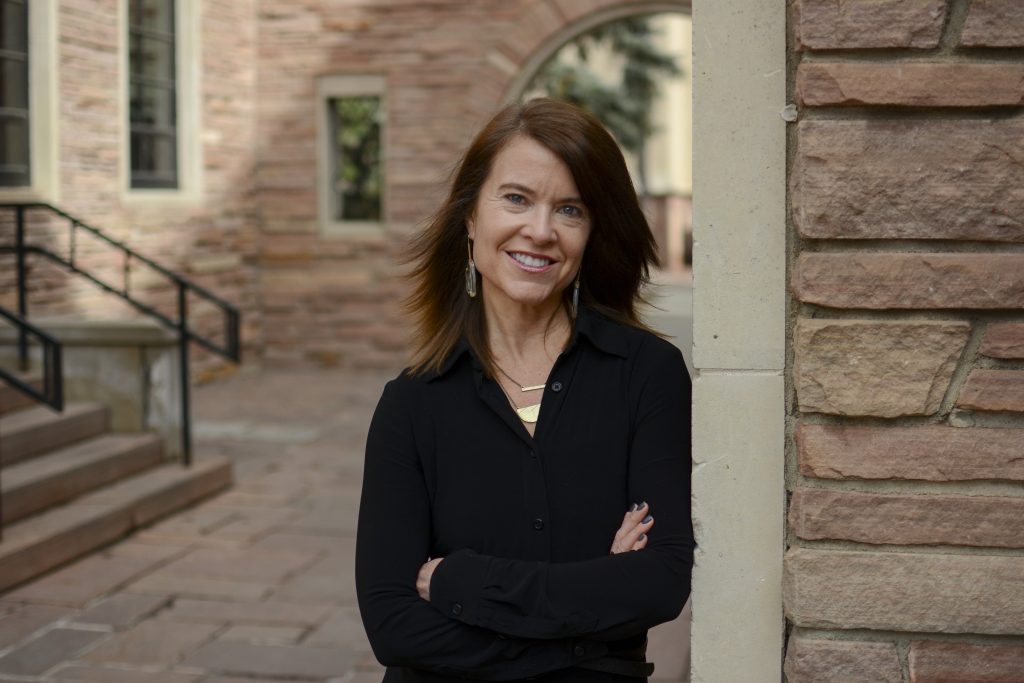
Elizabeth Dutro is professor and chair of Literacy Studies at University of Colorado Boulder and former K-12 classroom teacher. She collaborates closely with teacher colleagues and youth in her research on the intersections of students’ lives and literacy classrooms, particularly critical approaches to trauma, and issues of justice and equity in K-12 classrooms, teacher education, and policy. She is the author of the recent book, The Vulnerable Heart of Literacy: Centering Trauma as Powerful Pedagogy (Teachers College Press). She would love to connect at Elizabeth.dutro@colorado.edu; elizabethdutro.com; or @lifeasstory on Twitter.

Photo by Fusion Medical Animation on Unsplash

Literacy in the Time of Coronavirus

Teaching

By: Dr. Todd Lilly, University of South Carolina

Is it time to sell the school building? Is this the end of school as we know it? They’re coming back, aren’t they?

Like… when this is over, things will go back to normal… right? RIGHT???

An English teacher friend of mine who plans to retire at the end of the year with 40 years texted me: “School closed. My career might end like this !”

Wait! End like what? What just happened? Suddenly, nothing is normal, and there is no assurance that it will ever be again.

So I emailed my graduate students, “What’s going on?”

About 15 years ago, I left the high school classroom to teach in the ivory towers of higher education. A few years ago, my wife and I joined the University of South Carolina where I reside in the virtual ivory tower of on-line learning. I’ve been practicing “social distancing” living vicariously through my graduate students who are all teachers and administrators in real classrooms… at least they were until a few days ago. So… let me share what they’ve been telling me and you can think about how their stories compare to your situation.

From a teacher up in Maryland: “So far, absolutely nothing is occurring in my school district… along with what I assume is the rest of the state. We have been given explicit directions not to communicate with classes, issue assignments, or post grades. We may have one-on-one communication with students via Canvas, but classroom instruction in any manner cannot occur because the school district is afraid of violating FAPE. Our schools are closed until 4/24.”

This was a recurring theme. Teachers told me they’ve been instructed to focus on remedial learning rather than introducing new material. This is to buy districts and states time to bring the new learning situations into compliance with the laws regarding the rights of students with exceptionalities.

One South Carolina special education teacher expressed her passionate concern: “We place a greater emphasis on the accountability than we do on the lessons that life provides.”  She was not the only respondent to say how much she missed her students. I’m sure they miss her too.

Literacy is not a stand-alone skill; it is a practice that is always situated in a context, and this time, the context changed literally overnight.

There has always been a disconnect between what the public thinks teachers do and what they actually do: Teachers spend all their after-school time on Facebook, sharing brownie recipes (with pictures). One parent scornfully asked on Facebook: “Are teachers still getting paid?”

We can forgive parents in their time of frustration, but the responses I have received these last few days tell the true story:  Both administrators and teachers are… well… overwhelmed. It merely went from “barely bearable” to “impossible.” More than one teacher used the word “triage.”

An administrator in Florence, SC acknowledged this when she reported: “I work at our central office and we have been working tirelessly to support teachers who are working 10 or more hours each day preparing, grading, and holding a minimum of four office hours to answer students’ questions.  Those were the guidelines for week one.  In week two, add teacher created videos at least once per week.  It is definitely harder this week, not just for teachers creating and executing these magnificent virtual lessons but also for our students who are definitely missing their teachers and friends.”

From Pennsylvania comes this teacher lament: “I need a break from education things. With the distance teaching, I feel I’m on call 24/7 and [constantly] feel obligated to check on my students.”

Another teacher wrote: “You know, when I first got your email I felt a little bit like ‘one more thing.’ However, when I started [writing], I couldn’t stop. It was an outlet I didn’t realize I needed. It was a lot like writing in a diary and very cathartic.”

She went on to talk about how her district (as of March 30) “… has been assigning Chromebooks to students (yesterday and today) and Comcast is offering 2 months of free WiFi. Now, the teachers have been told by our association that we must have Chromebooks in case we are ever subpoenaed for something relating to Special Education. There aren’t enough Chromebooks! I don’t even know about the WiFi. Some teachers, like myself, don’t want to go out to the school and risk getting sick to get a Chromebook. In this case, I wish someone would have just promised some sort of protection. … I’m in charge of making sure my department of 16 understands protocols for reporting child abuse and adhering to legislation concerning special needs students. The last text I sent them was at 10 pm last night and the first was at 6:30 am. Our central office updates us as much as they can but they are doing triage as well.” 

In the last couple weeks, literacy practices have gone way beyond the technology of pen and paper, and may never return. How does a parent go about contacting Comcast or AT&T Mobile or Spectrum? What are the restrictions? What are their rights? Obviously, for such dramatic concern, people are recognizing that on-line learning is not quite the same as its cinder block counterpart.

Teachers are discovering there is a whole new set of literacy skills that needs to be learned to make this work, and that takes time and more than a bit of self-confidence.  By now, all of us have had to confront the reality that there’s more to moving on-line than merely having the equipment.

An Orlando science teacher makes the following observations:

1) A common concern of teachers has been “how do we stop the students from just Googling answers?!?” My thought has often been “why are we asking students questions that have answers that can be found on Google?”

2) Another common barrier teachers have found is “How will students learn without a face to face lesson and me explaining the information to them?”

3) My personal greatest barrier transitioning online is how to generate effective, authentic, and meaningful dialogue in an asynchronous online course. How can we get students to engage, debate, revise their own understanding of content, and push the knowledge base of the collective whole forward in an online course?2) Another common barrier teachers have found is “How will students learn without a face to face lesson and me explaining the information to them?”

An upstate South Carolina STEM teacher talked via video about the “pressure teachers are now putting on themselves to mimic their synchronous, daily lessons and pedagogy in an asynchronous, virtual space.” He states that what he intends is not to be the “content giver,” but rather his plan is to provide his students with activities, including those provided by web applications such as, The Physics Aviary,  during which he can “go in and comment multiple times, giving feedback [during the process].” Scott prefers “open world” simulations that are not as linear as other platforms that are more prescribed and restrictive.

He talked about his future plans of investigating the multimodal options that digital literacy offers. This is an important literacy topic that deserves its own blog, hopefully in the near future on this site. If this caught your attention and you want to know more, check out this article.

What Scott and several of the other teachers have in common is that they are in the first generation of “digital natives” who are now of an age in which they are no longer novice teachers. Digital natives, those born into the digital age, never had to learn the required technical skills that are now so much in demand as we are forced headlong into cyberspace. Digital natives merely acquired this form of 21st Century literacy by living it. We older folks have had to learn it, much like having to learn a new language. Learning is a whole lot harder and more time-consuming than acquiring, but it can work just as well in the end.

So what might this look like in practice? Teachers are incredible problem-solvers; there are no limits to what you can create when presented an impossible situation.

Here are a few more things teachers couldn’t wait to tell me about:

A middle-school ELA teacher is using The Diary of Anne Frank as model for their own diary/journal/memoir, much like a pastiche. “For my seventh grade ELA classes, I modified an idea from Kelly Gallagher.  Students are reading Anne Frank: The Diary of a Young Girl as a text and using Google Slides to write daily journal entries to record this historical event from their perspective. Their creativity has been endless. They are writing poetry, posting links to news stories and videos, sharing acts of kindness, creating videos, and inserting pictures, selfies, and memes to the entries. I am hoping they find therapy in this opportunity for self-expression.” 

This teacher clearly recognizes and encourages her students’ expanded repertoire of literacy practices that transcend the traditional definition of literacy:

  • As we go into more social isolation, you might write reviews of movies, television shows, podcasts, video games to share with your classmates.  
  • Post pictures that you find in the media and/or your personal photos that share your experience.
  • Respond to any seed about the crisis you find interesting. A “seed” can be an article, a broadcast, a Ted Talk, a tweet, a photograph, a podcast, a film, an Instagram (or another online) post, a TikTok video, a political cartoon, a photograph—anything that spurs some thinking about the crisis.

An urban social studies teacher offered a litany of apps she had to master over a weekend: “Students are expected to use email, the school website, Canvas, and Google Classroom to submit assignments and [for teachers to] deliver instruction. We use various apps such as Remind, Flipgrid, Zoom, Loom, Screencastify, etc. that allow teachers and students to interact in real-time. I’ve had to learn to use flipgrid, commonlit, zoom, Edpuzzle, Newslea and make sure I understand how to do audio/video via Schoology.”

A South Carolina administrator wrote: “My daughter is writing short plays for theater class and selecting musical pieces for band based on the scores.  She is learning to read difficult pieces of music and is looking forward to a Google hangout practice session next week. I find it ironic that most of her writing takes place in theater and hardly any in her English and social studies classes at the moment.”

Hmmmm….

Several teachers wrote about the boredom their own children are enduring. From the Atlanta suburbs, a middle schooler amused herself (and now us) with her own artistic creation.

Teachers seem to love tapping into students’ creative energies. A North Carolina high school art teacher joyfully exclaimed, “I’m LOVING this!”  She went on to gush about her students “…experimenting with abstract forms of art production to produce compositions of still life items at home. [One class is creating ‘altered books’ [as an example of an] interesting approach to literacy… which requires students to use visual literacy as well as your normal reading and writing.  This project also requires sequencing which is yet another form of literacy. They turn their third story in tomorrow through a video platform and the entire finished project in two weeks.  I can add you to my digital class so you can see their work if you’d like…”

 Yes, I think we’d all like that…

She then alluded to the elephant in the room: What about THOSE kids: “We have been required to provide 8 weeks of online and ‘pencil and paper’ packets of instruction in 2-week blocks [for students without Internet access].  The packets should be as similar as possible to the electronic lessons and allow for the same learning goals to be achieved…  Students with no internet pick up packets at a drive-through at the school and every two weeks come to school to pick up more work and drop off what they have completed in a dropbox.  Paperwork must be quarantined for 2 days before teachers can [touch] it…”  

A high school social studies teacher added: “The district had to set up a plan to distribute food (breakfast and lunch) in grab-n-go methods…”

As responses keep trickling in, it’s clear that there’s been more than one elephant sheltering in place in our classrooms. Students who refuse to comply have been set free. They’re out there some place, and they might not come back: “I have had 3 of 90 students submit/complete any assignments on a daily basis. No more than ten of the 90 have yet logged into the system.”

I suspect it’s more about Herb Kohl’s “I Won’t Learn from You” than Shakespeare’s “… whining  school-boy, with his satchel and shining morning face, creeping like snail unwillingly to school.”  It’s a critical literacy issue that we (including you) will need to take up on this page sometime soon. We can’t end like this.

About the Author

Todd Lilly has over 40 years of teaching experience, the majority of which was invested in middle and high school ELA and theater classes in and around Rochester, NY. Over the past 10 years he has served on undergraduate and graduate faculties in Wisconsin and currently at the University of South Carolina. He earned his Ph.D. in Curriculum and Instruction at the University of Wisconsin-Madison. His research interests include out-of-school literacy practices and the stories of marginalized, disenfranchised students. He is married to Dr. Catherine Compton-Lilly who holds the John C. Hungerpiller chair in the College of Education, University of South Carolina.