By: Addie Laney, South Carolina High School Student
Perspective. Many of us learned this word in art class when we were younger, but didn’t quite understand how it would apply to our lives on a broader scale, not yet. I thought it was an art term, then I learned this word is more than an art term. Perspective is the opinion form around a topic and how you choose to view issues. When thinking about the Coronavirus, the first thing to come to mind are negative thoughts, which is natural. As the cases rise, so does the fear, and so does the trauma that some people experience.
There are questions we never thought we would be asking, like: “What if i get it?” “What if my loved ones get it?” “When will I see my friends again?” Now those are questions we hear everyday. It’s okay to feel this way. No one knows what the next steps are involving the world’s peculiar situation right now.
Even though the level of uncertainty is so high involving the Coronavirus, one thing we can be certain of and have control over is our perspective.
I asked my friends to share negatives and positives they have found during this time of quarantine and social distancing. The video proves the undeniable truth and power of perspective. During this time we can choose to focus on how the stores aren’t open, how we can’t see all of our friends, or even how much we miss stepping into a school building everyday to learn. Or, we could focus on the good. We can spend more time with our families and reconnect with them again. We can focus on other values we have in life, like religion. We can learn new hobbies that help us find out new stuff about ourselves. Most importantly, we can learn how to truly appreciate what we have.
This is how we can view not only the situation involving the Coronavirus, but any situation life throws at us. Focusing on the negative, in a time like this, isn’t going to change anything or how anyone is feeling, it just feeds our trauma. We can choose to turn what could be a traumatic experience into a good, life changing experience and instead choose to heal ourselves, better ourselves and support ourselves. I choose to smile and stay safe. I hope you will too by focusing your perspective not on the negative, but on the positive.
About the Author
Addie Laney is a rising junior. She is the Fine Arts Chair of Student Council, President of Fellowship of Christian Athletes, a member of Future Farmers of America, a member of Youth Leadership for her county of residence and the Public Relations Chair for National Honor Society. She is also a member of her high school tennis team and a member of the senior dance in dance academy. She aspires to attend USC and become a therapist.
As the past weeks have unfolded, like many of my students and colleagues, the uncertainty of tomorrow, next week, the fall, and the world have caused me to struggle. I find myself experiencing life in a new way that consistently revolves around questioning my surroundings. For instance, when I went to the grocery store weeks ago, the amount of people walking around without a mask, coughing on others, and even one person sweating profusely caused my alarm bells to ring. I rushed home and realized I was in a state of panic; immobilized by fear of the unknown and fear of this potentially fatal disease. This traumatic experience continues to stay with me, and in fact, I have only gone back to the grocery store one additional time. Although my second experience made me feel safer because so many were wearing masks and there were limits on how many people were in the store, I was still worried and overcome with the feeling of sadness. Such a regular day-to-day situation, going to the grocery store, or any closed in space, has now become an immediate concern for me and a risk that I am not comfortable taking.
These same feelings continue as I watch news sources and read friend’s threads on social media about the loss of so many. When friends share their inconsolable grief at being unable to say goodbye to their loved one, or when I see the extremely long and growing lines at local food banks and the unparalleled call to support our communities, all of these experiences and moments leave me breathless with a sense of sorrow. These secondary traumatic experiences, and my own circumstances can easily lead to little hope. I often find myself critically reflecting, asking questions, and wondering how to get past this fear and enter a sense of calm and understanding. I wonder how others, students, friends, and colleagues are coping through these uncertain times. I am curious as to their feelings when going out in public, to restaurants or even getting a haircut. I question if I am being overly cautious, too cautious, or if my feelings and precautions are “normal.” Most importantly, I wonder when I will feel safe again. Sadly, none of these questions have immediate and definite answers.
As each day passes, I am constantly attempting self-care, as Kathleen Pennyway described in her post last week. For me this means taking time to get lost in a good book, catching up on a recorded tv show, or calling a friend to share experiences. I quickly learned that by sharing my experiences – my fears, my successes, my failures, and my daily situation, I felt a better sense of hope and calm. I was able to understand that although my experiences are my own, many can relate. Some offer words of wisdom and others relate their own experiences. None provided judgment. This relates to what Elizabeth Dutro shared in her post, and in her very important book, the concept of reciprocal witnessing. Although I did not know this term until recently, I have always understood the power of sharing our stories (testimonies) and having others listen – really listen and provide empathy, is powerful.
Navigating Student Trauma: The Importance of Connection to Heal
In our book, Teaching Hope and Resilience for Students Experiencing Trauma: Creating Safe and Nurturing Classrooms for Learning, Doug, Nancy, and I discuss how teachers can leverage literacies as tools to help our students navigate their lives, building capacity to respond to troubling times. We share how collaborative and meaningful discussions, using texts, and writing can build children’s and adolescents’ resilience. These ideas not only allow teachers to support students’ well-being and social-emotional learning, but they also address required content. But what could this look like in an online environment?
Ways to Leverage Literacies as Tools to Help Students Navigate Their Lives
Discussion to build
Of utmost importance when implementing any of these, is the ability to be a warm-demander, building upon already created teacher-student relationships in an online format. Peer relationships are just as important online, as in person, too. Although different, community can be built and developed. Salena Davis discussed in her post the importance of communication. This not only relates to what Dutro shared, but also aligns with the need for discussion with our students and for them to discuss with their peers. This may relate to sharing their stories, but we can also encourage discussion related to our own content and what they are learning or reading. For instance, I use Voicethread to share my lesson, embedding additional material, such as links to videos. On each slide, I provide my lecture, but add specific questions related to the content or ways to promote connection among the group. Students can respond to me or one another via audio, video, or text. These discussions are asynchronous but allow students to continue building community. Often, my students bring up their own personal connections to the material and relate it to their own lived experiences.
Another way to support student learning and choice is within our text selection. I recently had a teacher ask me about what book she could assign to her students now that they were remotely learning. My quick response was “what do they want to read?” If there are specific types of analysis questions that this teacher wanted to use, then she could provide an open theme or topic and let students choose their book. By giving her students options in what they read, she can still focus on analysis, the main goal, but also support student motivation to continue reading. Her students could synchronously meet with her and their classmates weekly (more or less) and share pieces of their book that has excited them, things they questioned as they read, or even how the student may have related to the situation, events, or characters. For instance, maybe a student reads about a character facing the death of a loved one. The student may share her own experiences that relate. Or, another student may read about inequities and ask questions of her peers (and the teacher) related to the inequities in her own life or within this current pandemic. Inquiry-based learning is a great way to provide choice in research for classrooms that do not use literature.
Writing to remember
Over the past few weeks, I have had quite a few students, all current teachers, wanting, more importantly, needing to share their experiences. Some created a running online journal with me, where they record their thoughts, feelings, and questions, and then I either respond, ask my own questions, or share my experiences. This may not work for all students, and it could be time consuming for a teacher to journal with all students. Therefore, we can encourage our students to support their own healing through private autobiographical writing. They can then choose if/when to invite other adults or peers to listen. As Kathleen Pennyway mentioned, having an open door, or in these days, an open email policy, is important. We want to ensure that our students and colleagues have a way to reach out and share, ask questions, or tell their stories.
Outside experts and a plan
While we want to communicate to our students that their voices count and can create constructive change, not accepting unjust realities, we must also remember that topics may inadvertently trigger memories or reactions related to additional traumas. It is important to have a plan to monitor students’ unease or if the topic may be too much in the moment. It is important to remember what we learned from Guy Ilagen’s post – our school counselors are available. As educators, we need to keep in mind our state’s mandated reporter requirements as we continue monitoring our students and their situations. If there is reason for concern, we need to reach out to our more trained peers. More importantly, we can reach out to our fellow colleagues and check in on them.
As I wrap this up, I want to emphasize that we can promote student empowerment and agency. I have found that by asking my students what they want or need is powerful. Through these discussions, we co-constructed knowledge and negotiated ways for students to demonstrate their learning and growth. Our students faced many hardships and traumatic experiences prior to this pandemic. Now, we are all experiencing this together. It is vital that we provide the time and space for our students to safely share their concerns and be human. This process starts by first sharing a bit of ourselves. I will never forget the moment of relief I noticed in my students when I shared my grocery store experience. It was like a huge weight was taken away from each of them. Although this did not allow for immediate conversation related to content, I found that these teachers needed to download their fears and connect with one another. These teachers shared their fears, connected and asked questions about transitioning their own classrooms to online, and ultimately realized the similarities and differences occurring across lives. Although all of my students were adults, they needed to know that the proverbial door was open.
Finally, I feel it important to thank all of my friends, colleagues, peers, fellow teachers and students for all that they are doing during these unstable times. Most importantly, I want to thank everyone reading this for bearing witness to my own traumatic experiences as I shared a piece of my story. I want every person reading this to know that it is okay to feel uncertain. I challenge each of you to reach out to someone and share your thoughts and feelings, inviting them to reciprocate.
About the Author
Dr. Rachelle S. Savitz is an assistant professor of adolescent literacy at Clemson University having been a K-12 literacy coach/interventionist and high school reading teacher. She is the recipient of Association of Literacy Educators and Researcher’s Jerry Johns Promising Researcher Award, American Reading Forum’s Gary Moorman Early Career Literacy Scholar Award, finalist for International Literacy Association’s Timothy and Cynthia Shanahan Outstanding Dissertation award, as well as Secondary Reading Council of Florida’s Reading Teacher of the Year award. She has published articles on inquiry-based learning, analysis and use of young adult literature, and response to intervention.
My classroom was fully invested in the practice of trauma-informed teaching. I was confident in my ability to build relationships with students that were based on honesty, listening, and mutual respect. I used those relationships to strengthen my students’ academic and social-emotional abilities. We had regular meditation practice in my room for all of my students. I had a couch in the corner that students frequently used to calm down if they needed to decompress from a stressful situation, and snacks in my office if anyone had forgotten breakfast. There were signs in my room celebrating diversity and respect for all, and my students regularly had conversations about race, police brutality, sexism, gender and sexuality, and other issues of social justice. I had agreements with other teachers in the school that if they needed a student to cool down for a second, they could send that student to me. Each of these strategies was designed to center my students’ needs, and to help them to deal with traumas such as violence, home instability, and poverty.
My students frequently commented the drama room was the place they felt safe, and I wore that accolade with as much honor as the awards we won at state competition. And there were many teachers at my school who were doing these things – I was only one part of a committed group of teachers who were working towards trauma-informed practice as our goal. Our school was making leaps forward, with plans for student and teacher wellness rooms, a good amount of teacher buy-in, and successful professional development opportunities. In short, there was momentum building in trauma-informed practice.
And then, the virus charged through our country and ripped apart everything that we had built.
I don’t know that I have ever felt as lost as an educator as I have during the past six weeks. I felt I was working harder than I have ever worked, and simultaneously I was failing at my job in reaching students. There were many times when I felt like giving up in despair. But I didn’t. As educators, our mantra is monitor and adjust, so I did. I made many mistakes over the course of learning how to teach theatre virtually, but I believe I have arrived back where I belong, with trauma-informed practice at the center of my teaching.
Here’s what I have learned.
1.Keep relationships at the center of your job
In the normal world, my classroom is constantly filled with of young people. From before the first bell rings, to long after everyone else in the building has left, there is theatre happening in Room 133. But more than that, I have worked hard to make the drama room a space where my students feel comfortable and safe. Whether kids needed a nap on my futon, a minute in the costume closet to cool down, or a chat in my office, they came to the drama room to find it.
Part of trauma-informed practice is creating a physical space that helps students relax and be able to learn. The loss of the physical space of my room left me without a huge tool to check in on students who are struggling academically and emotionally. The relationships built in school are grounded in the physical space of our classrooms. In a COVID-19 world, reduced to Zoom meetings and virtual assignments, our ability to connect and build relationships suffered. One of the things I miss the most about school is the ability to connect with my students easily and naturally on a human level. To say “Hey, I read that book you told me about,” or “What did you think of this scene in a play?” or “Have you heard about the new video game?” and hear about their interests and their dreams and who they are as people.
As online teachers, we need to be more intentional than ever in our efforts to build and maintain relationships with our students. Some of the things I did to maintain those relationships included starting weekly Instagram posts where I would pose a silly theatre related question that students could respond to. I hosted watch parties of plays on Zoom and virtual “lunches” in the drama room. And I started reserving time in our Zoom classes to ask my kids to share things that were going on with them – what they were watching (a lot of Tiger King), whether they missed school (surprisingly yes) and whether they were sleeping on a normal schedule (definitely not). These non-academic pursuits brought back several of the students who had gone no-contact, and I was able to use them to convince some of those same students to complete some of their academic work.
It is easy, in the world of eLearning, to reduce a teacher’s job to academics. This is a trap, and we dare not fall prey to it. For many of our students, we are a stable and welcome presence in their lives they may not find at home. This presence is as valuable as the content we teach. I know many of us are worried about test scores, the summer slump, AP Exams and college preparedness. I understand this worry, but it cannot take precedence over our relationships with our students.
2. Encourage self-care in your students, and practice it yourself
Students and teachers alike are experiencing some sense of anxiety, loss, grief or trauma right now. The news of the virus alone is enough to keep anyone awake at night. Many of our students are experiencing economic hardship due to the pandemic as well. And there are losses that are small to adults but loom huge in the lives of our students. Prom. Graduation. Spring performances.
These are losses and your students deserve to grieve them. When a student tells me about something they are upset about, I don’t placate or tell them there are people who are worse off. I don’t tell them they shouldn’t feel the way they feel. Learning to recognize and regulate our feelings is an important part of trauma-informed practice. I frequently tell my students feelings are never right or wrong, and controlling what we do with our feelings is more important than the feelings themselves.
At the same time, we need to make certain we are practicing what we preach. As I mentioned earlier, I had an extremely difficult adjustment to eLearning. There were times when no matter how hard I struggled, I barely felt like a teacher. In addition, I was caring for a 5-year-old and a 2-year-old who were also experiencing some regression due to the pandemic. My spouse and I were both working from home, and there were many days where I felt like a failure as both a teacher and a mother.
I eventually came to the realization that I was allowing my students flexibility that I did not allow myself. I needed to make changes – adjusting my Zoom schedule to coincide with my younger child’s nap schedule, for example, or creating time to do yoga and work in my garden. Many teachers have strong senses of empathy, and teachers who work with students who are dealing with trauma can suffer from secondary-PTSD. In addition, many teacher families are dealing with the same stressors that our students are dealing with. It is important to build routines of self-care so that we can maintain the emotional stamina to help our students. Our students deserve no less than our very best effort, and we cannot give them our best if we do not take care of ourselves.
3. Create hope, and involve students in a plan for the future
My students have many questions I cannot answer. Will we go back to school in the fall? Will we be able to do a musical? Will we be able to perform next year? It hurts my heart to have to tell them I don’t know. All students, but particularly students who have experienced trauma, need routine and structure to feel safe. So many of our routines are gone now. Nonetheless, I respect them too much to lie to them and promise them everything is going to be okay.
I cannot tell my students what the future holds, but I can give them some control over some of their circumstances. My student leadership board is currently in the process of choosing scripts for next year, as well as coming up with alternate plans in case the virus decides to make a resurgence. Young people are capable of coming up with those plans, and they deserve to have a seat at the table when those decisions are being made. There is very little we can control at this point in time, but offering our students the chance to help plan our future is one way we can give them some measure of certainty and agency. COVID-19 has transformed our reality in a matter of months, but one thing that has not changed is that we as teachers must put our students at the center of our practice. Whether we teach in classrooms or in packets or through Zoom, we can use trauma-informed strategies such as relationship building, self-care, and student-centered processes to better serve our students and ourselves as teachers.
About the Author
Kathleen Pennyway has been a professional drama educator, actor, and director for the past thirteen years, working for such organizations as the Windy City Players, the Lyric Opera of Chicago, and Childsplay. She has taught and performed in nine different states and worked with hundreds of young people. Ms. Pennyway graduated with a BA in Theatre from Northwestern University, and received her MFA in Theatre for Youth from Arizona State University. She currently teaches theatre at Dreher High School, and lives in Lexington with her husband Dee, her children, Harrison and Rosie, and her dog, Lily.
Toward the end of 2019, I was invited to write a column on the theme of teaching in troubled times. Sitting down to write that piece, I felt overwhelmed. I write often about the complexity of trauma in K-12 schools and the kinds of relationships, witnessing, and advocacy that difficult life experiences demand in literacy classrooms. So, it is not as though I hadn’t written about hard times before. But, that day, given all that had been and was occurring in the US, the troubles felt too heavy, the inequities too stark, the governmental accelerations of injustice too horrific to convey in words on a page. I think back to that time and try to reabsorb the explicit, violent, and policy-driven racism, xenophobia, and economic precarity that was already impacting so many youth and families. Trauma, inflicted by human-created systems, was all around us (while, whiteness, once again, like it always does, shielded me). Eventually, I moved my fingers across the keyboard and got some words on the page for that column about seeking hope and justice in teaching during troubled times. That was just a handful of months ago. We had no inkling of what was coming for us.
Now, here we are, and how do we even begin to approach the idea of trauma in a pandemic that is wreaking havoc on our communities, states, nation, and world? Trauma is always a complicated term that defies singular definitions. But, now, as teachers, students, and families face the emotional, financial, and physical devastations and anxieties of COVID-19, considering trauma is all the more crucial and all the more complex.
Literacy educators will need to think together about questions such as: What varied kinds of challenges are students bringing to their learning? How do we acknowledge and harness the pandemic as a shared experience, while recognizing the very different impacts it has inflicted? How is trauma both personal and political and how does that help us think about issues of justice in our classrooms, schools, and larger educational systems? How can we craft classroom communities that center compassion and care? How are teachers being positioned in discussions of students’ trauma during this time of crisis?
Positionality of teachers in discussions of students’ trauma
These are all questions I’m anxious to consider with fellow literacy educators over the coming weeks and months. For this post, though, I’ll turn to that last one, as I feel its importance in my bones as this crisis unfolds and see it in teacher colleagues’ eyes in our conversations on my screens.
By virtue of living through this time, teachers are facing overwhelm, fear, and anxiety. In addition, many are facing loss, grief, and financial upheaval. So, when we ask how teachers are being positioned in discussions of trauma and schools right now, teachers’ own humanity has to be integral to that question. One thing we know about many approaches to trauma-informed schooling is that teachers are often positioned as healers and helpers.
Being deemed a healer implies that it is students who are the wounded. We, of course, know this is a false dichotomy. We know through our own lives and our friends’ and colleagues’ experiences that teachers bring pain, sorrow, fear, and struggle to our work. It couldn’t be any other way. No one goes through life unscathed.
But, teachers are often told that trauma is something students bring to school. No wonder it can be hard to shake the idea that, as teachers, we are expected to convey only that we are fine, we are well, and our sole vigilance is toward students’ lives and learning. No wonder the focus on trauma can and does exacerbate pathologizing narratives about students. It is not that those messages of needing to be attentive to students’ traumas are false, but it is that those messages are simplified and incomplete. Indeed, the healer vs. wounded ethos surrounding teaching and trauma is so entrenched, in part, because so many teachers are so committed to supporting students that acknowledging one’s own struggles can feel self-indulgent or inappropriate. But, I believe we have to wrest free of that dichotomy because it is harmful for anyone, teacher or student, to be stuck on either side of it. We can embrace a more reciprocal approach to what it means to witness one another.
So, how might teachers reframe how they position themselves and students in relation to trauma?
In my book on centering trauma as powerful literacy pedagogy, I share an analogy related to this question that I have found helpful in my own thinking and teaching. I’ll share a version of it here.
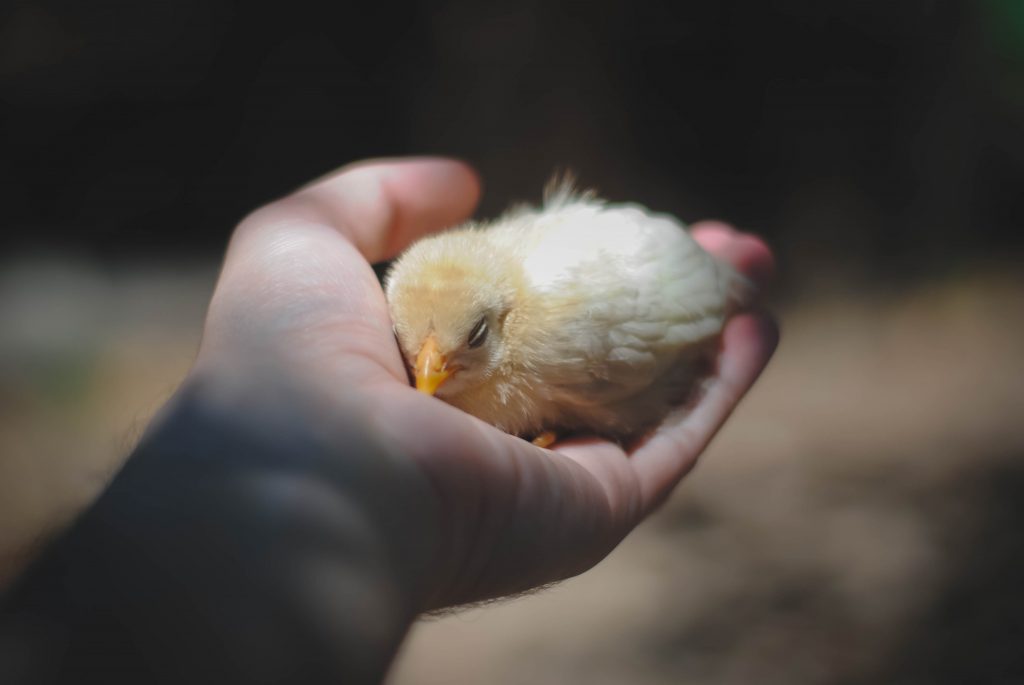
At times throughout my life, I’ve had a chance to be around recently hatched baby chicks. And when invited to hold one, I don’t hesitate—I didn’t as a 5-year-old and I don’t now. I step up and hold my hands out, cupped and ready to cradle the tiny, fragile, cheeping ball of yellow fluff. My heart leaps a little with what it will require—care, gentleness, keen attention. It is a moment suffused with responsibility. Yet with some coaching and support from those who surround me, even 5-year-old me can step up, willingly, and nurture, not harm. And given the chance, I could do that every day. Each time would require the exact same measure of care and attention. But it would, at the same time, become more familiar, something I could come to expect and assume as part of my everyday experience.
At this point in my description of this metaphor, I need to be clear: students in our classrooms are not the baby chick. The chick is the difficult experiences, the traumas, that anyone in the classroom community carries into that shared space. To position students as the fragile creature is central to the problem of how students and teachers are often positioned in relation to trauma. Viewing students as the chick implies an adult as the only participant with agency; an adult who, in this metaphor, is not only the strong one, but also looms largest as the protagonist in the story. One reason I include my child self in this image is to emphasize students as active subjects in reciprocally sharing and witnessing the kinds of hard stories that will accumulate for them and their teachers during this crisis. In being allowed to witness teachers’ vulnerability—their stories of challenge, fear, grief—students will know those stories belong in school and that their experiences will matter in how they are seen, heard, and valued in the classroom. The students, and the teacher, are the hands that gently, but without trepidation, cradle those stories in their classroom.
In being allowed to witness teachers’ vulnerability—their stories of challenge, fear, grief—students will know those stories belong in school and that their experiences will matter in how they are seen, heard, and valued in the classroom.
In whatever capacity teachers and students are together next year, everybody that enters the literacy classroom or accesses a screen will be bringing stories that require critical care and humanity. Some of those stories will be shared in explicit ways through discussions, writing, art, digital creations, one on one connections with between students and teachers. Other stories will be shared through an empty desk, a bowed head, a missed login, a quavering voice or trembling hand, a simmering sense of rage. And, as we know, some stories from students’ lives are shared and circulated in schools in ways beyond a students’ view or control. As literacy classrooms fill with stories of this crisis, let’s ensure that teachers’ experiences are present too—as signal of reciprocal witnessing, as opportunity and invitation to bring lived knowledge to school literacies, as source of connection and humanity, as acknowledgement that it can be hard to focus when feelings are overflowing, and as reminders of the far-from-equitable impacts of this crisis.
About the Author
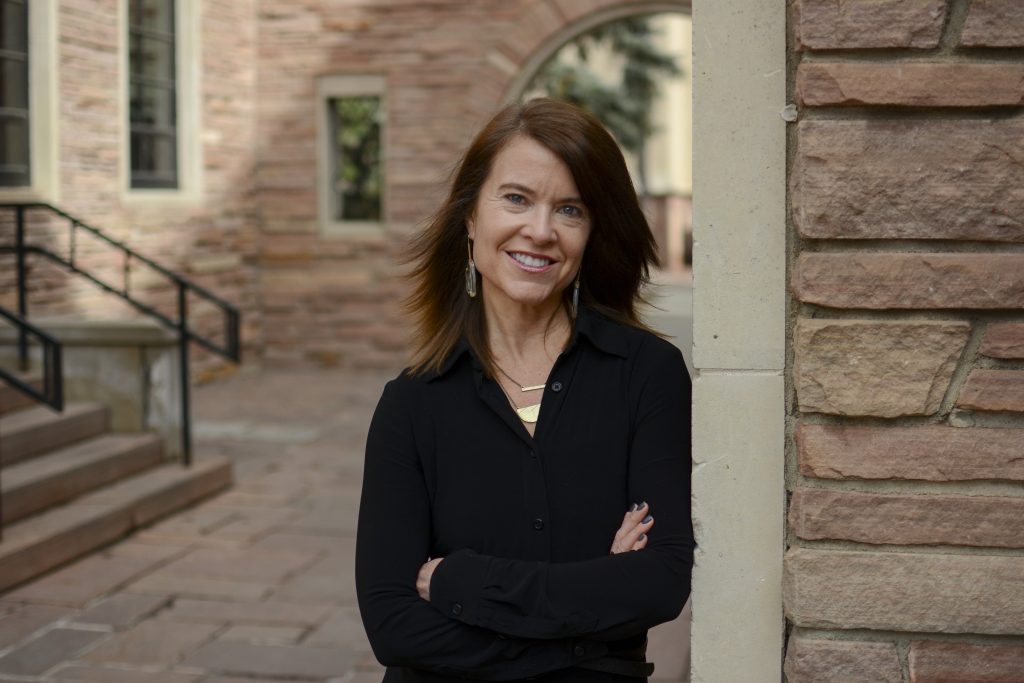
Elizabeth Dutro is professor and chair of Literacy Studies at University of Colorado Boulder and former K-12 classroom teacher. She collaborates closely with teacher colleagues and youth in her research on the intersections of students’ lives and literacy classrooms, particularly critical approaches to trauma, and issues of justice and equity in K-12 classrooms, teacher education, and policy. She is the author of the recent book, The Vulnerable Heart of Literacy: Centering Trauma as Powerful Pedagogy (Teachers College Press). She would love to connect at Elizabeth.dutro@colorado.edu; elizabethdutro.com; or @lifeasstory on Twitter.