Photo by Paweł Czerwiński on Unsplash

For the love of literacy

Collaboration

By: Charlene Aldrich, retired literacy instructor

I KNEW from an early age that books had an important place in life.  I was adventurous and brave with Encyclopedia Brown.  I dreamed about being a nurse with Cherry Ames.  I pondered survival instincts through The Lord of the Flies. I cried about Rascal and fell in love on The Island of the Blue Dolphins. 

I was always the one who brought every textbook home on the first day of school.  I HAD to know what we were going to learn that year.  And besides, ‘Library’ didn’t begin until the second week of school!   

Photo by Brett Jordan on Unsplash

But I soon realized that magazines were pretty great also: Reader’s Digest, Good Housekeeping, even Popular Mechanics!  Whatever my parents had on the table became fodder for my mind.  So, maybe it wasn’t ‘books’ that were important; maybe it was just, plain reading!That made choosing a career pretty difficult – Write books? Work in a bookstore? Be a librarian? OR do research?  How does someone decide what they want to do for 40 years of his/her life?

Content Area Literacy and the Librarian

Read or write?   How about read AND write?  Isn’t that what teaching is all about?  That and having summers off? So what began in a second grade classroom morphed, over many years, into teaching Content Area Reading and Writing (CARW), first to students preparing for college courses and then to content area teachers who were required to become ‘reading and writing teachers’.  But that’s not exactly what the R2S law said; concerning teacher education, the law’s intention was for all teachers to be confident in USING reading and writing in their content area.  And who is the best resource for that?  The person in the school in charge of the books!  The librarian, aka media specialist.  

I LOVE providing reading and writing research, literacy resources, and instructional ideas for content area teachers to embrace reading and writing as valuable instructional practices.  Even better is when librarians sign up for my CARW courses.   You see, I believe that literacy is everyone’s responsibility and that collaborating across grade levels and across content areas improves the probability that literacy is possible.  

Photo by Wan San Yip on Unsplash

Librarians are in the perfect position to orchestrate this collaboration.  BUT you have to ask. They aren’t mind readers.  By becoming partners in literacy, you both can ‘do good things for students’.  HOW?

  • Parallel Reading suggestions connecting content areas
  • LMS Embedded Librarians for immediate and ongoing student access
  • Direct Instruction for efficient research

What does the number one provider of research information say about librarians? 

 “The primary purpose is to support the students, teachers, and curriculum of the school or school district. Often, teacher-librarians are qualified teachers who take academic courses for school library certification or earn a master’s degree in Library Science” (Wikipedia).

South Carolina only employs ‘teacher-librarians’ in the schools.  Yes, their duties overflow into media, but first and foremost, they are your partners.  They can connect content to reading resources; they can connect reading resources to students.  

Overall literacy proficiency is grown within the classroom; through the collaborative efforts of teachers and teacher-librarians, it overflows into students’ out-of-classroom learning experiences.  But the best indicators of overall literacy proficiency are the graduates/adults/employees/employers/parents who model lifetime learning through reading and writing.  They value the ability to apply their literacy  to listen, read, analyze, evaluate, and respond to the plethora of messages that the 24-hour media services produce.  

PS:  Summers off – the joke was on me.  I found out that improving reading, writing, and math literacy is a year-round gig.  And it was my pleasure to serve.  

References

Wikipedia contributors. (2020, May 18). Librarian. In Wikipedia, The Free Encyclopedia. Retrieved 20:32, May 26, 2020, from https://en.wikipedia.org/w/index.php?title=Librarian&oldid=957428603  

About the Author

After 20 years of growing literacy in under-prepared college students, Charlene retired to focus on state-wide literacy initiatives such as LiD, 6-12 and her R2S approved literacy courses at College of Charleston.  She lets her life speak by empowering teachers to have the confidence and competence to implement a literacy model of instruction in any content area and at every grade level. Her best Covid-19 memory is teaching her grandson Algebra 1 via phone calls, Zoom, ztext messaging, and FaceTime.  It was online instruction at its best – synchronously and interactively.

We Need S’More Literacy from the Library!

Collaboration

By: Amanda Harris, South Carolina High Media Specialist

I love reading books, cataloging and shelving books, shopping for books, and placing books in readers’ hands, but as a high school media specialist, all that fun with books is only a small portion of my actual job. As a highly qualified educator who shares my literacy instruction skills with students and colleagues every day, my role goes far beyond the library stacks.

Since it’s summertime and I’m a girl who loves chocolate, indulge me for a few minutes and let me explain the library’s role in school-wide literacy instruction as an ooey, gooey, warm, melty, delicious s’more. 

The Graham Cracker

The foundation of a s’more is the graham cracker, providing support and structure on both sides to hold the entire concoction together. My goal as a media specialist is to provide resources and support for all content areas so that all teachers can be more effective in guiding students to content-specific literacy. Even though my district has 1:1 Chromebooks and students may think they can just Google everything for research, someone still has to teach them how to wade through their search results! One of the most important items on my to-do list in this graham cracker part of my job is to actively recruit teachers to share their classes with me. Once I have led them to realize how desperately they needed to schedule time for co-teaching (sometimes with free coffee involved in the persuasion), I make a point of threading my info literacy standards and skills over and over through every unit I teach across the curriculum. 

When I’m handing out the metaphorical graham crackers for the s’mores, I have to be intentional with teacher relationships, creative with my curriculum ideas, and even a little bit repetitive with teaching the skills to students, but without these graham crackers, the whole s’more falls apart and students lose opportunities for big-picture literacy application across the curriculum. 

Mmmm…Chocolate

My favorite part of the s’more, of course, is the chocolate, and my favorite part of being a school media specialist is definitely the fun library offerings: student book clubs over Chick-fil-a lunch boxes, faculty book clubs with grown-up conversation over breakfast snacks, author visits, makerspace crafting days, games and Legos out on the tables, and independent choice reading checkouts. These are the pieces of the school-wide curriculum puzzle that make the whole idea of literacy more enjoyable. 

Photo by Allie on Unsplash

The obvious sticking point here is that by the time students reach high school, very few of them are going to seek pleasure reading opportunities or spend their free time hanging out with a book club. How do I offer chocolate for the s’mores of students who are reluctant readers? I’m grateful to have some fantastic colleagues (not just in the English department!) who value choice reading enough to bring their students to me for independent reading checkouts. Sometimes they have target genres, sometimes they have target themes, and sometimes they want students to just pick anything that looks interesting.

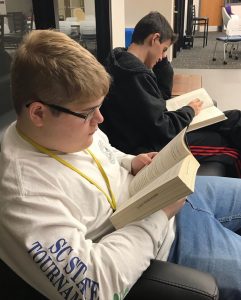
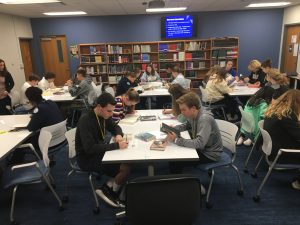
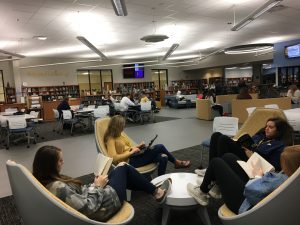
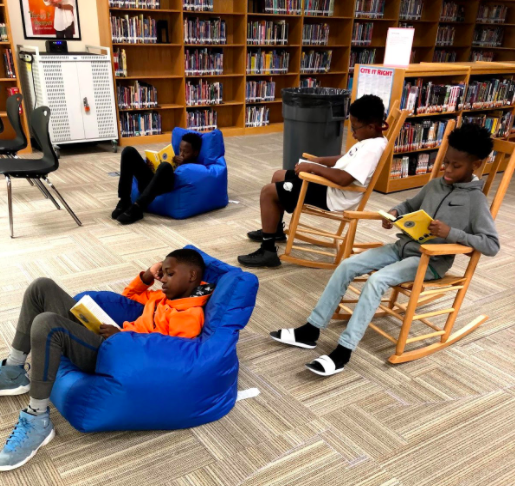
During this past year, we blocked off a weekly time with some of the English 1 and 2 classes to just come into the library for a routine sustained reading period. Their classroom teacher, my fellow media specialist, and I all sat down with them on the couches and modeled reading for fun, too! (Well, that was the plan. I actually spent more of my time up out of my seat, in the stacks, helping students find their next books to read, but that was fine with me!) When we suddenly switched to distance learning, I missed all of my students, but these two classes were the ones I most desperately wished to see.

Pleasure reading and finding a book to enjoy is the chocolate in the middle of the school-wide literacy s’more, and while I do love chocolate with all my heart, seeing reluctant readers find books they like and seeing students come to the library for fun in their free time brings me more joy than an entire one-year supply of my favorite Harry & David dark chocolate truffles.

Sticky Marshmallows

Photo by Rebecca Freeman on Unsplash

Finally, I must address the sticky, fire-roasted marshmallow that holds everything together between the graham crackers. At my school, this is the part of my media specialist role that doesn’t exactly fit the typical mold, but it just makes sense. If the library is the heart of the school and the media specialists should be dabbling in teaching with every department in the building, why not have your media specialist(s) serve as writing instructional lead teachers? 

I’m on a flex schedule and my teaching calendar does fill up with research projects and other library lessons. However, because there are two of us serving as full-time media specialists, we are able to schedule time to actively help teachers with writing instruction. We conference with teachers during their planning periods, or we go to their classrooms and help with a writing lesson or student writing conferences. The best part about this role is that sitting down to brainstorm a writing assignment with a teacher gives me an easy opportunity to market the library’s resources. 

I’ll be honest: Writing can sometimes be the stickiest part of school-wide literacy. Sure, everybody can fit more reading into their classrooms, but writing? Writing takes time to assess! Writing takes time to actually do in the classroom, precious time that is also needed to teach content-specific skills! Some students just don’t want to write, and it’s just more painful for everyone involved! Yes, yes, and yes. I totally get it, especially after 10 years in the English classroom and many hours of sleep lost to essay grading, but that doesn’t mean that writing instruction can just be swept aside. Writing = thinking, and it’s a critical part of the learning process.

Photo by Josh Campbell on Unsplash

Helping teachers regularly include more quality writing in their daily classroom routine has challenged me. I have had to study and learn more about how content literacy should look different across the departments, and I have had to lead some tense meetings, but I have also been able to see the exciting success my colleagues are having. To return to the marshmallow comparison, sometimes I accidentally drop my actual literal marshmallow in the fire, so I have to toss it and try again. Sometimes I don’t leave it in the fire long enough, so I have to try again. In the big literacy picture, writing instruction is the marshmallow, and sometimes we have to toss what we did and try again. Isn’t that what drafting and revising is all about? In the end, while the marshmallow is challenging to get just right, the finished s’more just isn’t complete without it.

Are you ready to go make some s’mores yet? If you want to get started on some figurative s’mores, go ahead and email your media specialist to get started on ideas for collaboration this year. If you want literal s’mores, keep the campfire far, far away from the library books.

About the Author

Amanda has twelve years of teaching experience and is beginning her third year as a high school media specialist at Walhalla High School.

The School Librarian and You

Collaboration

By: Kelley Rider, South Carolina School Librarian

I believe that the library should be the heart of the school. It is usually the largest academic space in the building. The librarian is trained to meet the curricular and non-curricular literacy needs of students. The library has books, technology, and other materials that students and teachers can use and enjoy. However, sometimes the library doesn’t get used to its full potential because teachers and students don’t realize the wealth of resources that are available there. 

The school librarian can be a resource for teachers and students. The librarian is a teacher who is trained to teach, collaborate, find resources, and support literacy. I’d like to encourage any educator to reach out to their school librarian to collaborate and enhance student achievement. 

Ways teachers can collaborate with the school librarian to enhance learning in content area classrooms: 

Bounce ideas around with your librarian.

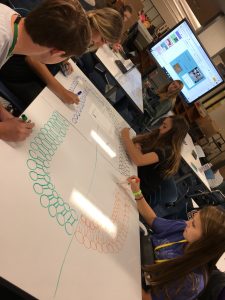
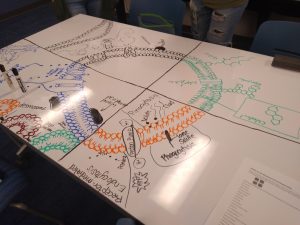
Once the AP biology teacher came into my school library. She looked like she needed someone to talk to, so I approached her and asked if she needed help. She had been teaching about cell membranes. She felt like the students had recently hit a wall. She needed to mix up the next lesson so she didn’t lose their attention.  We talked for a bit about what she had done in the past and what her learning objectives were for her students. Then, I gave her an idea to try a different approach. Together we came up with a plan to have the students divide the cell into four sections and each student had to draw and label the cell in their quadrant. Then the students had to collaborate, help each other, and rationalize to the group what he/she had drawn. The teacher just needed some inspiration to try a new strategy.

Procure resources from your librarian.

Many of the English teachers in my building require students to read a book of their choice independently for a unit of study. Each teacher’s requirement for this assignment looks a little different than the next. They will often ask if I can pull appropriate materials for this assignment for the students to browse through. As students are browsing, I often tell them about selections to help them make their final decisions. Additionally, the school librarian can share information about non-fiction materials for research, Discus databases, and technology available to students.

Plan lessons or units with your librarian.

A little over a year ago I was introduced to a teacher who had just been hired for the upcoming school year. She came by the school library to introduce herself and see what my library collection looked like so that she could prepare for the fall. I enthusiastically showed her around and sincerely told her that I would love to help to find resources or even teach lessons when appropriate in the next school year. 

A couple months went by, summer came, and then I got an email from her asking me to review a list of books she was interested in purchasing for her classroom library. She was worried that some of the novels would be too mature, and she wanted to get my opinion on how our community would react to themes in the books. These exchanges have led to this teacher and I having a great working relationship where she comes to me for help planning lessons and units. 

She wanted to embrace the teaching of Penny Kittle and Kelly Gallagher’s work which encourages teachers to allow students choice in what they read. What began with this teacher creating a more robust classroom library turned into me encouraging her to go with her gut to create a literary choice unit. The students selected a book from a teacher made list and then worked in small reading groups (lit circles) to complete assignments in class. I helped her facilitate this by helping to choose appropriate books and by teaching a couple lessons to her classes. 

The unit was such a success that she tried it again in the second semester. The instructional coach and I helped her procure books to facilitate themed lit circles. I added those new books to the library collection so that we could better track lost items.

About the Author

Kelley Rider is a third year high school librarian and former English teacher in Anderson, SC. She is Pendleton High School’s 2020 Teacher of the Year.  She serves on the Advocacy and Awards committees for the South Carolina Association of School Librarians.

Who Needs a “Media Specialist” When Google’s Got It All?

Collaboration

By: Betty (BT) Bouton, South Carolina Teacher-librarian

Right off the rip, I prefer the title teacher-librarian (TL). That’s what we are, and “media specialist” sounds inflatedly special. And as for whether TLs have anything to offer teachers in the world of unlimited access to almost everything, “Dang right, we do!”

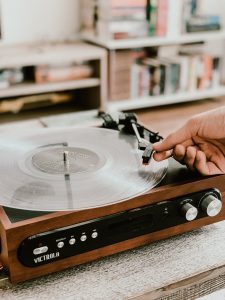
Given the ongoing COVID-19 changes in instruction, I’ve divided my comments into two parts, like the vinyl 45 records that were THE medium in my youth.  

Side A (also known as the “Big Hit”): Dream Dream Dream

Side A is the big hit — what your teacher-librarian is itching to do to help embed literacy skills in your classes in the “normal” school environment. (Warning: focus on SS, science, ELA, arts, and exceptional children. Math, I need help.) TLs truly “dream” of ways we can help our colleagues plan, gather resources, teach, and evaluate, using our standards along with state curriculum standards.

Resources

Teachers need resources to deliver personalized and differentiated instruction, and Google supplies LOTS of results. Your TL is popping to be your teammate in selecting the BEST sites and sources. 

Photo by fabio on Unsplash

We will curate the open-source material; but even better, we can guide teachers and students to powerful information resources and student-friendly tools (leveled articles, translations, audio, built-in dictionaries, and citation creators) available in databases, which are not the natural go-to sources for students and many teachers. For example, Charleston County School District provides access to SC Discus and additional databases through MackinVia, and our Destiny library system allows for TLs to create resource collections (on any topic/standard) that include books, websites, and database articles — all available to teachers and students. Ask, and we will collaborate!

Collaboration

But even Side A has its challenges: teachers create and assign great projects, but then are disappointed with students’ underwhelming results. Again, TLs are classroom teachers’ backup when it comes to down-and-dirty teaching: collaborating in direct instruction to guide students as they form research questions, evaluate sources, process information, and synthesize their results. TLs can also help with innovative methods for students to “publish” their work. 

Photo by Nicolas Lobos on Unsplash

Some of my most productive teaching experiences recently have been in science classrooms, collaborating on DBQs. As a co-teacher in an eighth-grade science unit about travel to Mars, the classroom teacher was the “science,” and I was the “search, source, cite.” Together, we addressed the needs of a range of students: the high fliers, students with IEPs, students with English as their second language, and struggling learners. The science teacher and I together planned, delivered instruction, created the scoring rubric, and graded students’ work.

Technology

But there’s more! I’ve just begun using MakerSpace projects to support literacy, admittedly late realizing how powerful hands-on activities are in improving literacy and learning. This year I hosted Maker lunches for 6th graders, using simple, fun activities to complement content standards. In a session on electrical circuits, students watched a short BrainPop video twice: before and after I led them through directions for a pre-made activity (with their hands on the supplies and directions). Then we let it roll. The light bulbs went off literally, and also figuratively for several at-risk students: “Hey, this is what we’re doing in science!”

And the possibilities for Ozobots in HS history and MS SS, especially for interactive timelines! Here’s an elementary-level project provided by Ozobot – substitute your content and start dreaming of teaming with your TL.

Side B (also known as the “Flip Side”): Hang on Sloopy

Well, this side of the vinyl is not yet a hit. The 12 weeks of “online learning” were a cipher and challenge to me as a TL. As I try to plan for the new school year, some days I can’t even get my Side B to spin on the turntable. That chipper “song” writer for Side A has been replaced by this less confident, but still hopeful TL.

On the plus, I did district-wide read-alouds of Some Kind of Courage by Dan Gemeinhart, my school’s guest author in 2019. Dan participated in one of the first sessions, trading time reading with me and talking about his next novel. But student engagement was low, as it was for most of our district-sponsored read-alouds for MS and HS.

On the minus, I struggled to find my traction for how to help content-area teachers. I created/updated a spreadsheet with online resources that supported the Quarter 4 standards for each subject/grade level; worked with some Related Arts teachers to set up Google classrooms (which they had not previously needed), and trouble-shot teachers’ and students’ technical issues. But I did not establish new and meaningful ways to support literacy. Shame on me.

Photo by Gabriel Barletta on Unsplash
Photo by Gabriel Barletta on Unsplash

But even during this summer limbo, TLs are spinning the turntable: sharing ideas about supporting literacy with new instructional models. As we teachers “hang on” to learn what instruction will look like, your school’s TL is ready to jump in to make the new model work for you and your students. With collaboration, Side B has the potential to be a chart-topping hit!

About the Author

BT has been teaching for 36 years, the last 12 as a teacher-librarian at Camp Road Middle School on James Island, SC.

In the Middle of It All

Collaboration

By: Cynthia Johnson, SC Media Specialist

“How do the narratives shape or create our understanding of mortality? Cynthia, would you like to respond? “

I froze. 

Was it my daydreaming gaze that gave away that I had not read a page or line from Hamlet?  I never read any of the classics while matriculating through High School, where the classics were deemed an important rite of passage which could not be avoided. I managed to bob and weave through them as an active listener, a benefit in the battle with books by a self-declared non-reader. 

As I entered Spelman College, I realized that it wasn’t reading that I hated. It was the selection of text and, more specifically, the absence of my voice and my perspective within the selected texts. I am not ashamed of my lack of knowledge in classics like To Kill A Mockingbird, Hamlet, or “The Iliad.” It shaped me into a better literacy instructor and more relatable librarian, someone both students and teachers alike could seek out for authenticity in thoughts and suggestions. 

Literacy Instruction Begins With Choice 

Photo by kazuend on Unsplash

When I became a school librarian, I wanted to introduce students and adults to reading in a way to make them realize that we are all readers. We just need the right book that sparks our interest. “Reader’s choice” became my mantra for increasing students reading in and out of the classroom. I intentionally created class activities to share with teachers to show that when we provide students options, they will and can read text to master and accomplish skills they seek. 

Coffee, Cake, and a Cool Takeaway

Initially, I enticed teachers with “Coffee, Cake, and a Cool Takeaway.”  In order to share what I can offer and how Media Center resources can be used. I invited teachers and staff to come to the media center during their planning periods to enjoy coffee, juice, and cake. It didn’t hurt that I had Media Center resources set out for viewing and interaction, too. I began with content collection development, using various multimedia, public library resources, websites, and primary sources. Many teachers create their own collections; however, in a very short period of time I was able to show how I could help. 

I also shared the newest information on our state virtual library and its various databases in order to offer resources to engage students in diverse texts. Overall, I was able to sell my services and the media center resources for teachers to use as they facilitate lessons for students to master standards. 

The Roots of My Beliefs Concerning Literacy

I believe that literacy needs to be deeply rooted in personal experiences. This allows students to examine their own histories as they make choices and connections in literacy. For the past two years, I have shared this belief in my collaboration with two teams of teachers. One team was the 6th grade English Language Arts teachers. We selected books from various time periods, but each narrative was told through the lens of an African American perspective. Students were allowed to choose which book interested them and we formed student cohorts based on the books chosen by the students. Each teacher, including myself, taught one book to a cohort of students. During that time, students received literacy instruction based on the book of their choice. 

Suggesting reading materials and teaching materials are two completely different experiences; therefore, I immersed myself in weekly, if not daily, conversations with my team as we moved through our books to ensure standards were mastered and engagement was maintained. We concluded the unit by hosting author, India Hill Brown, who spoke about writing and the history of unmarked graves and cemeteries in South Carolina. 

Creating literacy rich environments requires collaboration, as well as choice. I have discovered that in order to collaborate, you must build relationships. My teachers have come to trust my expertise based on my actions and not just my words. Whether it’s having a school wide read using diverse texts like Kwame Alexander’s Crossover or House Arrest by KA Holt, picture book Read-Alouds and discussions, specifically highlighting Black, Indigenous, other People of Color and LGBTQA in the books, in advisory classes, or Book Tastings focusing on challenging or interesting themes (e.g. George by Alex Gino), I always provide choice. I learned from one of my most avid readers while we discussed books one day. She informed me that she had a goal to read 100 books in 1 year. She was 76 books in! Clearly, this was a student who loved to read. She revealed to me, though, that the moment her teacher told her she had to read a specific book, whether it was an excellent read or not, she was unmotivated. That conversation drove me to examine teaching literacy even more closely, as I changed lenses to look through the eyes of the ever-changing middle school student.

As I looked at my own relationship with students – and, in turn, their relationship with reading. I realized that my practice of always offering choice has made book talks and other various activities an easy sell because the children knew my intentions were pure, and I was advocating for them. They trusted the suggestions and practices I brought them. They could relax, knowing that I wouldn’t battle them on content. I just want them to read a book.

About the Author

Cynthia Johnson is an 8-year veteran school librarian at Longleaf Middle School, Columbia SC. She is a Member at Large for the South Carolina Association of School Librarians.

School Librarians: Your Literacy Partners

Collaboration

By: Tamara Cox and Pamela Williams, SC Media Specialists

“What we teach children to love and desire will always outweigh what we make them learn.”

Jim Trelease

One of our goals as educators is to help students become life-long readers. Too often we focus solely on the mechanics of reading without addressing how we build the love of reading. Life-long readers find joy in reading. We want our students to enjoy reading, which will fuel their desire to read and help them build habits to carry them throughout school and into their future. The school librarian can help spark that love of reading.

The school librarian can be your partner in nurturing readers and building those habits. As educators we all have different roles to play in the process of teaching students. The expertise of the school librarian can strengthen your school’s reading culture and literacy outcomes. School librarians fill an important “interdisciplinary, instructional role, particularly in teaching students to be better consumers and producers of information” (Lance, 2014).

Research

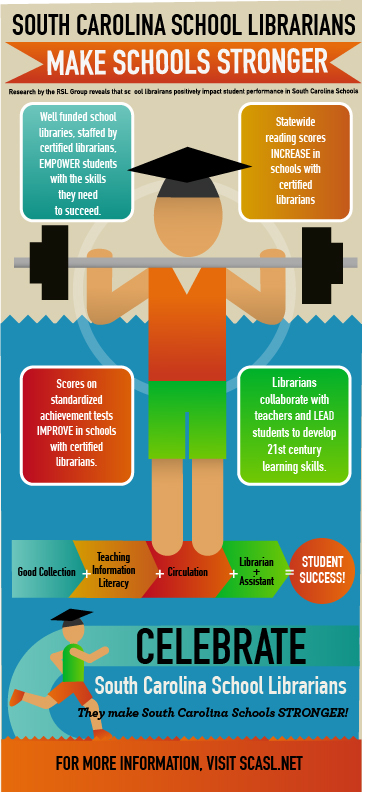
Numerous studies spanning multiple states and decades have shown that a high-quality library program positively impacts student achievement, graduation rates, and mastery of academic standards. These correlations exist regardless of student demographics or school funding levels. In fact, these correlations are most pronounced in our vulnerable student populations, including students of color, students from low income homes, and students with disabilities (Lance, 2018). School library impact studies have been conducted in 24 states, including South Carolina. The South Carolina study confirmed the findings of other studies by showing that having a fully staffed school library (certified school librarian and assistant) that is well-funded results in higher test scores (Lance, 2014). 

Let’s Work Together

There are many ways that the librarian can be your partner in literacy. Please reach out to your librarian so that you can find ways to work together. Here are some of the impactful ways that librarians can support the literacy goals of the school:

  • Collaborate with classroom teachers by planning lessons together.
  • Curate print and digital resources for lessons and standards.
  • Plan reading programs and celebrations.
  • Share booktalks and recommended book lists with teachers, students, and families.
  • Provide reader advisory services.
  • Provide book access for recreational reading, no reading level limits.
  • Curate recommended book lists around a theme, unit, or topic.
  • Assist with literature circle discussions.
  • Organize or help with a faculty and/or student book club.
  • Organize and host online and in-person author chats.
  • Share reading resources and strategies with families.
  • Host book fairs to help increase book access and ownership.
  • Provide professional development on a variety of literacy and technology topics.
  • Help teachers integrate technology tools into their literacy lessons.
  • Teach lessons on information and media literacy.
  • Provide instruction on research skills.
  • Work with teachers to build an inclusive, engaging library collection that supports the curriculum.
  • Serve on school-wide literacy and leadership committees.
  • Create a library space that is safe and welcoming to all students.

Conclusion

The benefits of a robust and effective library program under the leadership of a certified librarian are undeniable. By utilizing the librarian’s expertise and nurturing collaboration with your librarian, your school can see positive changes in student learning and achievement. The school library program can be your partner in literacy success!

References

Lance, K. C., & Kachel, D. E. (2018). Why school librarians matter: What years of research tell us. Phi Delta Kappan. Retrieved from https://www.kappanonline.org/lance-kachel-school-librarians-matter-years-research/

Lance, K. C., Schwarz, B., & Rodney, M. J. (2014). How libraries transform schools by contributing to student success: Evidence linking South Carolina school libraries and PASS & HSAP results. In RSL research group. Retrieved from https://scasl.memberclicks.net/assets/phase%20i.pdf

Lance, K. C., Schwarz, B., & Rodney, M. J. (2014). How libraries transform schools by contributing to student success: Evidence linking South Carolina school libraries and PASS & HSAP results, phase II. In RSL research group. Retrieved from https://scasl.memberclicks.net/assets/phase%202.pdf

South Carolina Association of School Librarians. (2015). South Carolina school librarians make schools stronger [Image]. Retrieved from https://www.scasl.net/south-carolina-impact-study

An entire page dedicated to research sharing how librarians impact reading and literacy: http://www.ala.org/tools/research/librariesmatter/taxonomy/term/137.?page=23

About the Authors

Tamara Cox is the National Board certified librarian at Wren High School, Awards Chair for the SC Association of School Librarians, 2020 Library Journal Mover & Shaker, 2019-2020 South Carolina School Librarian of the Year, Honor Roll finalist for the South Carolina Teacher of the Year, and recipient of the 2018 I Love My Librarian Award. Contact her at coxt@apps.anderson1.org or @coxtl on Twitter.

Pamela Williams is the 2019-2020 President of the South Carolina Association of School Librarians (SCASL), a National Board certified school librarian at Richland Northeast High School, and a former South Carolina School Librarian of the Year. She can be contacted by email at pwilliams@richland2.org or on Twitter @readingrocksPam.

Breaking the Mold: Using Digital Literacy Outside the Traditional Classroom

Teaching

By: Hannah Kottraba, SC Teacher

Dear reader, I ask you to consider these two questions: How can I create a digital classroom? And Why should I? 

Six months ago, technology was a component of my methodology, but not the primary platform for my instruction. That all changed when COVID-19 brought my in-residence teaching to an abrupt halt, and I decided to use Zoom as a digital classroom. The platform allowed my students and their families to present an artifactual literacy project we began before my school’s closure. Pivoting from the traditional classroom to online allowed my families to participate from any location, share a broader range of documents, and feel more at ease in a low-anxiety environment because they presented from home. By using a digital medium, families shared in powerful ways that would not have been possible had we remained in a traditional setting. If you seek to make your classroom more inclusive but have not found an appropriate way of doing so, you should consider the impact a digital platform can have on your students’ education.

On the Job and in the Classroom

In my ten years of teaching, I have experienced the struggle of working around schedules to invite relatives into the school. Getting time off from work can be challenging for parents- though they want to show up for their student, sometimes, it just is not possible. Using a digital classroom helped families bypass such hindrances for school participation. To join our class from any location, parents simply logged in using the access code I sent through our school email system. 

I recognized how impactful an online space is when a student’s mother joined us during her 15-minute break in a hospital room from where she worked. The student was at home with her grandparents, who also made an appearance on screen. It was moving to watch this mother share pictures and videos using her phone from a separate location than her child and parents. The reality that she could still participate in her daughter’s educational experience while never leaving her workplace made me realize that I need to use a digital platform when school resumes; doing so will provide more flexibility for my families. 

Artifacts Online 

Initially, I feared that the details and significance of my students’ artifacts would get lost through the screen. However, they far surpassed my expectations for presenting. They found new and inventive ways to share their research, interview transcripts, and artifacts. Some students transitioned their hard copy documents into Google Slides or PowerPoint presentations by scanning their records and creating PDF formats that they could insert into a more extensive online collection. Other students made a digital compilation of images and videos with the use of video editors and screen recorders. Because  students were at home, they could share an extensive range of objects that otherwise would have been impossible to bring to school, like the portrait of a student’s ancestor hanging in her living room. 

The emotional component of the artifacts and stories came through the screen and the wide use of technology astounded me. I was proud of how the students took ownership of their stories and challenged themselves by transitioning tangible objects to digital relics. 

Connecting in a Comfortable Space

Standing in front of a group of people is never easy; speaking about personal stories that bring forth emotions is even more difficult. My students’ literacy projects asked parents to do just that, be vulnerable, and share intimate details of their past. Had we remained in the traditional classroom, I doubt parents would have felt as comfortable to speak openly in a conversational manner about their lives. However, meeting online made parents feel more at ease during the presentations because they were at home in a familiar and safe space. 

The effect of speaking online led parents whom I had not met all year to participate with their child because of the convenience and low-anxiety environment. Two separate families talked about adoptions that were unknown to me before this project. One student shared about the loss of her dear mother, and another student spoke about leaving his native country to come to America. With families logging in from home, our conversations felt more like our class was sitting in a family’s living room, and they were telling us stories as if we were all old friends. 

A Missing Link

             To circle back to my original questions of how to create a digital classroom and why you should, I would recommend testing several digital platforms to see which one will work best for your needs. Zoom worked for my class while we were in this transitional period. The students had no issues with logging into the digital meeting and using the program’s screen-sharing and recording features. Creating a digital space was as easy as setting up an account and sending out a link with an embedded password through my school’s email system. Parents, who had never owned a computer, were able to access our classroom from their phones with ease. As to why you should invest in creating a digital platform, I hope that by sharing my students’ literacy project, you can see how impactful technology was for my families to be able to connect in meaningful ways outside of the traditional classroom. 

About the Author

Hannah Kottraba has ten years of teaching experience and recently graduated with a M.Ed. in Language and Literacy as a Literacy Coach from The University of South Carolina. She is creating a new literacy lab program for the 2020-2021 school year at Thomas Sumter Academy in Sumter, South Carolina.

New Literacy Studies: For What It’s Worth…

Research

By: Dr. Todd Lilly, University of South Carolina

(For what it’s worth, this blog is peppered with a few hyperlinks to entertain the reader and to illustrate New Literacy Studies… for what it’s worth. Enjoy!)

Here’s a scene you might recognize: Everyone is concerned about the mental health of the young prince. The father of his fiancé finds him alone in a room in the castle, absorbed in a book. “What do you read, my lord?” The prince stops reading, flips through his book as if to try to find an answer to this most-important question. Then, as if making an astonishing discovery, he answers: “Words. Words. Words!”

I know what you’re thinking: “I’m not an English teacher! What’s this got to do with me?” Well… In the context of New Literacy Studies…Plenty. For what it’s worth, there was certainly a whole lot more in the prince’s book than words, and that should interest all of us.

Our house backs up to a popular public recreation area, so our Home Owners’ Association (HOA) posted signs: “Private Property/ No Trespassing!”

Many third graders would have no trouble sounding out the words:

“Pr…Pr… Pr  as in Pretzel”

“Tr…Tr…Tr… as in Truck”

Hmmmm… I have no idea why the ‘ATE’ in “ PRIVATE” shouldn’t be pronounced like “8” or why the ‘ei’ in “eight” should. What exactly is a ‘ə’ anyway? “I’m not a reading teacher!” Anyway, that’s the gist of old literacy studies.            

So, maybe we secondary teachers don’t actually know all that much about Old Literacy Studies, but still, we get the idea: If kids know enough rules to sound out words, they can read just about anything we give them, whether it’s a social studies text book or Hamlet. It’s an autonomous design: Learn to decode and you have power. It’s that simple.

Well… actually, no, it’s not that simple. And neither are the literacy events and practices we expect students to engage in when they enter our classrooms. That’s where New Literacy Studies gets interesting.

About 30 years ago, just about the same time as “You’ve got mail!” several out-of-the-box smart people from a few English-speaking countries got together and kicked around the idea that literacy was more than decoding, semiotics, and semantics. In the mid-1990s they saw how the rise in popularity of digital technology had the potential to radically change the way people produced and consumed all kinds of texts. They got so excited about this “New” idea that they made plans to meet in a small New England town, New London, New Hampshire, just to talk about it. And they did. They came to be known as “The New London Group.” What was their conclusion?

This might be a good time to get up, stretch, visit the bathroom and/or the refrigerator, maybe do a little yoga… Ok, here goes:

They decided that literacy is a social event embedded in a complex web of power-laden social and technological contexts that all revolve around texts and language. (Yes, English teachers; that’s what Pygmalion, written a century ago was all about… “Duh!”). Another way of looking at it is that literacy exists by means of some technology (a book, a sign, a billboard…) in a social space between a producer and a consumer. It involves ways of speaking, thinking, acting, and believing, which would mean that one’s identity and membership in social groups can and does affect meaning. This mutation from literacy as merely decoding to literacy as a social practice was coined “the social turn.”

So there. Move over Gutenberg!

That’s pretty much what they could agree upon. I can imagine the discussion got a bit contentious when they started thinking about the definition of “text.” Is an embroidery of birds on a pillowcase a text? Seriously, that’s an important question in the context of multiliteracies, but we’ll save that for another blog.

For now, let’s consider the “No Trespassing” sign above as a text. It’s not a Falkner novel or a Shakespeare play, “but ’tis enough, ’twill serve.”

Someone created the sign, someone nailed it to a tree, and there are indeed people who have come along and read it. The sign successfully transfers an idea from the sign’s producer to the consumer: “Keep off OUR property!” The literacy event is accomplished. What more might these New Literacy folks say?

Well…plenty. They would point out that that the posting and reading of the sign was but an event, part of a larger practice that brought together myriad social and power connections. The sign was initially a reaction to a legal context. At our annual HOA meeting, our lawyer noted that if we hadn’t posted these signs, we would be liable for any damages incurred by anyone who stepped onto our property. (Don’t you just LOVE lawyers?)

There’s also, of course, a power dynamic. Who are these potential trespassers? We can only imagine them happening by and reading our message: We own something/ you don’t/ you can’t have it/ We deserve it/ You don’t. Nanananana…  “The sign said you got to have a membership card to get inside…Ugh!”

I’m sure y’all noticed the graffiti on the sign, probably a tag, a unique form of literacy that a certain group of people (in this case, graffiti writers) use to identify their work: Loosely translated, it says: “Hey, I’m somebody too!” And am I wrong to deduce a bit of anger and animosity?

If literacy, then, is all about contexts and social memberships, who gets to decide meaning? ELA teachers have heard this refrain before; it’s not new.

Student: “Mr. Lilly, I think Robert Frost’s ‘Stopping by Woods on a Snowy Evening’ is about Santa Claus.”

I can’t remember my reply, but now in my current life, I call forth the literacy gurus:

Louise Rosenblatt would have said, “Ok, a reader has a right to make meaning out of otherwise meaningless symbols.”

E.D. Hirsch might exclain: “Hogwash! Go ask Frost!”

Michel Foucault would look up from his bath: “Go for it kid ‘cuz Robert Frost is dead!”

Here’s some song lyrics that were a bit more popular than Frost when I was a kid:

“Paranoia strikes deep. Into your life it will creep. It starts when you’re aways afraid. You step out of line, the man come and take you away.”

–Stephen Stills

In the words of the great Yogi Berra: “It’s like déjà vu all over again.” For you youngins (“Ok, Boomer…”), long before Post Malone, Lizzo, Chance, JayZ/ Beyoncé; long before Justin and Taylor, even before Back Street Boyz and still further back before AC/DC there was the Buffalo Springfield. Band member Stephen Stills, in 1967, during the tumultuous years of the Vietnam War and Civil Rights, immortalized these words in his “For What It’s Worth” which rocketed to #7 on the Billboard Hot 100 chart.

Ok, what’s it about? Vietnam Protests? The Generation Gap? Was it a precursor to NWA? “Words, words, words.”

Nope, it was about an event in which riot police confronted a large gathering of young people who came together to protest a curfew in Hollywood, California. But to hundreds of thousands, it represented a division in America, an anti-establishment movement that exists to this day. If you don’t recognize the lyrics, I’ll bet if you click on the above link, you’ll recognize the tune. And if so, is the tune an integral part of the text? (If you actually click on that link, you’ve officially become involved in New Literacy Studies!)

Ok, that’s cool, but here’s the kicker: What happens to a text when it becomes older than the generation for which it was written? In the 1990s, about the same time the New London Group met in New Hampshire, the Buffalo Springfield band members (minus Neil Young, of course) all in middle-age, allowed their song to be used in a Miller Beer commercial. What?! An anthem of protest converted into an anthem of capitalism?! “Something’s happenin’ here. What it is ain’t exactly clear…”

Well, actually, it is quite clear. The baton had been passed to a new generation. The context, the setting, the medium, the identities and power dynamics of the producers and consumers had changed from social injustice to quaffing a cold one. If you think about it, it’s much like what kids experience when they march from math to social studies to ELA and to lunch, all in the course of a typical morning. Everything changes. Students might read the same word in each class’ lesson, (“plot,” for example), but it will have a totally different meaning as the bell rings and students march from one class to another. The fact that they can pull this off day after day demonstrates remarkable sophistication. No science teacher is going to accept a lab report written as a rhetorical composition. As soon as students cross the threshold into the science room, they abandon the aesthetics of poetry that defined the day’s ELA class and magically conform to the inductive reasoning espoused by Francis Bacon, whoever he was.

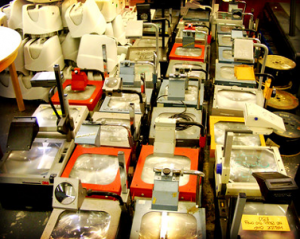
Where old school technology goes to die-
Alex Watson, CC.org

Nothing is benign; a literacy event is always at the intersection of competing contexts (identities, histories, cultures, purposes, technologies) that can wax and wane over time. While in the course of a single day, we demand students think like a historian, think like an artist, think like an author, think like a scientist, think like a mathematician, think like a musician; all of which require a different literacy practice.

This past March, those kids were sequestered to rooms in their home “castles” somewhere in the village or in places even Verizon won’t go. And at the flip of a switch we were found alone at our laptop at our kitchen table desperately trying to replicate the old literacy practices of a face-to-face classroom and project it onto the new, unseen, unfamiliar contexts of the students’ existence. We tapped out words that were meant to convey the same curriculum and the same standards, but we all sensed the inevitable: “Something’s happening here/ What it is ain’t exactly clear.” More than a few of us have been confronted students’ equivalent of “No Trespassing/ Keep Out;” maybe not in so many words,

This could be a very long, very hot summer!

Robert Davy “Protest” Licensed through Creative Commons

“What a field-day for the heat. A thousand people in the street. Singing songs and carrying signs. Mostly say, “Hooray for our sign!’…You step out of line, the man come and take you away. It’s time we stop, children, what’s that sound? Everybody look what’s going down…”

For what it’s worth, this New Literacy Studies stuff never gets old.

“It’s only words and words are all I have to take your heart away” –Shakespeare  (Just kidding; it was the Bee Gees, and if that makes a difference to you, welcome to New Literacy Studies!)

About the Author

Todd Lilly has been a teacher for over 40 years, the majority of which was invested in middle and high school ELA and theater classes in and around Rochester, NY. Over the past 10 years he has served on undergraduate and graduate faculties in Wisconsin and currently at the University of South Carolina. He earned his Ph.D. in Curriculum and Instruction at the University of Wisconsin-Madison. His research interests include out-of-school literacy practices and the stories of marginalized, disenfranchised students. He is married to Dr. Catherine Compton-Lilly who holds the John C. Hungerpiller chair in the College of Education, University of South Carolina


Photo by Akshay Nanavati on Unsplash

Quaranteaching: We’re Not In Kansas Anymore

Teaching

By: Scott Buhr, South Carolina Physics Teacher

Photo by Hal Gatewood on Unsplash

I was 11 years old when I got my first trumpet. My grandfather bought it for me and I was thrilled. I couldn’t wait to learn how to play it. I had taken piano lessons for several years and I can remember my 11-year-old mind thinking, “The trumpet will be so much easier, it only has three buttons!” Silly right? I was taking my knowledge of the piano and superimposing it upon a completely different type of instrument. Sure, there are some things about playing the piano and the trumpet that are alike, but treating one like the other will leave your orchestra one instrument short. My piano literacy did not translate into trumpet literacy, who’d of thought?

Now twenty years later, I am an educator who thinks about the sort of transition that I went through from piano to trumpet on a daily basis. Each hour of the school-day, students arrive in my classroom from all sorts of differing classes—each one teaching them their own literacy practices. My job as a physics teacher is to teach my students how to think like a physicist. How do physicists solve problems? How do they think about the universe? How do they talk to each other about it? This is every teacher’s task. How do I get my students thinking like the professionals in this field think? 

“QUARANTEACHING”—THE STRANGE TRANSITION FROM FACE-TO-FACE, BRICK-AND-MORTAR, GOOD-OLE-FASHION SCHOOL TO THE WHAT-IN-THE-WORLD, CRAZY-LAND OF ELEARNING.

Enter Covid-19. Suddenly, every teacher has been thrust into the unknown world of “quaranteaching”—the strange transition from face-to-face, brick-and-mortar, good-ole-fashion school to the what-in-the-world, crazy-land of eLearning. This unbelievable turn of events has forced teachers to make a literacy transition of their own. From the face-to-face to the virtual. Like many educators right now, you might be struggling to transition from the face-to-face environment that you know so much about to a completely digital experience. If you, like me, found the recent upset to feel rather normal and stress-free, then you might be a digital native—someone who was brought up with today’s technology and whose use of it feels less like using a prosthetic and more like using a natural appendage. Or, perhaps you would not consider yourself a digital native, but are comfortable adopting new technologies and have been for some time. Either way, there are many people whose comfort level with using all sorts of technology is high and there are some whose comfort is low. If you are an educator reading this, you probably could go through the names of the people in your department and pick out the ones who seem to like using technology just because it exists, the ones who avoid it at all costs, and everyone in between. 

Now, I find myself in the comfortable position of being a digital native as well as having been enrolled in online grad classes for some time. My wife has taught virtually for years, and I am about to begin teaching my own virtual class. Many other teachers did not have my circumstances and were faced with the daunting challenge of online teaching with about two days notice. 

Here is the interesting bit. I haven’t noticed that technology integration has been the biggest hurdle for teachers. Indeed, many teachers have been surrounded by all sorts of technology for quite some time—both in and out of the classroom. No, from my perspective, the biggest struggle for many teachers hasn’t been “How does this thing (Zoom, Google Docs, etc. . . ) work?” But instead, “How do I put it all together to work for me and my students?” “How should it work?”

The biggest struggle for many teachers is not “How does this thing work?”, but instead “How should this thing work?”

Let me explain: 

I have seen many teachers share their plans of how they are going to replicate their classroom experience online. This includes bell work, short lectures, and even the possibility of taking tests online. These plans seem to elicit “oohs” and “aahs” for their elaborateness and are applauded for the fact that this teacher has created something so close to a brick and mortar classroom experience. Now don’t get me wrong, context is everything and there may be scenarios where any one of those strategies is really the best one for that particular age, class, or context. As a digital native though, here’s my two cents:

 Is replicating the brick-and-mortar experience the best way to provide eLearning? 

It is likely that your teacher-education program took a traditional approach to lesson planning and unit planning that involves students working linearly through materials as you guide them. This form very much fits the context of students who enter my classroom at the same time each weekday, stay about an hour, and leave with whatever, if anything, I have tasked them to do at home. Still doesn’t mean it is the best, but it certainly fits the context. Now, does a traditional lesson plan seem to fit our current context? Any online context? 

  Photo by Kari Shea on Unsplash

Perhaps the nuts and bolts of the eLearning technology is really not the biggest issue. Maybe our approach to teaching in this sort of environment is what needs the most attention. Most online courses that I have taken have offered me less direct instruction and more opportunities to create things based upon research I have set out to accomplish with resources that the instructor has provided. That is, I have taught myself for the most part and then created some sort of product based upon my learning. Sometimes this has worked really well and other times it hasn’t. 

The thing that has made this model the most successful is how the teacher approaches the class. If they take a “set it and forget it” approach, I am almost sure to be frustrated and unsure of what I am supposed to be doing. If, however, my first attempts on projects are met with specific, helpful feedback, then I am sure to thoroughly engage with the class. 

Educational technologists have long towed the line that technology is a tool, but today it seems that the technology is more a context or environment than merely a tool.

So did you catch the key? Feedback. In my face-to-face classes, I provide this in a thousand small ways. Verbal feedback, facial expressions, and body language are paired with my planned materials to facilitate my being able to accurately gauge and respond to student understanding. Without those tools in an eLearning environment, my students will experience the same frustration that I had from my own online teachers who seemed to treat the courses I was in like an automated machine. In an online environment, many excellent teachers likely struggle to provide the incredible feedback that they normally would when working face-to-face. Could it be that the pressure to make eLearning look and feel like a traditional classroom is the wrong approach? Educational technologists have long towed the line that technology is a tool, but today it seems that the technology is more a context or environment than merely a tool. If my students are primarily engaging with me and my course through hardware and software, then hasn’t that repositioned the technology to more than just a tool?  In fact, it becomes a whole different social discourse in which the ways we act, think, and communicate are quite foreign from the space of the traditional classroom. The literacy paradigm has changed. We’re not in Kansas anymore, Toto.

Personally I have faced this challenge with my honors physics students. I introduced them to a new online tool called MasteringPhysics as a part of my doctoral work. This platform provides immediate and elaborated feedback to my students, but many of them still struggled to connect with this feedback. This program is specifically designed to use a host of technological magic to give electronic feedback to students and yet they still struggle. How much harder it must be for new eLearning teachers to adjust to this new paradigm. 

Hopefully, educators all across the country will begin to pressure themselves into designing online lessons rather than teaching lessons online.

Reshaping your thinking isn’t easy. Even as a digital native, I have found myself trying to force my prior learning experiences as a student onto my current classes. It just feels “right” sometimes. My 11-year-old self had to learn to treat the trumpet as a completely different instrument complete with all new ways of thinking about music. It could well be that teachers who have been thrust into eLearning need the same kind of adjustment in their thinking. So have you felt pressure as a teacher to replicate face-to-face style learning in the virtual world? Was this pressure internal or external? Hopefully, educators all across the country will come out of quarantine with a fresh perspective of the advantages and disadvantages of eLearning and begin to pressure themselves into designing online learning using online literacies rather than teaching lessons online. This is going to require New Literacy Studies.

About the Author

  Photo by Kyle Gutschow

Scott Buhr is a high school physics teacher in Simpsonville, SC. He is a doctoral candidate at the U of SC College of Education studying Curriculum and Instruction. He has been involved with physics instruction, instructional design, and public speaking for nearly a decade. He was named in the Top Ten Teachers of the Year for Greenville County Schools in 2017-18 and shortly thereafter led his physics class to break a Guinness World Record. Scott also operates a small, gourmet popcorn business and actively ministers with his wife in their local church.

Do I Really Have To Read and Write?

Teaching

By: Elinor Lister, Glenview Middle School English Teacher

One year at the start of the school year, a student asked “Do I really have to read and write?” I think my response was “Umm, yes, this is English class.” I’ve also answered this sort of question before with something like, “No! Not at all. This is only school. We don’t do those things too much here.” My sarcasm is definitely why I teach eighth grade and above! 

Many children would rather do anything else besides read and write. So many of the rules and regulations of our education system have beaten the love of either out of them.

– Elinor lister

Despite the humor and our eye rolls at these questions, lies a real truth – one that is disappointing and frightening. Many children would rather do anything else besides read and write. So many of the rules and regulations of our education system have beaten the love of either out of them. Teachers have to prepare students for benchmarks, MAP testing, SLO tests, standardized tests, etc. To do this, we often give students things to read that we wouldn’t want to sit down and read ourselves, if we didn’t have to do so. We make them write nothing but what will help them answer a discussion question well or respond to a writing prompt correctly. All of these expectations have removed the one thing that is vital to a student truly receiving a good education – the desire to learn. 

As educators it is our job to handle the mandates and requirements of assessments while finding ways to help students want to learn, love to read, and desire to write. Piece of cake, right? As easy as putting out a house fire with a water bottle! And yet, teachers do it every day because they are awesome and dedicated and refuse to stop trying.  

In my career, I have run across some tools that I have used or seen used with success in helping students enjoy reading and writing. Most of these transcend content and can be great practice in any classroom.

Tools to Increase Student Enjoyment of Reading and Writing

Sustained Silent Reading (SSR)

Photo by Seven Shooter on Unsplash

This isn’t new, but it has fallen by the wayside. I know the argument some use saying that students sit there staring at a book and do not actually read. There may always be a few who are harder to reach than others, but don’t take the experience away from the majority.

Colleagues and I have found the best success with SSR when students can truly pick what they want to read – books, magazines, graphic novels, newspapers, informational texts, etc. I’ve even allowed children’s books. Does it really matter what they are reading, if they are interested in reading it? I never found success forcing students to keep a reading log or write about what they read each day. We should give them time to read what they want to read. Let them rediscover the joy in reading, and learn that reading doesn’t have to have strings attached to it. As adults, we read because we want to and because it’s entertaining or informative. Why can’t students experience that too?

Hyperdocs

These documents are a wonderful way to pull a variety of literacies together for one topic. A hyperdoc moves students through their work, it can take them to different articles, videos, images, and websites. Students read and process through so many varying texts to learn, analyze, and produce results. Hyperdocs are a fantastic way to engage students while having them read, write, think, and produce. If you are unfamiliar with the term, Google it, and you will find so many examples and help guides. You’ll be glad you did! I use some form of a hyperdoc now for almost every unit. 

Current Sites

Current. Relevant. Now. Typical curriculums rarely involve reading this type of work. There is amazing and interesting literature out there to be read, enjoyed, and used in classrooms. I am not suggesting we get rid of pieces that have age, history, or formality to them, but those are primarily taught in English classes. English classes don’t need to be the only classes reading, and English classes can certainly bring in some current reading as well now and then. Teachers don’t need to spend their valuable time searching for material, though. There are several sites that have wonderful articles and materials that span various contents, themes, topics, and reading levels. 

  1. Actively Learn has a wealth of articles with guiding questions and discussions to accompany each one. The questions and discussions are also editable so teachers can make them exactly what they want, if needed. This site has had so many wonderful articles throughout Covid-19 that spoke directly to students’ fears, uncertainties, and stresses. This site is completely free. 
  2. Newsela also has a wealth of current and relevant articles. It has articles based on primary and secondary sources, on topics such as art, money, sports, health, etc., and on speeches and famous people. Each article has a quiz relating to the content of the article that can or cannot be used along with a writing piece. What I love is that the writing prompt can be edited to fit what the teacher wants to focus on for discussion. There is a free version to this site that offers a great deal, but it has some limitations. 
  3. TeenInk is another site. This site has pieces that have been written by teens themselves. It has writing in magazine form, fiction, poetry, nonfiction, reviews, art and photos, and more. There are so many genres offered within each of these categories, even the most reluctant reader can find something. They are very real and very relevant. Those interested can also create an account and submit their own writing to be published on the site. After reading pieces by other teens, many want to write themselves and submit their writing for publication. 

Blogs

Students have to learn to complete academic writing. They need that knowledge for all parts of school from upper elementary through college. In teaching that, however, we often forget that students need to experience freedom in writing. It is creative, therapeutic, and enlightening. We can learn so much about our students from their writing, but we rarely feel that we can allow them this time. A way I find to give them this opportunity is through blogs. I set up a Google Site (either with multiple pages or with embedded Docs) and allow students to make it their own. They can write about anything on their mind or any topic they are interested in; they just have to write. I try to give them twenty minutes two to three times per week. I have ninety minute classes, so that works for me.

I have had students write about recipes, makeup tips, sports, extra-curricular activities, traveling, hobbies, friends, drama, dating, video games, etc. They can add pictures, videos, you name it. You can also have blogs that are specific to topics so that students write about content but in a less formal way. This could be books they’re reading, reviews of things, or thoughts on characters or chapters. Blogs would work in any content area, and they are a real-world type of writing that allows students to feel heard in their own way, not through a formal essay. 

Student Choice

I firmly believe that one of the greatest ways to utilize students’ strengths and make learning relevant is in allowing students to have choice. It could be choice in a topic, choice in a project medium, choice in a partner, anything – just give them choice. Let them take ownership! Students can learn information and be able to share that they have mastered it in so many different ways. Capitalize on that. As teachers, we often get worried about giving away control. Our control doesn’t often create engagement and expand student literacy. Set up parameters, give guidelines, create a rubric, and let students go. You will be amazed at what they can create!

Photo by Jakob Owens on Unsplash

Allow students to write books with Slides, Forms, or websites like Storyjumper. Let them create a comic strip with a website like Pixton. Give them the freedom to write a script and film a video. Provide a topic to research and tell them to present that information in any form such as a Prezi or a Powtoon to so many other websites that are free and available. Here’s a short list of some favorites: Adobe Spark, Canva, Smore, TES, Padlet, Flipgrid, Screencastify, Thinglink, and Emaze. I even have a colleague who walked students through scientific research and then let them create podcasts! They were fantastic.

Our students live in a world of constant technology. They are immersed in it. We need to let that spur them into renewing their reading and their writing. 

We have so many tools at our disposal, so many ways to enrich our students’ literary skills. They live in a world of technology; it is all around them. We can use that to our benefit to help renew their desire to read and write. We can also remind them that reading and writing should be more important to them than just fulfilling academic requirements. Once we can hook them, the academic success will follow.

About the Author

@elinorlister on Twitter

Elinor Lister has taught high school and middle school English for twenty years and currently teaches eighth grade English in Anderson, South Carolina, at Glenview Middle School. She was the District Teacher of the Year for Anderson Five for the 2018-2019 school year. Elinor holds a Bachelor’s in English from Erskine College, a Master’s in Educational Technology from Lesley University, and a Master’s in Administration from Gardner Webb University.