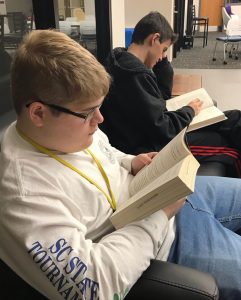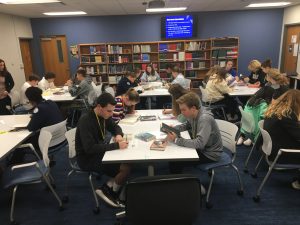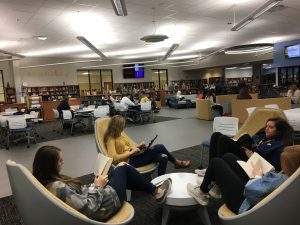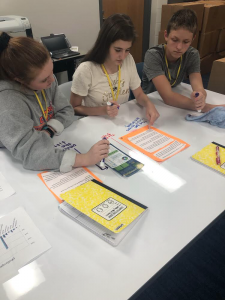
Photo by Tyler Nix on Unsplash

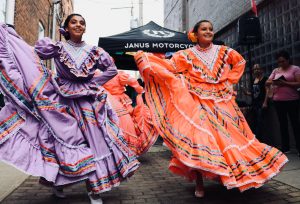
Learning about our families through the Family Heritage Project

Blog, Collaboration

By: Julia López-Robertson, University of South Carolina and Rocio Herron, Jackson Creek Elementary School

Last fall I taught a Family Dynamics course and was searching for a way to engage my undergraduate students in meaningful experiences with children and families; the course carries a community service component that is left up to the instructor to design and implement. I sought to involve my students in experiences that would help them develop strategies for authentic family and community engagement that they could later draw upon when they became classroom teachers.
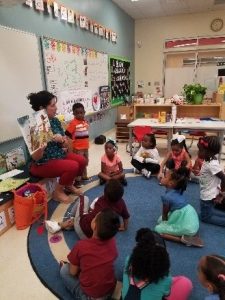
I am very fortunate to be able to spend time in a local Pre-K classroom with a teacher, Rocio Herron, who willingly shares her students and families with me. Rocio has taught at Jackson Creek Elementary School since the school opened three years ago; the majority of the school population is African American (73%), followed by Latino students (13%), and 100% of the students receive free/reduced lunch.

Rocio and I have a history; she was my youngest son’s Pre-K teacher a few years ago (he is now 15). Rocio and I share similar views on teaching and learning and family engagement; we believe that children have a right to their language; children must be actively engaged in their learning; teachers must learn about their children lives outside of school in order to better teach them; and that trusting relationships with families are the cornerstone of teaching.

Family Heritage Project
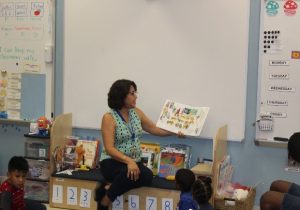
I spend Friday mornings in Rocio’s classroom engaging the children in bilingual (Spanish/English) read alouds, songs, dances, and games. One Friday I mentioned to Rocio that I was teaching a course with a community service component and wondered if she had any ideas for my class. I explained the time commitment and my goals for the project and she excitedly exclaimed that she had a Family Heritage Project she was looking to do that would involve all three Pre-K classrooms.  
The purpose for the Pre-K Family Heritage project was to get to know the children and their families by engaging them in a project about their family. Rocio explained that she also wanted the families to know that they all had things to be proud of and to contribute to the school and society in general; too often our immigrant families and families of color are made to feel insignificant and that they have nothing to offer our schools or their children. Through the project, the families would investigate their heritage, family, and culture and uncover for themselves the tools they possess that can be used for helping their children learn; i.e. language, sewing, gardening.  I wanted my students to view the families as contributors of knowledge and see them through an asset-based lens where their funds of knowledge, their community-based ways of knowing (Moll, Amanti, Neff, González, 1992) are recognized as valuable instruments for school learning.  
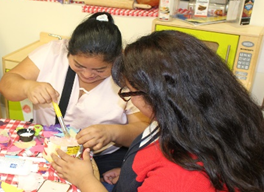
The Family Heritage Project spanned a few weeks in the fall semester. Families were asked to come to school on three evenings; my students and I participated in all activities that took place over the three visits. The first evening was spent getting to know each other; Rocio engaged the families in a read aloud followed by a discussion, families sang songs that the children did in school, families played school games with the children and we all got to know each other. We expanded the view of ‘family heritage’ to include things that you do together as a family because we wanted to be inclusive of all families. Rocio asked them to think about things that they did together and gave the example of her spending time at the beach while in her home country of Costa Rica; she showed her beach bag and other artifacts. I shared that my family enjoyed going on road trips and explained that my artifact would be a car and a roadmap.
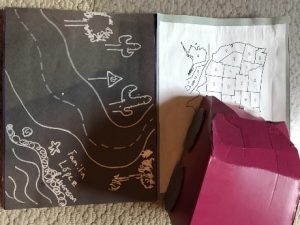
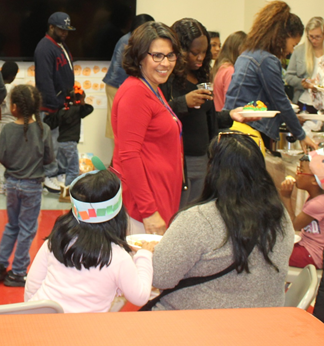
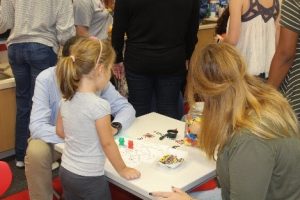
The second evening the families worked on creating a physical representation, an artifact, of their family and/or family heritage using supplies we had at school; paper, cereal boxes, soup cans, etc. The only rule for the artifacts was that they had to be handmade, nothing could be store bought. There was so much excitement, so many conversations and a busy hum filled the room! The third and final evening was a potluck celebration where each family shared their artifact and story with the group, the children presented a song, and we celebrated with a meal. I shared my car and road map representing our love of road trips, my students also shared their various artifacts as did all of the teachers. Artifacts were displayed on tables for all to see.  Once everyone shared, we had our meal which was the annual Thanksgiving celebration.
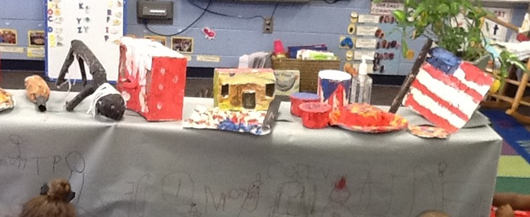
As I walked around, I heard laughter, families making connections with one another and sharing stories!   It was truly joyful!

What would we do different?

We were so eager for the project that we held the events in one month! We realize that having the meetings so close inhibited attendance, especially for the second meeting. The next time we do this, we will space out the meetings over a couple of months or over six weeks. 

Closing thoughts

As noted above immigrant families and families of color are often viewed through a deficit lens where what they do not posses is highlighted, for example; families do not know English or they live in a high poverty area. One of our main goals for the Family Heritage Night was for families to uncover their own riches and recognize that they indeed posses knowledge, skills, and strategies that will help their children succeed in school.  Engaging the undergraduate students helped them see this firsthand and also helped them see that family engagement is not scary. Finally, if we approach our families with love and respect and demonstrate that in everything that we do and say, our families begin to trust us and a trusting relationship with families is the foundation upon which everything is built.

References

Moll, L. C., Amanti, C., Neff, D., & González, N. (1992). Funds of knowledge for teaching: Using a qualitative approach to connect homes and classrooms. Theory into practice, 31(2), 132-141.

About the Authors

Julia López-Robertson is a Professor of Instruction & Teacher Education at the University of South Carolina.
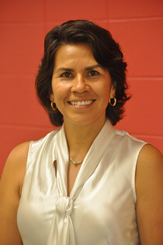
Rocio Herron is a Pre-K teacher Jackson Creek Elementary School.

Where Does It All Begin?

Blog, Research

By: Dr. Kavin Ming, Winthrop University

For the month of August, our blogs addressed a variety of topics related to the idea of using culturally responsive teaching with English Language Learners.  Specifically, we identified strategies to strengthen culture-sensitive instruction; highlighted the importance of allowing students to use their first language, and determined key questions to ask ourselves as we implement culturally sustaining pedagogy.  The root of these positive practices starts with cultural competence. 

What is Cultural Competence and Why Does It Matter?

Cultural competence is the ability to successfully teach students from cultures other than one’s own.  This requires a deep understanding of complex awareness and sensitivity, a wide body of knowledge, and a set of skills that, when taken together, produces effective cross-cultural teaching.  One key element is acquiring this capacity is having a keen awareness of one’s own culture and the culture of others. I once read where an author said that you cannot truly teach students if you don’t really know them.

Photo by sydney Rae on Unsplash

An awareness of one’s own culture and the culture of students impacts the types of books read, the kinds of materials selected, the variety of strategies used, and the evaluation practices implemented.  Culturally competent educators use their cultural competence as a guide for action when working with students, parents, and members of the community.

Culture Matters

Student achievement continues to be at the forefront of all educational entities, including district, state, and federal organizations.  The poor performance exhibited by large groups of diverse students in many areas around the country leaves many asking what can be done to move these students to higher levels of achievement.  As the demographics of schools have changed, teaching and learning has not followed the same evolutionary pace.  For a number of educators, traditional methods of instruction have predominated, and these methods do not reflect a genuine consideration for effective instructional methods and the impact of culture on teaching and learning.  Thus, one of the most significant implications of professionally developing cultural competence is the basic understanding that culture does impact learning, and by adapting a different stance, based on an understanding of the significance of culture, students from diverse backgrounds can make academic gains. 

Knowing Your Students Begins with Introspection

Photo by Taylor Smith on Unsplash

Teachers who look within analyze their own feelings towards those who are culturally different, determine how those feelings relate to the dominant culture, and think about what frame of reference influences these feelings.  Key factors in understanding diverse students include learning about each person, and taking a personal interest in establishing positive relationships.  It also includes continuously questioning one’s self in order to clarify salient issues.  Teachers can engage in introspection as part of the planning or preparation period on a daily, weekly, or monthly basis.  This frequency ensures that it is an ever-present part of their teaching routines.

Coupled with learning about one’s students, and questioning one’s self, teachers can develop cultural competence through personal development.  Reading and seeking to understand the profiles and experiences of different cultures introduces teachers to contexts that help them identify similarities and differences within and across groups.  A starting point is for teachers to purchase or borrow books that are written by people of color, including history, literature, and education.  Some of these books include:

  • Women of Silk by Gail Tsukiyama
  • The Circuit: Stories from the Life of a Migrant Child by Francisco Jimenez
  • I, Too, Am America by Langston Hughes
  • Song of Solomon by Toni Morrison
  • Cry, the Beloved Country by Alan Paton

It’s Personal

In order to teach students, teachers must first reach them.  Teaching starts with the heart.  The best laid lesson plans will not amount to much if teachers don’t really know who are the students sitting in front of them.  When students know that teachers care about them, and are interested in them as individuals, they will open themselves up to hearing what the teacher has to say.  Culture matters, and effective teachers recognize this importance and strive towards achieving cultural competence. 

References

Aceves, T. C., & Orosco, M. J. (2014). Culturally responsive teaching (Document No. IC-2). Retrieved from University of Florida, Collaboration for Effective Educator, Development, Accountability, and Reform, Center website: http://ceedar.education.ufl.edu/tools/innovation-configurations/.

Au, K. (2009). Isn’t culturally responsive instruction just good teaching? Social Education, 73(4), 279-183.

Diller, J. V., & Moule, J. (2005).  Cultural competence: A primer for educators. Toronto, CA: Thomson Wadsworth.
Howard, T.C. (2003). Culturally relevant pedagogy: Ingredients for critical teacher reflection. Theory into Practice, 42(3), 195-202.

Pang, V. O. (2001). Why do we need this class? Phi Delta Kappan, 76(4), 289-292.

About the Author

Dr. Kavin Ming is a Professor at Winthrop University in Rock Hill, SC.  She is currently serving as the Department Chair in the Department of Curriculum and Pedagogy.  She teaches undergraduate literacy methods courses and graduate content area literacy and practicum courses.  Kavin’s research interests include at-risk student populations, culturally responsive pedagogy, content area literacy instruction, and multisensory teaching of literacy skills.  Kavin can be contacted at mingk@winthrop.edu.

Culturally Responsive Instruction to Improve English Learners’ Academic Oral Language Development

Blog, Research

By: Dr. Elke Schneider

What is culturally responsive instruction and why is it important?

Culturally responsive instruction (CRI) refers to teaching any content area in a way that infuses and honors knowledge about learners’ socio-culturally, linguistically, ethnically, racially, religiously, and socio-economically unique backgrounds. It not only makes the purpose of learning about specific content learner-relevant by connecting it to their cultural and linguistic frame of reference but also provides necessary language support and cultural explanations in interactive, authentic and carefully structured learning opportunities.  In CRI, cultural, verbal and nonverbal components are made explicit to help diverse learners succeed. Therefore, the strategies below address these aspects.

Non-native speakers of English or English learners (ELs) present the fastest growing group of students in the US and in the Carolinas and are part of an increasingly diverse student population that requires CRI.  Such instruction provides ELs with explicit guidance on how to orally communicate effectively in social and academic settings.

Photo by iMattSmart on Unsplash

Effective CRI is based on a strong rapport with ELs. It unlocks EL’s motivation to overcome challenges based on language and acculturation needs.  In collaboration with ESOL teachers, one can find out about ELs’ schooling background, home life, and possibly any key experiences ELs may have had prior to entering a content area teacher’s classroom that may impact learning success such as traumatic experiences coming to this country or any non-academic strengths that could be utilized to motivate learning content.

Why is it important to focus explicitly on oral language development?

 Oral language skills provide the basis for proper development of all other academic skills including listening, reading, and writing skills.  Native speakers develop oral language skills during the first five to six years of their lives before learning to read and write. However, ELs moving into the new culture later in life, must acquire oral, reading and writing skills fast all at the same time and are forced to participate in state testing from the start without any accommodations.

What constitutes oral language skills?

Developing social and academic oral language skills includes culture-specific verbal and nonverbal skills that require years to reach native speaker quality.  It takes approximately 2-3 years to develop social oral language skills needed to engage properly in social settings such as recess, or after school experiences. Academic oral language needed to verbalize and reflect on academic content takes at least seven to nine years. Both types of oral language skills require not only proper command of vocabulary and sentence structures but also of culturally specific nonverbal skills like gestures, postures, eye contact, proper pausing, body distance from speakers, and tone and volume of voice to make oral communication effective.

The following selected strategies are specifically geared towards ELs and focus on academic language skills development but can be implemented with all learners.

Strategies for culturally responsive academic oral language instruction

  • Make the purpose of an oral exchange about a topic clear and relate it to ELs’ world of reference. Ways to do that are:  (1) Start a motivating dialog about a picture or short film clip that is relevant to ELs and thus prompts personal connections and opinions about a topic; (2) Ask students to share a personal experience to help them see the purpose of a content area task; (3) Show concrete items or ask students to bring in an item that represents something that helps them relate to a topic in dialog with peers. 
Photo by Charlein Gracia on Unsplash
  • Plan for routine pair and group discussions prior to or after listening to  teacher presentations, viewing or reading tasks

Routinely infusing oral academic dialog opportunities allows ELs to practice those structures. Generally, infuse 5 minutes of oral processing for every 3 minutes of teacher talk. Cooperative learning dynamics as offered in think-pair-share orally or think-pair-share orally-write, think-write-pair-share orally or view (picture, video clip)- pair- draw information- share orally allow ELs to critically process information with their multicultural and multilingual frames of reference. For more details, see Zwier (2019).

  • Explicitly teach effective dialog features and allow oral pair or small group practices. On posters and personal handouts for students, flow charts display academic dialog features. Among them are gestures and language structures to: (1) demonstrate active listening skills (2) ask for more details or clarifications, (3) share culturally comparative information, (4) make sure everyone has contributed a comment, (5) keep dialog partners on task, (6) Compare and contrast information, and(7) summarizing what was said.  For details, see Zwiers (2019). Also, explicitly discuss how such oral features differ by allowing ELs to share how dialog patterns compare to their cultures. Highlight also how dialog structures change when talking to person of authority versus a peer.
Photo by Brett Jordan on Unsplash
  • Explicitly teach vocabulary in common phrases and sentence structures along with nonverbal communication features.

After analyzing what key vocabulary and associated phrases are needed for ELs to engage in proper academic dialog about a topic such as the water cycle or facts that led to the Civil War, allow ELs to practice saying these key words before using them in context. For instance, ELs will not participate in dialog about the photosynthesis, if they are not comfortable saying the word. Therefore, repeated syllable-by-syllable practice of the word is important. The entire class can be engaged in doing so chorally.  Teachers have students repeat a word like photosynthesis syllable by syllable. In the intonation and speed modeled by teachers, students repeatedly add one syllable to the next until they can say the entire word fluently. Then, it is used in common phrases (successful photosynthesis, failed photosynthesis) and sentences (A photosynthesis requires…, A photosynthesis occurs when….).Such essential vocabulary with common sentence structures are then collected on content specific vocabulary cards that allow ELs to draw mnemonic devices and references to their first language as needed (i.e. photo and foto mean the same in Spanish as in English). Other words with the same component (photograph, photographer) can be added to help expand vocabulary.

  • Explicitly teach nonverbal communication features

Given that non-verbal communication constitutes about 85% of in person information exchanges, teaching non-verbal communication features explicitly along with the language structures is paramount. Brief role plays in which one student asks questions and the other one answers them can serve as a practice for verbal and nonverbal oral language features. Students can prepare written scripts or work from brief notes on cards. Such performance can to demonstrate gained knowledge while implementing proper eye contact, gestures, postures, tone and volume of voice. Students can role play interviews of experts on science facts, a historic civil rights movement leader or a character in a novel or a writer. For each scenario, proper nonverbal skills such as eye contact, tone of voice, gestures, or body language can be practiced.

The following resource offers many specific suggestions for content area
instruction including evaluation charts:

Zwiers, J. (2019). Next steps with academic conversations. New ideas for improving learning through classroom talk.

Information about different specifics about language characteristics of over 30 language:

Swan, M. & Smith, B. (2001). Learner language: A teacher’s guide to inferences and other problems. London, UK: Cambridge University Press.

About the Author

Elke Schneider (PhD) is professor for Literacy, Special Education, and Second Language Learning at Winthrop University and has worked in this field for 25 years. She has supported regional and statewide efforts in training teachers at all grade levels and content areas in meeting learning needs of English learners with research-evidenced practices.

Culturally Sustaining Pedagogy for Emergent Bilingual Students

Blog, Research

By: Daniel Stockwell, Clemson University PhD Student

Who Are Emergent Bilinguals, and What is Culturally Sustaining Pedagogy?

I was once an emergent bilingual (EB) student. My family moved to Ukraine right before I entered first grade, and while I spoke English at home, the language of school was Ukrainian. My first experiences with public education were in a Ukrainian school roughly one month after arriving in the country. I did not speak the language, and I did not know much about the cultural norms of the classroom, but I needed to be engaged in authentic, meaningful learning. Instead, the teacher gave me toys and told me to sleep whenever I wanted to. 

Emergent bilingual (EB) students in the United States are those who speak a language other than English at home and are learning English at school but are not considered proficient in English. These students are often referred to as English Language Learners (ELLs). García and Kleifgen (2010) argued that they should be referred to as emergent bilingual students to highlight their linguistic strengths, not what they lack, and I completely agree with them.

Photo by Belinda Fewing on Unsplash

The languages a person speaks are essential components of their culture, so EB students bring with them unique linguistic strengths and cultures into the classroom. To engage these students, as we should engage all students, in rigorous academic instruction and participation, educators will need to implement culturally sustaining pedagogy (CSP) in their classrooms. The James A. and Cherry A. Banks Professor of Multicultural Education Django Paris (2012) explained that CSP is part of the “struggle toward an education that honors and extends the languages and literacies and practices of our students and communities in the project of social and cultural justice” (p. 96). CSP is no single list of practices or strategies. Rather, to implement CSP, teachers must learn about and value their students’ unique cultures and ways of knowing and doing. Teaching practices that implement CSP stem from this knowledge of individual EB students.

What Questions Can I Ask Myself as I Implement Culturally Sustaining Pedagogy with Emergent Bilingual Students?

Good teachers reflect on the instruction they provide, they look at formative and summative assessment data, and they ask themselves questions as they strive to improve and work to engage students in meaningful learning. This is a never-ending process because educators are life-long learners. No list of questions (or strategies) can cover everything educators could or should think about as they implement CSP with EB students. All students are different and unique. EB students come from diverse cultural backgrounds, nationalities, and families, who all have their own ways of using language to learn. So, educators will need to keep asking questions. The list that follows is meant to help educators begin thinking about how they can implement CSP with their specific EB students. It is a start that emphasizes the hard questions we all have to ask ourselves, over and over again.

How do I view my EB students?

Do you have deficit perspectives of EB students? Do you find yourself unconsciously associating their limited English proficiency with their intelligence? Do you think their culture is somehow inferior to your own? 

Photo by Josh Calabrese on Unsplash

If educators have deficit perspectives of their EB students, teachers will likely have lower expectations for their academic achievement, which has long-lasting consequences for these students.

Imagine trying to apply to college if you were tracked and placed in lower-level courses based on your perceived proficiency in a different language. Many EB students are schooled in contexts that do not give them access to advanced placement (AP) courses while they maintain the label of English Language Learners. In these settings, the language needs of EB students are placed above their academic needs. Unfortunately for these EB students, the most important predictor of student persistence in obtaining a baccalaureate degree is the academic rigor of their high school courses (Wassmer et al., 2004). EB students have a right to rigorous academic engagement. Do you think your EB students are ready for the kind of instruction they deserve?

Who does the accommodating in my classroom?

Do your EB students have to do all the accommodating necessary for learning and teaching to take place? Do they always have to change the ways they talk and think? How they interact with authority in the classroom? How they learn? How they view schooling and their role in their own education? 

EB students and their parents want to be involved in their learning and in the culture of the classroom, but they should not have to change everything about themselves in order to participate fully. Also, parents who do not speak English want to help their children with homework assignments; are you making it possible for them to be involved? 

Nieto and Bode (2018) advocate for teachers to participate in mutual accommodation. This means educators need to be willing to make some accommodations themselves to help EB students achieve academic success. Schools, parents, and students need to work together. Teachers need to make sure to accommodate their instructional practices so that they are culturally sustaining. Teachers need to affirm the languages, cultures, and ways of knowing and doing that their EB students bring into the classroom. 

What counts as official knowledge in my classroom? Who counts as knowledgeable?

How do you view your role as the teacher? Is it up to you to fill the students minds with as much content as possible? Or do you see your classroom as a place for you and your students to build knowledge together? If so, what counts as knowledge? Whose knowledge is valued and whose is ignored? 

Photo by Andrew Ebrahim on Unsplash

Teachers can plan times for their EB students to teach the class so that they can be the experts for a while. Allowing EB students to share elements of their culture, creative ways of thinking about a problem, or ways of knowing and doing that are different from the dominant group’s shows the entire class that all students have knowledge that is official and valuable. This is culturally sustaining; it communicates to EB students that their cultures are not just acknowledged by schools but are welcomed and valued.

Is my classroom “English Only”?

Do you tell your EB students to speak or write only in English in your classroom? Are they allowed to read in the language they use at home, or only in English? 

Martínez (2010) studied EB middle school students in East Los Angeles to explore how they used Spanglish daily in their English language arts and social studies classes. While some use the term Spanglish in the pejorative sense, I do not. Martínez, other researchers, and I use this term to refer to the skillful and creative use of features of both Spanish and English to communicate. Martínez demonstrated that the EB middle school students used Spanglish in ways that met the California state standards for listening, speaking, and reading. Teachers should consider allowing other languages to be used in class to give students access to rigorous academic engagement and to give them practice with using language to communicate in meaningful ways. 

Teachers can allow their students to engage in translanguaging. Researchers and educators have a few different conceptions of what translanguaging is; one understanding is that translanguaging is “the deployment of a speaker’s full linguistic repertoire without regard for watchful adherence to the socially and politically defined boundaries of named (and usually national and state) languages” (Otheguy et al., 2015, p. 283). When EB students can use their complete linguistic repertoires, they feel valued and that their knowledge matters. Also, this allows them to engage in higher-order thinking because they can analyze, evaluate, and create more easily when they are not restricted to one language. Furthermore, when it comes to writing, teachers should consider the purpose of writing. Who are EB students writing for? Why are they writing? Teachers know that the process of writing, not the product, is when most learning takes place (Velasco & García, 2014). Allowing EB students to translanguage as they work on their writing assignments engages them in rigorous instruction; even if their English writing skills are not at grade level, their thinking can be. Translanguaging opens up doors of opportunity for their advancement as writers. 

What are my goals for EB students? Do you have high expectations for them? Does your school measure their success with EB students based on how many are reclassified out of the English Language Learners program? Is your highest goal for them to be able to graduate from high school one day? 

A Final Question

Photo by Emily Morter on Unsplash

This last question is about asking yourself, “What are the goals of my EB students for themselves?” If we do not know the personal goals of our EB students and their families, we probably are not teaching in ways that are culturally sustaining. 

If EB students’ linguistic skills and cultures are valued and incorporated into the official curriculum in schools, EB students will be able to pursue their own goals, and we will be better positioned to help them. 

References

García, O., & Kleifgen, J. A. (2010). Educating emergent bilingual students: Policies, programs, and practices for English language learners. Teachers College Press.

Martínez, R. A. (2010). “Spanglish” as literacy tool: Toward an understanding of the potential role of Spanish-English code-switching in the development of academic literacy. Research in the Teaching of English, 45(2), 124–149.

Nieto, S., & Bode, P. (2018). Affirming diversity: The sociopolitical context of multicultural education (7th ed.). Pearson.

Otheguy, R., García, O., & Reid, W. (2015). Clarifying translanguaging and deconstructing named languages: A perspective from linguistics. Applied Linguistics Review 6(3), 281–307.

Paris, D. (2012). Culturally sustaining pedagogy: A needed change in stance, terminology, and practice. Educational Researcher, 41(3), 93–97.

Velasco, P., & García, O. (2014). Translanguaging and the writing of bilingual learners. Bilingual Research Journal, 37(1), 6–23.

Wassmer, R., Moore, C., & Shulock, N. (2004). Effect of racial/ethnic composition on transfer rates in community colleges: Implications for policy and practice. Research in Higher Education, 45(6), 651–672.

About the Author

Daniel is a Ph.D. student in the Literacy, Language, and Culture program at Clemson University. Before entering this program, he was a high school English teacher in Greenville, South Carolina.

Listening Beyond the Accent: Valuing the Emergent Bilingual Students in our Schools

Blog, Teaching

By: Elizabeth McCauley McDonald, South Carolina Elementary School Principal

The Challenge

I still remember the moment a teacher walked “Marco” to my classroom. I went to say hello and he said, “Hola.” As he entered the room and had a seat, the teacher whispered to me, “he doesn’t speak English.” I remember the feeling in the pit of my stomach, because I was terrified. I took three years of Spanish in high school and one semester in college, but I could only remember a few words and phrases. Conjugating a verb would have been a miracle! I instantly began to panic because I did not know how I was going to help a student I could only communicate with in broken phrases. Immediately, I did what most first year teachers would probably do…I looked in my class, found my only other Latinx student in the classroom and asked her to help me communicate with Marco. He was in my classroom for approximately three months before he moved away and in the short three months of being in my classroom, he transformed my teaching practices. 

Photo by Jon Tyson on Unsplash

While I know that my instructional practices with Marco were not the most useful or the best practices, he always walked in my class with a smile and was willing to allow me to practice my Spanish with him. See, Marco was fluent in Spanish and could read in Spanish. He was a highly intelligent student, and even with the language difference, he often outperformed half of my English only students. In that short three month period, I saw Marco step out of his comfort zone, in small group settings, and practice speaking English with his peers. When we worked together one-on-one, I would attempt to speak Spanish and he would practice English. When we just couldn’t connect the dots between the two languages, he began to call for the student in class that spoke both languages to translate – he became his own advocate. 

I saw Marco for who he was and I valued his language and his culture which created an environment where he felt comfortable enough to practice English out loud. He went from being unwilling to speak a word to anyone in the classroom, except me, to actively engaging with his peers. As he became more vocal, more of his English only speaking peers began to engage with him and embrace his language and want to learn Spanish as well. In all honesty, to me those moments were magical. My English only students seemed to realize that Marco was not behind, or not as smart as them, simply because he spoke a different language and English with a thick accent; instead, they heard beyond the accent and saw Marco for who he was, someone who was extremely knowledgeable, smart and an emerging bilingual. My English only students wanted to also be able to speak two languages. 

Everyone noticed when Marco stopped coming to class. He and his family moved to California. While, I most certainly did the best I could – speaking slowly, using visual pictures and my hands to describe words, encouraging collaboration with peers and one-on-one conversations with me, providing tests in Spanish (thank you Google Translate), I can only imagine how much more I could have done for Marco if he was in my class after I gained my ESOL certification, or even after I had taken one ESOL course. 

Lessons Learned

While I met Marco in my first year teaching, there are a few lessons that I have kept close with me from that experience.

Allow students space to use their first language on their journey to acquire a second language.

Photo by Matt Howard on Unsplash

Can you imagine an English only speaking student enters their ninth grade French course for the first time and the teacher tells them they are only allowed to speak French, which they do not know yet, and the teacher only speaks to them in French? Most parents would be in an uproar because the students do not have foundational knowledge of the language, language structure, or language vocabulary, but they are being held to a standard of fluency and proficiency. But, yet and still, we ask emergent bilingual students to do that each and every day. Instead of allowing them to use their language as a bridge, we expect them to make a leap across uncharted territory into the unknown, without support. This has to stop! 

Allow students to use resources in their first language.

One thing that was abundantly clear, is that Marco could read and speak Spanish fluently. Many of our emergent bilingual students are coming to school with skills in their first language, but how often do we, as educators, leverage that knowledge? Through the use of Google translate, I was able to allow Marco to complete his assessments in his dominant language. I would provide Marco with the English and Spanish versions of his tests and quizzes. If Marco stayed longer, I would have tried to phase our usage of the Spanish document as a support and supplement, if he was ready for it. In fact, I once taught a German exchange student, and we were able to do just that. Allow students to show you who they are and what they can do. Support them in the continued development of their first language as they acquire English. Show interest in their language, learn what you can so that you can communicate with your student in their language of comfort, before you require them to stretch to yours. 

Now, I know what some folks are thinking, but what about the state assessments that require the usage of English? Well, that’s why you have to continue the work and continue to support your emergent bilinguals in their English development. I think we could also argue that assessments given to emergent bilinguals in a language other than their first language, especially when they can read and write in their first language is problematic, but that would be a whole other blog post. 

The designation of a student as an English language learner or emergent bilingual has no bearing on a student’s intelligence. 

Too often, educators are surprised when students like Marco perform well on assessments and can understand and analyze content. The ability to speak more than one language is often seen as a value added when the first language is English and the second language is… well, not English. Too often we see students who speak two languages, but due to their primary language being a language other than English, it is seen as a deficit. This has to stop! Linguistic prejudice and linguistic racism is real and we all must do the work to self-identify the language biases we hold, and we must do that work ourselves. Furthermore, we need to see all emergent bilingual students as walking into our classrooms with additional knowledge, and that should not be determined based on the geographic location associated with their first language.

Into the Beyond

Photo by Mathew Schwartz on Unsplash

As students enter the classrooms in our school buildings this year, I’m calling for all educators to work on leveraging the funds of knowledge students bring with them to school each and every day. Leverage the language and the cultural practices that create the foundations on which students build their understanding. Support student development of their first language, in addition to supporting their development of English. Most of all, seek to understand your students, and not just to have your students understand you. It’s only at this point that we can move into the beyond, beyond listening to just the accent, beyond preconceived ideas of what it means for a student to be an emergent bilingual, and we can begin to center our students’ experiences in meaningful ways to help them process the language around them.

About the Author

@MrsEM_McDonald on Twitter

Elizabeth McCauley McDonald is an Assistant Principal at Northside Elementary School in Seneca, South Carolina. She holds a Bachelor’s in Secondary Social Studies from Clemson University, a Masters in Education from Anderson University and a Masters in Educational Administration from the University of South Carolina. Elizabeth is currently pursuing a PhD. in Literacy, Language and Culture at Clemson University. Elizabeth also serves as the LiD 6-12 Blog Editor.

Culturally Responsive Instruction for Non-Native Speakers of English

Blog, Research

By: Dr. Elke Schneider, Winthrop University

What is culturally responsive instruction and why is it important? 

How would you feel if you involuntarily had to leave all you knew and were comfortable with, and found yourself in a completely new environment, including a school where everyone spoke a language you could not understand, and where people interacted differently than you are used to seeing happen in the culture you came from? How would you feel, if you did not even know how to ask for a bathroom break, or were not sure if it was safe to eat the unfamiliar food that you saw served in the school cafeteria? For some of us who have never moved far from the environment and home culture of our initial upbringing, this might be really hard to imagine. It would probably come close to a nightmare that you wished you could wake up from and forget.  

Such experiences are common for non-native speakers of English, or English Learners (ELs) who represent the fastest growing community of learners in our public schools nationwide as well as within the state of South Carolina. Many of them have recently moved into our state and only know themselves in their home language and culture. Coupled with this newness, ELs have to participate in state standardized testing without integration time, and their school performance is part of annual school report cards. All this puts pressure on content area instructors to have strategies at hand that help ELs succeed quickly.

ELs, along with their classmates, present a potpourri of diverse learner backgrounds due to different socio-cultural, ethnic, religious, linguistic, and socio-economic experiences. Teaching in a culturally responsive way actively integrates these differences into instruction in which a) a culture of respect for differences and diversity is fostered as an enrichment and asset for all, b) common life challenges are seen as connecting anchors amidst apparent differences, and c) knowledge is built in such a way that every student has the same fair chance to succeed. 

Photo by Sandy Millar on Unsplash

Specifically, culturally responsive instruction thus provides explicit opportunities for students to link the newly learned content with what they already know. It infuses a variety of different, multisensory, carefully structured learning opportunities that occur often through cooperative learning interactions. These allow ELs to learn in the context of natural exchanges with peers and teachers. Such instruction requires teachers to model different learning and problem-solving strategies explicitly and to make academic language structures and associated nonverbal behavior patterns explicit. 

The interconnectedness of acculturation and language acquisition

Acculturation refers to the process of integrating a representative of a minority culture into a majority culture. This includes accepting and learning social interaction patterns and the language of the majority culture. Acculturation and language acquisition are therefore tightly interrelated. This means for ELs in the school culture that the safer and more socially integrated ELs feel, the faster and more successful is their learning progress. This is true for all learners with language and cultural experiences different from those of the main culture. While this blog focuses only on ELs, many of the shared strategies can be considered for the integration of learners of other minority groups.

Strategies to strengthen culture-sensitive instruction of ELs

Helping ELs understand the American school culture

Photo by Sam McGhee on Unsplash
  • Create video clips about essential features of the school culture (i.e., school nurse, bus or morning routines, homework assignments) or routine tasks and expectations in your content area (i.e. science lab procedures, history project) in collaboration with colleagues and administration. These, both ELs and their parents (i.e., during parent conference times) can watch repeatedly until they understand the shared routines or procedures when the oral explanations are provided in several most commonly used languages. Each can be saved separately so they can be shared among teachers as needed.

Activating ELs’ unique contributions to the learning community

  • Allow ELs to use their native language to make connections with the content presented in English. Canadian multilingual learning researcher Jim Cummins stresses the importance of allowing the use of ELs’ first language in school because, if denied, an essential part of ELs’ identity and livelihood is squelched. This in turn impacts the learning progress negatively. 
  • Examples could be a) providing space on graphic organizers to note a realization in the first language, b) allowing ELs to use their native language as they figure out tasks or work together with others by using a bilingual dictionary and translation digital devices, c) pairing up several ELs with native speakers so clarifications can occur naturally in two languages.  
  • Prior to any topic, activate ELs’ prior knowledge by eliciting experiences from their home culture where appropriate (i.e., wild life, weather, socio-cultural routines, historic sites, historic events, or how basic math skills were taught in the home culture).

Infusing culturally and linguistically sensitive content instruction

Photo by NeONBRAND on Unsplash
  • Provide repeated opportunities for ELs to orally repeat essential academic language structures used with a content through whole or small group choral response. This builds ELs’ confidence in using academic language when engaging in natural group interactions with peers. Such oral practice also provides the basis for subsequent writing tasks. 
  • Provide Illustrations in handouts, posters, and/or on PowerPoint presentations with subtitles in English for each step-in procedural task (i.e., math task, science project, history report). This makes content more comprehensible and allows ELs to participate in community learning tasks more successfully.

Building culturally sensitive relationships and understanding

  • If something does not feel right in the communication process (verbal and/or nonverbal), do not ignore it, rather seek clarification in a way that allows an EL to keep his/her face. Often ELs do not feel comfortable asking questions or acknowledging confusion, especially not in front of peers. Therefore, it is the teacher’s responsibility to seek clarification, best one-on-one. 
  • Teach all students about how to be a culturally responsive citizen. This includes building empathy for differences and practice of conflict resolution through explicit reflective dialog and role play as needed. It also includes clarifying what bullying is and what the consequences are for such behavior in the classroom learning community and during recess. It also includes teaching all students how to act respectfully towards each other. Positive behavior reinforcement of appropriate interactions can provide meaningful incentives.

Assessing ELs’ acquisition of academic knowledge

  • Preteach test language and response structures for different test tasks. This is important because American common test types may not be familiar to ELs nor may they have the language capacity. Collaborate with ESOL teacher/s on this as well.
  • Provide alternative assessments. ELs who cannot present their knowledge with proper academic language yet need to share their knowledge via projects that allow them to illustrate or gesture what they know or label graphic images with what they know. Provide word banks to use for responses, and simplified sentence structures and number of response choices in test tasks. 

These are just a few ideas to infuse culturally and linguistically responsive strategies for ELs into content area instruction. The following three sources provide a variety of research-evidenced instructional practices beneficial for ELs to be culturally and linguistically integrated into the American education system.

Additional resources to investigate are:

a) Go to Strategies retrievable from: http://www.cal.org/what-we-do/projects/project-excell/the-go-to-strategies

b) 50 strategies for teaching English language learners by Adrienne Harrell and Michael Jordan (6th edition)

c) For more project-based content instruction see Dinah Zike’s foldables resources on the internet for math, science, social studies, math

About the Author

Elke Schneider (PhD) is professor for Literacy, Special Education, and Second Language Learning at Winthrop University and has worked in this field for 25 years. She has supported regional and statewide efforts in training teachers at all grade levels and content areas in meeting learning needs of English learners with research-evidenced practices.

What in the World Have you Been Doing?

Blog, Collaboration

By: Jeni Nix, SC School Librarian, and Rene Harris, SC Elementary School Principal

The Tale

There is a tale of a couple given a cruise as a wedding gift.  They were excited and grateful for the generous offering.  They embarked on the journey with great expectations. But once on the ship, their excitement and joy reversed mid-trip.  For most of the trip, they remained in their cabin. 

Photo by Arun Sharma on Unsplash

Near the cruise’s end, they met an elderly couple, and struck up a conversation comparing their impressions of their nautical excursions. The honeymoon couple shared how boring the trip had been, even expressing disappointment. But the elderly couple told how invigorated and engaged their experience had been, looking forward to the opportunity to travel this way again. Intrigued and perplexed by the evaluation of the honeymoon couple, they asked a series of questions. Did you go to the Deserted Island Luau party? Had you enjoyed the night of games in the Vegas lounge? Wasn’t the tropical water slide with exotic drinks at the pool bar amazing? The honeymooners looked at each other with puzzled faces. The wife spoke first and explained that they hadn’t experienced any of these events.  The husband chimed in that they were unaware that these activities were options, and questioned the cost of the happenings.  

The elderly couple now looked at each other with puzzled faces and smiled.  The wife spoke first, “There was no extra cost, these things were included in the cruise package.”  

“What in the world have you been doing!” the elderly man blurted out in confusion. 

The young couple’s embarrassment was evident. “Well, we’ve mostly been eating, sleeping, and walking along the edge of the ship.” That’s when it dawned on the seasoned pair that the honeymooners had never ventured beyond the edge, never explored the inside of the boat, or pursued all of the amenities their trip had offered. 

The Practice

As a young child, I loved to write but hated to read. I spent my entire youthful career on the edge of books, only walking among the book jackets and back covers, creating book reports and projects from a few marketing ads and summaries.  Cliff was my BFF.  It wasn’t until I was required to take the obligatory “Children’s Literature” course in grad school that I got to experience the joy and delight that an excellent book offers. 

The Secret Garden

As the instructional leader, I want to ensure that no child is left behind on the shore or in their cabin. I am honored to work with talented teachers who embrace our mission to promote reading as a pathway to success. Our explicit, overt attempts to celebrate reading as a choice versus chore have been productive and positive.  While I operate at the helm, standing in the bridge of the ship, our media center is the deck of our vessel with exponential and far-reaching impact. 

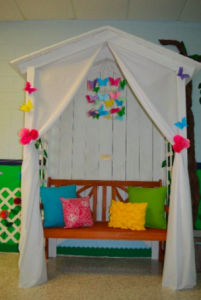
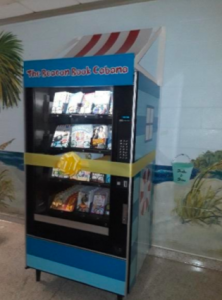
Our library is the center of our boat, helping us to enjoy a multitude of amenities propelled by its creativity and spirit.  Our book vending machine, reading lounge, Palmetto Shore amphitheater, and secret garden are all extensions of the media center and its strategies for promoting reading for enjoyment.  Icons of “what teachers are reading now” and endorsements of great reads, monthly celebrations of Terrific Readers are all portholes and pathways to the most happening place aboard our ship.  I may be the captain, but I know who is driving this rusty bucket… the Media Specialist.

Book Vending Machine

We strive to work together to create a print-rich environment where literacy is organically infused into our learning community. We strive to move away from extrinsic motivational tricks or reading tallies for counting’s sake. We model the importance of reading by being explicit about the value and joy of reading. As we cruise through our reading quest, we strive to ensure that every child enjoys the amenities along the way, so that reading is more than a rudimentary process, and becomes a lifelong pleasure. 

As my principal so eloquently painted the picture of a childhood spent on the periphery of the journey to immersing herself in a good book it reminds me of the fact that the library fills many different roles in our students’ lives. No matter what the reason for visiting, the library is a safe haven for all children. 

Reading Buddies

Before the pandemic, our students would come in daily seeking a variety of things. Some would be there because they were told to come and it was my challenge to lead them to the book that would finally make a trip to the library a treat instead of a mandate. For others, it was a place they sought out for their next adventure or to find a character or scenario that made them feel a little less alone. A place where they could see themselves between the pages and know there was someone in the world that saw what they saw or felt what they felt. That is why it’s more important now than ever before to strive for inclusive collections that equally represent all of the diversity in the students and families that we serve. 

In addition, librarians need to continue reaching out to students through social media outlets, and other platforms, to share new books and help them find the truth in the barrage of information coming at them every day. Our roles may have temporarily changed physical location but the importance and impact of the services we provide as librarians is more important than ever before. 

About the Authors

Mrs. Rene Wyatt Harris, Principal- Beech Hill Elementary School Rene has thirty-two years of teaching experience and is the principal of Beech Hill Elementary School.

Mrs. Jeni Nix, Media Specialist- Beech Hill Elementary Jeni has 25 years in education, as a teacher and a librarian in Dorchester District Two Schools. This Nationally-Board certified teacher is serving as the 2020-2021 SCASL School Librarian of the Year.

Photo by Paweł Czerwiński on Unsplash

For the love of literacy

Blog, Collaboration

By: Charlene Aldrich, retired literacy instructor

I KNEW from an early age that books had an important place in life.  I was adventurous and brave with Encyclopedia Brown.  I dreamed about being a nurse with Cherry Ames.  I pondered survival instincts through The Lord of the Flies. I cried about Rascal and fell in love on The Island of the Blue Dolphins. 

I was always the one who brought every textbook home on the first day of school.  I HAD to know what we were going to learn that year.  And besides, ‘Library’ didn’t begin until the second week of school!   

Photo by Brett Jordan on Unsplash

But I soon realized that magazines were pretty great also: Reader’s Digest, Good Housekeeping, even Popular Mechanics!  Whatever my parents had on the table became fodder for my mind.  So, maybe it wasn’t ‘books’ that were important; maybe it was just, plain reading!That made choosing a career pretty difficult – Write books? Work in a bookstore? Be a librarian? OR do research?  How does someone decide what they want to do for 40 years of his/her life?

Content Area Literacy and the Librarian

Read or write?   How about read AND write?  Isn’t that what teaching is all about?  That and having summers off? So what began in a second grade classroom morphed, over many years, into teaching Content Area Reading and Writing (CARW), first to students preparing for college courses and then to content area teachers who were required to become ‘reading and writing teachers’.  But that’s not exactly what the R2S law said; concerning teacher education, the law’s intention was for all teachers to be confident in USING reading and writing in their content area.  And who is the best resource for that?  The person in the school in charge of the books!  The librarian, aka media specialist.  

I LOVE providing reading and writing research, literacy resources, and instructional ideas for content area teachers to embrace reading and writing as valuable instructional practices.  Even better is when librarians sign up for my CARW courses.   You see, I believe that literacy is everyone’s responsibility and that collaborating across grade levels and across content areas improves the probability that literacy is possible.  

Photo by Wan San Yip on Unsplash

Librarians are in the perfect position to orchestrate this collaboration.  BUT you have to ask. They aren’t mind readers.  By becoming partners in literacy, you both can ‘do good things for students’.  HOW?

  • Parallel Reading suggestions connecting content areas
  • LMS Embedded Librarians for immediate and ongoing student access
  • Direct Instruction for efficient research

What does the number one provider of research information say about librarians? 

 “The primary purpose is to support the students, teachers, and curriculum of the school or school district. Often, teacher-librarians are qualified teachers who take academic courses for school library certification or earn a master’s degree in Library Science” (Wikipedia).

South Carolina only employs ‘teacher-librarians’ in the schools.  Yes, their duties overflow into media, but first and foremost, they are your partners.  They can connect content to reading resources; they can connect reading resources to students.  

Overall literacy proficiency is grown within the classroom; through the collaborative efforts of teachers and teacher-librarians, it overflows into students’ out-of-classroom learning experiences.  But the best indicators of overall literacy proficiency are the graduates/adults/employees/employers/parents who model lifetime learning through reading and writing.  They value the ability to apply their literacy  to listen, read, analyze, evaluate, and respond to the plethora of messages that the 24-hour media services produce.  

PS:  Summers off – the joke was on me.  I found out that improving reading, writing, and math literacy is a year-round gig.  And it was my pleasure to serve.  

References

Wikipedia contributors. (2020, May 18). Librarian. In Wikipedia, The Free Encyclopedia. Retrieved 20:32, May 26, 2020, from https://en.wikipedia.org/w/index.php?title=Librarian&oldid=957428603  

About the Author

After 20 years of growing literacy in under-prepared college students, Charlene retired to focus on state-wide literacy initiatives such as LiD, 6-12 and her R2S approved literacy courses at College of Charleston.  She lets her life speak by empowering teachers to have the confidence and competence to implement a literacy model of instruction in any content area and at every grade level. Her best Covid-19 memory is teaching her grandson Algebra 1 via phone calls, Zoom, ztext messaging, and FaceTime.  It was online instruction at its best – synchronously and interactively.

We Need S’More Literacy from the Library!

Blog, Collaboration

By: Amanda Harris, South Carolina High Media Specialist

I love reading books, cataloging and shelving books, shopping for books, and placing books in readers’ hands, but as a high school media specialist, all that fun with books is only a small portion of my actual job. As a highly qualified educator who shares my literacy instruction skills with students and colleagues every day, my role goes far beyond the library stacks.

Since it’s summertime and I’m a girl who loves chocolate, indulge me for a few minutes and let me explain the library’s role in school-wide literacy instruction as an ooey, gooey, warm, melty, delicious s’more. 

The Graham Cracker

The foundation of a s’more is the graham cracker, providing support and structure on both sides to hold the entire concoction together. My goal as a media specialist is to provide resources and support for all content areas so that all teachers can be more effective in guiding students to content-specific literacy. Even though my district has 1:1 Chromebooks and students may think they can just Google everything for research, someone still has to teach them how to wade through their search results! One of the most important items on my to-do list in this graham cracker part of my job is to actively recruit teachers to share their classes with me. Once I have led them to realize how desperately they needed to schedule time for co-teaching (sometimes with free coffee involved in the persuasion), I make a point of threading my info literacy standards and skills over and over through every unit I teach across the curriculum. 

When I’m handing out the metaphorical graham crackers for the s’mores, I have to be intentional with teacher relationships, creative with my curriculum ideas, and even a little bit repetitive with teaching the skills to students, but without these graham crackers, the whole s’more falls apart and students lose opportunities for big-picture literacy application across the curriculum. 

Mmmm…Chocolate

My favorite part of the s’more, of course, is the chocolate, and my favorite part of being a school media specialist is definitely the fun library offerings: student book clubs over Chick-fil-a lunch boxes, faculty book clubs with grown-up conversation over breakfast snacks, author visits, makerspace crafting days, games and Legos out on the tables, and independent choice reading checkouts. These are the pieces of the school-wide curriculum puzzle that make the whole idea of literacy more enjoyable. 

Photo by Allie on Unsplash

The obvious sticking point here is that by the time students reach high school, very few of them are going to seek pleasure reading opportunities or spend their free time hanging out with a book club. How do I offer chocolate for the s’mores of students who are reluctant readers? I’m grateful to have some fantastic colleagues (not just in the English department!) who value choice reading enough to bring their students to me for independent reading checkouts. Sometimes they have target genres, sometimes they have target themes, and sometimes they want students to just pick anything that looks interesting.

During this past year, we blocked off a weekly time with some of the English 1 and 2 classes to just come into the library for a routine sustained reading period. Their classroom teacher, my fellow media specialist, and I all sat down with them on the couches and modeled reading for fun, too! (Well, that was the plan. I actually spent more of my time up out of my seat, in the stacks, helping students find their next books to read, but that was fine with me!) When we suddenly switched to distance learning, I missed all of my students, but these two classes were the ones I most desperately wished to see.

Pleasure reading and finding a book to enjoy is the chocolate in the middle of the school-wide literacy s’more, and while I do love chocolate with all my heart, seeing reluctant readers find books they like and seeing students come to the library for fun in their free time brings me more joy than an entire one-year supply of my favorite Harry & David dark chocolate truffles.

Sticky Marshmallows

Photo by Rebecca Freeman on Unsplash

Finally, I must address the sticky, fire-roasted marshmallow that holds everything together between the graham crackers. At my school, this is the part of my media specialist role that doesn’t exactly fit the typical mold, but it just makes sense. If the library is the heart of the school and the media specialists should be dabbling in teaching with every department in the building, why not have your media specialist(s) serve as writing instructional lead teachers? 

I’m on a flex schedule and my teaching calendar does fill up with research projects and other library lessons. However, because there are two of us serving as full-time media specialists, we are able to schedule time to actively help teachers with writing instruction. We conference with teachers during their planning periods, or we go to their classrooms and help with a writing lesson or student writing conferences. The best part about this role is that sitting down to brainstorm a writing assignment with a teacher gives me an easy opportunity to market the library’s resources. 

I’ll be honest: Writing can sometimes be the stickiest part of school-wide literacy. Sure, everybody can fit more reading into their classrooms, but writing? Writing takes time to assess! Writing takes time to actually do in the classroom, precious time that is also needed to teach content-specific skills! Some students just don’t want to write, and it’s just more painful for everyone involved! Yes, yes, and yes. I totally get it, especially after 10 years in the English classroom and many hours of sleep lost to essay grading, but that doesn’t mean that writing instruction can just be swept aside. Writing = thinking, and it’s a critical part of the learning process.

Photo by Josh Campbell on Unsplash

Helping teachers regularly include more quality writing in their daily classroom routine has challenged me. I have had to study and learn more about how content literacy should look different across the departments, and I have had to lead some tense meetings, but I have also been able to see the exciting success my colleagues are having. To return to the marshmallow comparison, sometimes I accidentally drop my actual literal marshmallow in the fire, so I have to toss it and try again. Sometimes I don’t leave it in the fire long enough, so I have to try again. In the big literacy picture, writing instruction is the marshmallow, and sometimes we have to toss what we did and try again. Isn’t that what drafting and revising is all about? In the end, while the marshmallow is challenging to get just right, the finished s’more just isn’t complete without it.

Are you ready to go make some s’mores yet? If you want to get started on some figurative s’mores, go ahead and email your media specialist to get started on ideas for collaboration this year. If you want literal s’mores, keep the campfire far, far away from the library books.

About the Author

Amanda has twelve years of teaching experience and is beginning her third year as a high school media specialist at Walhalla High School.
The School Librarian and You

Blog, Collaboration

By: Kelley Rider, South Carolina School Librarian

I believe that the library should be the heart of the school. It is usually the largest academic space in the building. The librarian is trained to meet the curricular and non-curricular literacy needs of students. The library has books, technology, and other materials that students and teachers can use and enjoy. However, sometimes the library doesn’t get used to its full potential because teachers and students don’t realize the wealth of resources that are available there. 
The school librarian can be a resource for teachers and students. The librarian is a teacher who is trained to teach, collaborate, find resources, and support literacy. I’d like to encourage any educator to reach out to their school librarian to collaborate and enhance student achievement. 

Ways teachers can collaborate with the school librarian to enhance learning in content area classrooms: 

Bounce ideas around with your librarian.

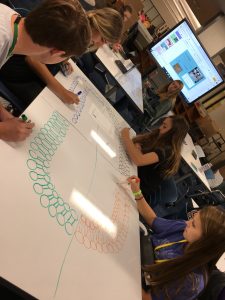
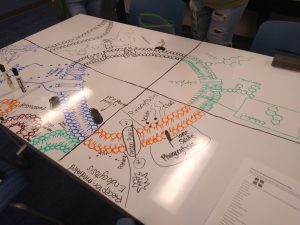
Once the AP biology teacher came into my school library. She looked like she needed someone to talk to, so I approached her and asked if she needed help. She had been teaching about cell membranes. She felt like the students had recently hit a wall. She needed to mix up the next lesson so she didn’t lose their attention.  We talked for a bit about what she had done in the past and what her learning objectives were for her students. Then, I gave her an idea to try a different approach. Together we came up with a plan to have the students divide the cell into four sections and each student had to draw and label the cell in their quadrant. Then the students had to collaborate, help each other, and rationalize to the group what he/she had drawn. The teacher just needed some inspiration to try a new strategy.
Procure resources from your librarian.

Many of the English teachers in my building require students to read a book of their choice independently for a unit of study. Each teacher’s requirement for this assignment looks a little different than the next. They will often ask if I can pull appropriate materials for this assignment for the students to browse through. As students are browsing, I often tell them about selections to help them make their final decisions. Additionally, the school librarian can share information about non-fiction materials for research, Discus databases, and technology available to students.

Plan lessons or units with your librarian.

A little over a year ago I was introduced to a teacher who had just been hired for the upcoming school year. She came by the school library to introduce herself and see what my library collection looked like so that she could prepare for the fall. I enthusiastically showed her around and sincerely told her that I would love to help to find resources or even teach lessons when appropriate in the next school year. 

A couple months went by, summer came, and then I got an email from her asking me to review a list of books she was interested in purchasing for her classroom library. She was worried that some of the novels would be too mature, and she wanted to get my opinion on how our community would react to themes in the books. These exchanges have led to this teacher and I having a great working relationship where she comes to me for help planning lessons and units. 

She wanted to embrace the teaching of Penny Kittle and Kelly Gallagher’s work which encourages teachers to allow students choice in what they read. What began with this teacher creating a more robust classroom library turned into me encouraging her to go with her gut to create a literary choice unit. The students selected a book from a teacher made list and then worked in small reading groups (lit circles) to complete assignments in class. I helped her facilitate this by helping to choose appropriate books and by teaching a couple lessons to her classes. 

The unit was such a success that she tried it again in the second semester. The instructional coach and I helped her procure books to facilitate themed lit circles. I added those new books to the library collection so that we could better track lost items.

About the Author

Kelley Rider is a third year high school librarian and former English teacher in Anderson, SC. She is Pendleton High School’s 2020 Teacher of the Year.  She serves on the Advocacy and Awards committees for the South Carolina Association of School Librarians.