The Advantages of Inquiry: Equity and the Economy

Research

By: Dr. Britnie Delinger Kane, Assistant Professor at the Citadel

In education, inquiry has long been considered foundational to all four major disciplines (e.g., Dewey, 1927)—English, social studies, science, and math—and it has been motivated and defended from a number of theoretical backdrops (i.e., critical literacy; social constructivist theories of learning; disciplinary literacy; engagement theory; and on and on). Others might choose a different conceptual framework from which to understand the place of inquiry in classrooms, but—for my money—I prefer to understand its utility from the standpoint of social constructivist theories of learning. This stance helps us to see connections between inquiry-oriented instruction, disciplinary literacy, and even more equitable forms of instruction.

The term “constructivist” teaching is often bandied about, but it’s a deeply complex and potentially misleading term. If you have never read Marc Windschitl’s (2002) review of the research on “constructivist” or “student-centered” instruction, you should. It will change the way you think about every piece of educational research you happen across —not to mention every blog with ten tips for integrating into the classroom Chromebooks or SeeSaw or Lucy Calkins’s writing curricula. Windschitl’s main argument in that piece is that the field has been unfair to teachers in advocating for a nebulous idea of “constructivist” teaching. He then, in detailed and clear ways, distinguishes between two broad orientations to theories of learning, cognitive constructivism (think Piaget) and social constructivism (Vygotsky), which continue to inform thinking in the learning sciences. 

So far, many of you may be nodding, straining to remember that Ed Psych class long ago where you kept getting the words assimilation and accommodation mixed up and someone asked you to make a poster about Vygotsky’s ZPD (only rarely have I been in a School of Ed that wasn’t plastered with posters of the ZPD). The point that Windschitl (2002) highlights is that humanity can file the articulation of coherent theories about human learning on its list of invaluable accomplishments of the last 100 years. However—and this is the clincher—theories of learning are NOT theories of teaching: Just because we know boatloads more about the ways that people learn does not necessarily mean that we can fill the same boats with our understanding of effective teaching. Windschitl proceeds to outline what—from a social constructivist standpoint—constitutes great teaching. He calls this ambitious instruction—or, how to teach in ways that will support what we understand, broadly, about the social nature of learning. The whole bullet-pointed list could sustain career-long consideration, but here’s my favorite line:

[When students are engaged in rich opportunities for conceptual learning, they are] routinely asked to apply knowledge in diverse and authentic contexts, to explain ideas, interpret texts, predict phenomena, and construct arguments based on evidence, rather than to focus exclusively on the acquisition of predetermined “right answers” (Windschitl, 2002, p. 137).

Windschitl calls such teaching ambitious, because it supports social constructivist forms of learning. Ultimately, Windschilt and other learning theorists seem to agree that ambitious instruction can support the rich forms of conceptual learning that students will need in order to succeed in our knowledge economy. Learning theorists have highlighted that such expertise involves not just memorization of important facts and procedures, but “a deep conceptual understanding of complex concepts and the ability to work with them creatively to generate new ideas, new theories, new products, and new knowledge” (Sawyer, 2014, p. 5). Indeed, it is a repeated finding of educational research that, by addressing complex, authentic, and relevant questions, students can learn to use their procedural and conceptual knowledge flexibly in order to solve novel problems while evaluating and communicating arguments clearly (Sawyer, 2014, p. 5).

In short, rich learning requires that students inquire into authentic and relevant problems, and so bringing inquiry into classrooms can be an important framework for teaching ambitiously. Of course, as a literacy person, I cannot think about discipline-specific forms of inquiry without also thinking about disciplinary literacy. Disciplinary literacy is about apprenticing students into the ways that experts use reading, writing, speaking, listening, and thinking in specific disciplines to inquire into questions of import to particular fields. At the heart of disciplinary literacy is the idea that students must learn both the content and processes through which knowledge is constructed in particular disciplines (Moje, 2007). As Moje (2007) emphasizes, understanding the processes through which knowledge is constructed is central to equitable forms of pedagogy—not only because understanding these processes helps students to reconstruct them and use them in their own lives, but because understanding those processes can support students, ultimately, in critiquing them. To my mind—understanding the processes through which knowledge is constructed in particular disciplines is about…well, inquiry. Spires and her colleagues (2016) agree. They have used inquiry as a means of supporting students’ disciplinary literacy, calling their framework for this work project-based inquiry (PBI). In their framework, PBI has five phases:

  1. ask a compelling question, 
  2. gather and analyze sources, 
  3. creatively synthesize claims and evidences, 
  4. critically evaluate and revise, and 
  5. share, publish, and act
Photo by Cristian Palmer on Unsplash

Early evidence suggests that, by focusing on disciplinary literacy within an inquiry paradigm, teachers and students are able to deepen their understanding of disciplinary literacy and engage in deeper, authentic, relevant, and engaging content-specific learning (Spires et al., 2016). 

As research on disciplinary literacy centrally highlights, however, the processes through which disciplinarians construct knowledge—or, the modes of inquiry they use—are, of course, discipline specific (Dobbs, Ippolito & Charner-Laird, 2017; Moje, 2007; Shanahan & Shanahan, 2008; Spires et al., 2016). A number of articles, including those cited here, have written about this in great depth, so I will limit myself to a single example. In the PBI framework that Spires and her colleagues suggest, inquiry across disciplines begins, of course, with a compelling question. Students then gather and analyze sources. However, the ways in which they analyze these sources are different: literary critics deconstruct literary and rhetorical devices, such as irony and metaphor; scientists attend to an author’s credential and authority within the field; and historians contextualize primary sources, paying attention to both the author, purpose, audience, and time period in which the piece was written or created; mathematicians analyze the logic of an argument without attending as closely to the context of the author (Spires et al., 2016, p. 153). Thus, all disciplines inquire, but they do so differently. 

Photo by Brett Jordan on Unsplash

In short, inquiry is a powerful framework for ambitious teaching, and it can be an important vehicle for supporting disciplinary literacy and content-area learning. By bringing inquiry projects into the classroom, students have opportunities to participate in disciplinary work, which can support students’ development of disciplinary literacy, as well as the content and processes that disciplinarians use to build knowledge. There are two major advantages to this: (1) inquiry can support students to develop the kinds of rich, flexible conceptual knowledge they will need in order to find success in the knowledge economy (Sawyer, 2014); and (2) inquiry allows students to participate in approximations of processes of discipline-specific knowledge construction, which is foundational to equitable teaching (Moje, 2007; Behrman, 2006).   

References

Behrman, E. H. (2006). Teaching about language, power, and text: A review of classroom practices that support critical literacy. Journal of Adolescent & Adult Literacy, 49(6), 490-498.

Darling-Hammond, L. (2016). Research on teaching and teacher education and its influence on policy and practice. Educational Researcher, 45(2), p. 83-91.

Dewey, J. (1927). The public and its problems. Athens, OH: Shallow. 

Dobbs, C., Ippolito, J. & Charner-Laird, M. (2017). Investigating disciplinary literacy: A framework for collaborative professional learning. Cambridge, MA: Harvard Education Press.

Moje, E.B. (2007). Developing socially just subject-matter in- struction: A review of the literature on disciplinary literacy teaching. Review of Research in Education, 31(1), 1–44. doi:10. 3102/0091732X07300046001 

Sawyer, R. K. (2014). Introduction: The new science of learning. The Cambridge Handbook of the Learning Sciences. 2nd ed. Cambridge: Cambridge University Press. (pp. 1-18).

Shanahan, T. and Shanahan, C. (2008). Teaching disciplinary literacy to adolescents: Rethinking content-area literacy. Harvard Educational Review, 78(1), 40–59.

Spires, H. A., Kerkhoff, S. N., Graham, A. C. K. (2016). Disciplinary literacy and inquiry: Teaching for deeper content learning. Journal of Adult and Adolescent Literacy, 60(2), p. 151-61. Windschitl, M. (2002). Framing constructivism in practice as the negotiation of dilemmas: An analysis of the conceptual, pedagogical, cultural, and political challenges facing teachers. Review of Educational Research, 72(2), 131–175.

About the Author

Britnie Delinger Kane is an assistant professor of literacy in the Zucker Family School of Education at The Citadel in Charleston, SC. Dr. Kane’s teaching and research focuses on how teachers learn to teach ambitiously. Her work has focused on a number of content areas, including mathematics, writing, and computer science. This focus has led to her interest in disciplinary literacy, to which she brings a learning science perspective. She has studied teachers’ professional learning across their careers, from preservice teachers’ involvement in simulations of professional work to in-service teachers’ participation in teacher workgroups to instructional coaching. 

Photo by Michael Dziedzic on Unsplash

Truth Finding in Young Adult Literature

Teaching

By: Kim Ferrari, South Carolina English Teacher

If you were to look through my high school yearbooks, you would quickly notice one thing. Almost everyone was white. I grew up in a very white community in one of the whitest states in America and could probably count on my fingers the number of Black people I knew. As far as I knew, racism didn’t exist any more. The Civil Rights Movement and desegregation brought an end to it and everyone was treated equally now.

I moved to South Carolina in 2014 and learned very quickly that everything I thought I knew about racism and civil rights was wrong. 

Photo by Arthur Edelman on Unsplash

I watched the news in shock, horror, and disgust as the truth became apparent: racism is very much alive today. This new reality became something that I had to grapple with. I realized that I needed to relearn my nation’s history. For the first time, I began to realize that what is written in our history books is not the absolute truth. There are many untold stories in our history, stories which paint a different picture. As an educator working at a school with predominantly students of color, I knew that I needed to do better and educate myself.

To better understand the new reality and the new culture that I was now surrounded by, I turned to books (as any English teacher would). One of the very first books I read on my journey of truth was The Port Chicago 50 by Steve Sheinkin. I found myself on the verge of tears throughout the book, unable to believe that humans could be so cruel to one another. But then I turned on the news and saw the same types of things happening 60 years later. 

Searching Inward

I continued reading books to help me process and understand what was happening around me, focusing on those books written by Black authors about Black youth. The first book that really made a difference was All American Boys by Jason Reynolds and Brendan Kiely. One of the main characters, Rashad, a Black teen falsely accused of stealing a bag of chips from a convenience store, could have been one of my students. This was the first time that I saw not just a character in a book, but a student in my classroom. It caused me to question my personal biases. Did I treat my Black students differently? Was I unfair in my discipline? Did my students all feel valued and seen in my classroom? These were difficult questions to ask myself and I didn’t always like the answers I came up with, but I owed it to my students to ask myself them.

The more books I read by Black authors and about Black teens, the more I learned about the injustices they face. Each book with characters like my students helped me to realize that when one of them calls out “Yo, Miss,” before asking a question, they’re not being smart with me. When a student is more interested in the latest music release or shoe drop than my Shakespeare lesson, it doesn’t mean I’m a bad teacher. These are just some of the things that they grew up with as part of their culture. A culture that I never experienced, but a culture that I can learn about through books. 

Making Connections

Photo by IIONA VIRGIN on Unsplash

As police violence on Black people continues to happen, young adult novels like  The Hate U Give by Angie Thomas, Dear Martin by Nic Stone, Ghost by Jason Reynolds, Long Way Down by Jason Reynolds, Ghost Boys by Jewell Parker Rhodes, and How it Went Down by Kikla Magoon have helped me to see perspectives that I hadn’t before. I saw these events through the eyes of my Black students and while I will never truly understand what it is like to be Black in America, these books offer me a window into their world. 

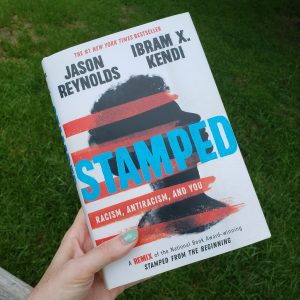
Most importantly, Stamped: Racism, Antiracism, and You by Jason Reynolds and Ibram X. Kendi taught me everything I never learned in school about slavery, racism, and segregation. What I thought I knew was challenged and I grappled with these new truths. Months later, I’m still questioning much of what I thought I knew about our nation’s history. This new (to me) information has helped me look at current events in a different light and to see how everything that happens today is connected to an event or decision in history. 

While there have been many books published in the last few years that center on the injustices faced by Black people and while it is important for everyone to read these stories, there is also importance in reading and amplifying stories of Black joy. Instead of focusing on how Black people have suffered, stories of Black joy celebrate being Black, being human, and living life. Books like The Crossover, As Brave as You, My Life as an Ice Cream Sandwich, and Children of Blood and Bone are just a few of the amazing stories of Black joy published in the last few years. With each book that I’ve read, I’ve learned about the importance of music, how different hair styles represent a person’s identity, and how stories are passed down from generation to generation to continue the culture. 

Moving Forward

All of these books have helped me to become a better person, educator, friend, and ally. My journey has been difficult at times but it is far from over; I recognize that I still have so much more to learn. Young adult literature will continue to be a powerful resource for me, allowing me to connect with my Black students and to see just some of the ways in which racism still exists in our country. 

If you have never read a book that serves as a window into the life of a Black person in America, then I encourage you to read one. If you are White and have never read a book by a Black author, I challenge you to read one now.

About the Author

Kim Ferrari is an English Teacher at Manning High School in Manning, SC. She received her Bachelor of Science in Secondary English Education from the University of Maine at Farmington and is working on her Master’s in Literacy from Clemson University.

Safe Schools: More Than Locked Doors and Sanitizer

Collaboration

By: Dr. Jennifer Geddes Hall, Clemson University

Classrooms today are complex environments to navigate for teachers. There are standardized tests for almost every subject and grade level and teachers are expected to have every student, no matter the circumstances, pass these exams. They are expected to differentiate instruction based on the individual needs of each student all while being tasked with adhering to COVID health guidelines and participating in active shooter drills. Even more so today than in days of the past, teachers are responsible for addressing not only the academic needs of students but their social and emotional needs as well. Now that the racial unrest of our country, which has been around for decades, is more visible with violence against BIPOC and police brutality popping up on social media and news outlets, schools and teachers are charged with making their classrooms safe for all students.

Photo by Kelly Sikkema on Unsplash

Safety is not ensured by having a school resource officer, locked doors for visitors who wish to enter, temperature checks at the door, or sanitizing stations at every corner. Safety outside of this context must address the culture of the school and the emotional safety and well-being of students from various backgrounds. What do I mean by emotional safety? Emotional safety includes feeling a sense of belonging in the fabric of the school and its community. Feeling safe enough to be vulnerable and share struggles and victories without fear of consequences or backlash. Feelings of togetherness and not otherness. In short, safety is created through positive relationships and unconditional positive regard. 

Microagressions and Macrogressions

Micro/macroaggressions can jeopardize this sense of safety and quickly create a negative school culture and harmful experiences for BIPOC students of all ages. Let’s first explore microaggressions. Microaggressions are commonly defined as subtle, degradations and putdowns -intentional or unintentional- disguised as jokes and/or compliments that are manifestations of racism and privilege which cause negative/harmful effects on the recipient. Some examples related to racial microaggressions include: Where are you from? You speak so clearly and eloquently! You don’t act Black. I’m colorblind. What are you? Can I touch your hair?

Photo by Kate Kalvach on Unsplash

Although these may seem like “harmless” comments, they have great impact and BIPOC experience these types of interactions several times every day. Microaggressions such as these perpetuate the idea that BIPOC students are different, unusual, abnormal and can ultimately tear them down. Research has shown that the impacts of microaggressions can affect blood pressure, lower feelings of well-being and self-esteem, and increase stress, anger, frustration, anxiety, and depression. Outwardly it may appear that students are disengaged, verbally and physically aggressive towards peers and/or teachers, noncompliant, struggle academically, and/or drop out of school. Similarly, macroaggressions are obvious, larger scale or overt acts of aggression such as environmental macroaggressions and institutional/ideological macroaggressions (Compton-Lilly, 2020). Lack of BIPOC representation or items that convey racialized messages and areas within the school building or grounds that are racially insensitive such inadequate resources, inequitable policies/practices, and apathy in addressing impact of race or racial issues in the system are all examples of macroaggressions that may be occurring in our schools. These larger scale issues often lead to disproportionate levels of expulsion, suspension, and disciplinary actions against BIPOC students, increased negative attitudes and toxic school culture. 

Creating Safe Spaces for Black, Indigenous and People of Color

So how do teachers create safe spaces and help to positively impact change against micro/macroaggressions in their classrooms and schools? First off, teachers need to be open to examining and addressing their own implicit biases and areas of privilege. When we open our eyes to the messages about BIPOC that our society and environments have placed upon us, we can be more intentional about removing them from our way of being and interactions with students and others. We also need to be proactive in building relationships with all of our students and outwardly express our support for BIPOC. When we take time to connect, understand, and empathize rather than dismiss student experiences, we build relationships and trust. Research has demonstrated that when there is at least one caring, responsive, attuned person in a student’s life, it can impact the resilience and success of that student. Including representation of BIPOC and diversity in academic content and in classroom environments also conveys support. Representation is powerful.

Photo by Nadine Shaabana on Unsplash

When teachers hear others using or perpetuating microaggressions we need to intervene and stop them. This will demonstrate care and concern for our students, provide a model for others, and will help to decrease negative interactions that BIPOC students might experience during the school day. Instances of repeated or intentional microaggressions by students should be treated as bullying and addressed through the school’s bullying policy. Unfortunately, there are also instances of teachers and other adults in the schools who use microaggressions. These instances should also be addressed immediately and brought to the attention of administration for repercussions. Microaggressions of any kind are harmful but those initiated by adults in the school building have more impact due to differences in power, control, and privilege. 

A Collaborative Solution

Finally, to address micro and macroaggressions teachers should communicate and collaborate with their school counselors in an effort to develop positive change in the school culture. School counselors are uniquely trained to address the mental health and emotional needs of students as well as advocate and implement data-based interventions for systemic change. School counselors have a larger view of issues in the school, access to data which can support needed efforts, ability to collaborate across many domains, and a seat at the leadership table by working closely with administrators. They have relationships with students, parents, and with adults in the school and community. Together, teachers and school counselors can work to focus on changes that need to be made in the classroom, such as bias that may be influencing grading practices or classroom lessons or group counseling interventions that may be necessary to build student skills related to cultural empathy. School counselors may also need to partner with teachers in providing cultural competency training to adults in the school and presenting school data on cultural climate to the school board/administration in an effort to improve conditions and policies/practices to ensure equity. I ask you to think about and consider what you will do in your classroom to take these steps forward? What actions will you take to make sure your school is a safe space for all? Change is not a choice, it is imperative. 

For more resources on how to make classrooms more equitable and inclusive visit https://www.tolerance.org/

About the Author

Dr. Jennifer Geddes Hall is an assistant clinical professor at Clemson University, teaching in the Counselor Education program and serving on the College of Education’s Community and Diversity committee and taskforce for Inclusive Excellence. She is a licensed professional counselor and certified school counselor with over 17 years of combined experience as a child/teen therapist and school counselor. Dr. Hall has worked in community and school settings in diverse, urban communities as well as rural areas. She has a focus on multicultural issues as well as developing cultural competency in her past publications as well as local, state, and national conference presentations. Dr. Hall currently serves on the board for the Association of Child and Adolescent Counseling (ACAC), a division of the American Counseling Association (ACA)

Photo by Volodymyr Hryshchenko on Unsplash

Data over Assumptions: Determining How Our Schools Engage in Family-School Partnerships

Collaboration

By: Dr. Jennifer D. Morrison

Photo by Dave Craige on Unsplash

In 2016, the University of South Carolina Language & Literacy faculty members decided to overhaul the Masters in Education degree requirements. The then current program was outdated and focused on very narrow conceptions of literacy, who owned it, and how it was to be taught. Because we all hailed from strong critical theory backgrounds, we knew a social justice thread was imperative. Through this lens, as we examined individual courses as well as the program as a whole, we began to ask questions such as: who owns literacy?  How do we want to present this? What about funds of knowledge and out-of-school literacies?  This line of questioning led us to realize that nowhere in our program did we account for parental and community involvement in students’ literacy learning.  This, to us, was a huge gap that needed to be filled. We decided to redesign a course entitled “Guiding the Reading Program,” changing it from a third assessment course to one on literacy leadership with a focus on developing skills that would assist teachers in employing community and family resources in school and district literacy practices and policies. I was the initial instructor for this course and looked to my experiences, as an instructional coach and administrative intern, to help me build the curriculum and key assessment experiences. 

Tough Conversations and Deep Reflection

When discussing family involvement, it is not uncommon to hear educators talk about how many parents attend PTSA meetings, come to Open House/Curriculum Nights, or support the band/athletic boosters. However, it becomes important to really consider which parents are involved and what percentage of the school they represent.  It is often eye-opening to realize large swaths of families are un- or under-represented at school events. For example, as the instructional specialist at a middle school in Maryland, I was part of a school leadership team who specifically sought to broaden our parent involvement, not only in how they were involved but also in who was involved.  We had a very active and invested community; so, when we collected data about who was coming into our school for social and academic activities and who was not, it was surprising to see we had almost no members of our Latino families represented. This required us to conduct deep reflection and address cultural divides. We thought we were providing appropriate communication with our families by sending home notices in backpacks and posting on our school’s social media and websites. However, when we asked members of the Latino community why we had limited attendance, they indicated to us more personal means of communication were needed. When we started picking up the phone and personally calling families, we found they were significantly more responsive; we had to bridge a cultural divide we did not realize we had built, to ensure all families felt welcome. This is not an uncommon experience that emerges once school leadership teams and teachers delve mindfully, deeply, and honestly into the degree to which families and community members are truly involved in schools. 

The Work

Figure 1

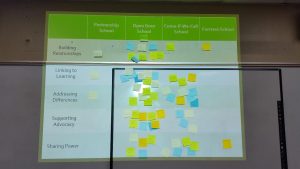
In my class, one of the early activities I ask teachers to complete is a pair of inventories regarding parental involvement practices.  The first is Salinas, Epstein, and Sanders’s (2012) An Inventory of Present Practices of School, Family, and Community Partnerships. It identifies six ways parents can be involved in schools (called “types” in this instrument) including: parenting, communicating, volunteering, home-learning, decision-making/leadership, and community collaboration. School members are asked to consider the degree to which statements listed under each type are true and in what grade levels. These responses help illuminate both traditional and nontraditional means of involvement and also show if there are patterns or trends in participation. I then pair this inventory with a second evaluation instrument from Beyond the Bake Sale (Henderson, Mapp, Johnson & Davies, 2007). This instrument uses five domains (building relationships, linking to learning, addressing differences, supporting advocacy, and sharing power) to help educators identify which of four versions of family-school partnerships best describes their school (partnership, open-door, come-if-we-call, or fortress). To help them to see patterns, I ask students to identify which version of partnerships their schools represent for each domain and place a sticky note in the appropriate location (see Figure 1). While most people would say they have a partnership school, especially at the elementary level, many individuals are surprised with the results of this survey.  There are areas suggested, such as including parents in curricular decisions, many of my students have not ever considered.

Figure 2

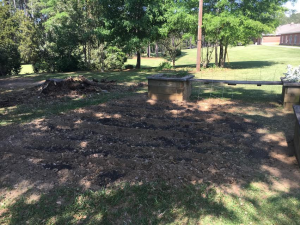
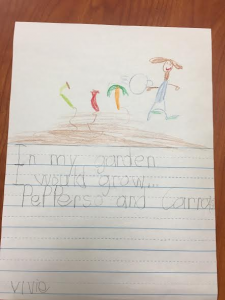
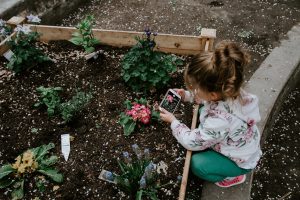
Between these two instruments, my students begin to get a clearer, and more accurate, picture of their schools’ strengths and needs with regard to parent and community partnerships. They are then asked to develop a family and community partnership grounded in the data they have collected from these two sources. I encourage them to think about how they can move their school to a higher version within one domain of the Beyond the Bake Sale rubric while also using some of the descriptors from the Epstein inventory to help frame goals and action steps. The projects that have emerged from this project have been organic, deeply-embedded in individual school needs, centered on literacy, and overall impactful. One resulting project was discussed in this blog by Hannah Kottraba in June when she wrote about her family heritage project. Other examples have included virtual science activities where parents and students engage in disciplinary literacy to solve scientific problems; pre-k students engaging in pen pal writing and subsequently building a garden with members of an assisted care facility (see Figure 2); online interactive math resources (focused on literacy needed for word problems); workshops that coach family members how to support reading with all ages of students; family culture exhibits; writers’ gallery celebrations; and international student shadowing days where high school students serve as hosts for international graduate students learning about America’s education system. Many of these projects addressed family and community populations who are often underrepresented in schools, and several have become multi-year or ongoing events.

It is important to remember that such projects are many times singletons, snapshots that occur once as a result of a course; the impetus being the need to complete a class assignment. I am not so naïve as to think these class assignments have suddenly made every school my students teach at a Partnership School. What is important is the paradigm shift that occurs as teachers undergo this process. They begin to seek out ways to better meet the criteria established by these two inventories; they become more attuned to cultural differences that may be acting as a barrier to some families and making them feel unwelcome with the school space; and they become more appreciative of the funds of knowledge parents and family members bring with them.

About the Author

Dr. Jennifer D. Morrison is an instructor at the University of South Carolina. Her experiences include being a middle and high school English teacher, gifted education resource teacher, and instructional coach.  She earned her Ph.D. at the University of Nevada, Reno, in Language, Literacy, and Culture.  She is a National Board Certified Teacher (AYA/ELA), an alumnus of the Teaching Shakespeare Institute at the Folger Theater in Washington, D.C., and has won multiple awards for teaching and writing including NCTE’s Paul and Kate Farmer English Journal Award and AERA’s Dissertation Award in Research on Teacher Induction. Currently, her research focuses on adolescent, digital, multimodal, and disciplinary literacies as well as narrative and qualitative methodologies.

Strengthening the Generations Through Agricultural Literacy

Collaboration

By: Alonzo McDonald, South Carolina High School Agriculture Teacher

Photo by Jed Owen on Unsplash

Everybody knows the song, “Old McDonald had a farm.” Well, that song is about my dad. He’s the McDonald that had the farm…and the cows, and the peacocks, the ducks, the hogs and the mules. I’m the McDonald that took my passion for agriculture, which developed at a young age, and turned it into a career as an agricultural education teacher. Often, people believe teachers of elective courses are not concerned with literacy; however that is not the case. When teaching an elective course, you have to come up with creative ways to motivate students to engage in content literacy. I have found that I can foster student literacy through the community engagement of my students. 

One of the cornerstones of agricultural education programs is the desire to create productive citizens who serve their community. Through the Agricultural Education Program and Future Farmers of America (FFA) at Manning High School, students are molded into being model citizens that willingly give back to their community through various events and community partnerships that continue throughout the year. The motto of FFA reads “Learning to Do, Doing to Learn, Earning to Live, Living to Serve.” The last line, “living to serve” is one that I think the students grasp without even realizing it, because it becomes so embedded in our work in and out of the classroom. When you connect the last line of the motto with the first line, “learning to do,” students are equipped with the tools needed to successfully give back to the community that made them.

Photo by Kelly Sikkema on Unsplash

Through various in class activities, articles from agriculture magazines, and hands-on experiences students gain content knowledge they can put to use and pass on to younger students, in one of our strongest community partnerships, at Manning Early Childhood Center (MECC). Students within the agriculture program are able to explain the content that they have learned throughout the semester in a way the younger students are able to understand and use as they work on the raised bed garden at MECC. My students are able to teach these younger students how to transfer this knowledge into a useful skill (i.e. seed depth and spacing, watering needs, pollination, importance of fertilizer, plant parts, etc.) that can be used in the school garden. When my students are explaining to four and five year olds the needs of plants, and seeing that the younger kids are actually understanding it, brings me joy. As a teacher, being able to see the products of our toil is always rewarding. 

Photo by Cathy VanHeest on Unsplash

Having good role models for students to emulate is important. Through a consistent partnership with the Clarendon County Master Gardeners, my agriculture students have learned ways to pass on agriculture knowledge to others. The master gardeners model the ways in which experiential knowledge can be transferred through shared gardening experiences. My students then use what they have learned in their interactions with the master gardeners, with the students at MECC. The master gardener volunteers are able to bring in their real-world knowledge and experiences to help enhance the students understanding of not only the task-at-hand, but meaningful life experiences. Through this partnership, students are able to experience what it feels like to have someone giving back to the community and investing in the students at our school. As a result, students are more willing and eager to gain a better understanding of agriculture so that they can pay it forward.

Several students have gained a new appreciation for different aspects of agriculture because of these partnerships and have taken additional steps to further enhance their knowledge through research. Students are more willing to engage in learning, because they want to be able to share their knowledge with younger students and understand the information they learn from the master gardeners. As a result of community partnerships, students learn to use the agriculture content vocabulary, which supports their learning in my class and future agricultural classes they may take in the future.

Photo by Dan Meyers on Unsplash

Agriculture is an important part of today’s society that is sometimes overlooked. As the global population increases, we need to make sure that our appreciation for what agriculture provides continues to increase, so that we have future generations who are interested in agriculture and want to contribute to the field of agriculture. There are many initiatives and programs that are in place to encourage the younger generations to be more interested in agriculture. Through partnerships with different agricultural organizations, the youth are being exposed to the many different aspects of agriculture. My challenge to you is expose your students to some of the many different avenues that lead to the wonderful world of agriculture.

About the Author

Alonzo McDonald is an Agricultural Education Teacher at Manning High School, in Manning, South Carolina. Alonzo earned his Bachelor of Science in Agricultural Education from Clemson University. He also holds a Masters of Education in STEM Leadership from American College of Education.

Photo by Tyler Nix on Unsplash

Learning about our families through the Family Heritage Project

Collaboration

By: Julia López-Robertson, University of South Carolina and Rocio Herron, Jackson Creek Elementary School

Last fall I taught a Family Dynamics course and was searching for a way to engage my undergraduate students in meaningful experiences with children and families; the course carries a community service component that is left up to the instructor to design and implement. I sought to involve my students in experiences that would help them develop strategies for authentic family and community engagement that they could later draw upon when they became classroom teachers.

I am very fortunate to be able to spend time in a local Pre-K classroom with a teacher, Rocio Herron, who willingly shares her students and families with me. Rocio has taught at Jackson Creek Elementary School since the school opened three years ago; the majority of the school population is African American (73%), followed by Latino students (13%), and 100% of the students receive free/reduced lunch.

Rocio and I have a history; she was my youngest son’s Pre-K teacher a few years ago (he is now 15). Rocio and I share similar views on teaching and learning and family engagement; we believe that children have a right to their language; children must be actively engaged in their learning; teachers must learn about their children lives outside of school in order to better teach them; and that trusting relationships with families are the cornerstone of teaching.

Family Heritage Project

I spend Friday mornings in Rocio’s classroom engaging the children in bilingual (Spanish/English) read alouds, songs, dances, and games. One Friday I mentioned to Rocio that I was teaching a course with a community service component and wondered if she had any ideas for my class. I explained the time commitment and my goals for the project and she excitedly exclaimed that she had a Family Heritage Project she was looking to do that would involve all three Pre-K classrooms.  

The purpose for the Pre-K Family Heritage project was to get to know the children and their families by engaging them in a project about their family. Rocio explained that she also wanted the families to know that they all had things to be proud of and to contribute to the school and society in general; too often our immigrant families and families of color are made to feel insignificant and that they have nothing to offer our schools or their children. Through the project, the families would investigate their heritage, family, and culture and uncover for themselves the tools they possess that can be used for helping their children learn; i.e. language, sewing, gardening.  I wanted my students to view the families as contributors of knowledge and see them through an asset-based lens where their funds of knowledge, their community-based ways of knowing (Moll, Amanti, Neff, González, 1992) are recognized as valuable instruments for school learning.  

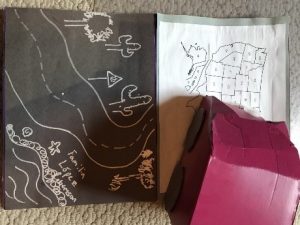
The Family Heritage Project spanned a few weeks in the fall semester. Families were asked to come to school on three evenings; my students and I participated in all activities that took place over the three visits. The first evening was spent getting to know each other; Rocio engaged the families in a read aloud followed by a discussion, families sang songs that the children did in school, families played school games with the children and we all got to know each other. We expanded the view of ‘family heritage’ to include things that you do together as a family because we wanted to be inclusive of all families. Rocio asked them to think about things that they did together and gave the example of her spending time at the beach while in her home country of Costa Rica; she showed her beach bag and other artifacts. I shared that my family enjoyed going on road trips and explained that my artifact would be a car and a roadmap.

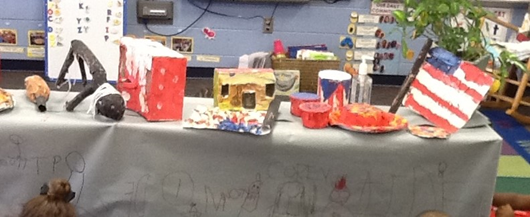
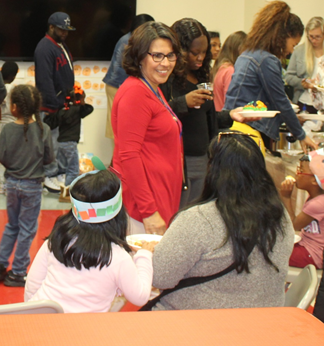
The second evening the families worked on creating a physical representation, an artifact, of their family and/or family heritage using supplies we had at school; paper, cereal boxes, soup cans, etc. The only rule for the artifacts was that they had to be handmade, nothing could be store bought. There was so much excitement, so many conversations and a busy hum filled the room! The third and final evening was a potluck celebration where each family shared their artifact and story with the group, the children presented a song, and we celebrated with a meal. I shared my car and road map representing our love of road trips, my students also shared their various artifacts as did all of the teachers. Artifacts were displayed on tables for all to see.  Once everyone shared, we had our meal which was the annual Thanksgiving celebration.

As I walked around, I heard laughter, families making connections with one another and sharing stories!   It was truly joyful!

What would we do different?

We were so eager for the project that we held the events in one month! We realize that having the meetings so close inhibited attendance, especially for the second meeting. The next time we do this, we will space out the meetings over a couple of months or over six weeks. 

Closing thoughts

As noted above immigrant families and families of color are often viewed through a deficit lens where what they do not posses is highlighted, for example; families do not know English or they live in a high poverty area. One of our main goals for the Family Heritage Night was for families to uncover their own riches and recognize that they indeed posses knowledge, skills, and strategies that will help their children succeed in school.  Engaging the undergraduate students helped them see this firsthand and also helped them see that family engagement is not scary. Finally, if we approach our families with love and respect and demonstrate that in everything that we do and say, our families begin to trust us and a trusting relationship with families is the foundation upon which everything is built.

References

Moll, L. C., Amanti, C., Neff, D., & González, N. (1992). Funds of knowledge for teaching: Using a qualitative approach to connect homes and classrooms. Theory into practice, 31(2), 132-141.

About the Authors

Julia López-Robertson is a Professor of Instruction & Teacher Education at the University of South Carolina.

Rocio Herron is a Pre-K teacher Jackson Creek Elementary School.

Where Does It All Begin?

Research

By: Dr. Kavin Ming, Winthrop University

For the month of August, our blogs addressed a variety of topics related to the idea of using culturally responsive teaching with English Language Learners.  Specifically, we identified strategies to strengthen culture-sensitive instruction; highlighted the importance of allowing students to use their first language, and determined key questions to ask ourselves as we implement culturally sustaining pedagogy.  The root of these positive practices starts with cultural competence. 

What is Cultural Competence and Why Does It Matter?

Cultural competence is the ability to successfully teach students from cultures other than one’s own.  This requires a deep understanding of complex awareness and sensitivity, a wide body of knowledge, and a set of skills that, when taken together, produces effective cross-cultural teaching.  One key element is acquiring this capacity is having a keen awareness of one’s own culture and the culture of others. I once read where an author said that you cannot truly teach students if you don’t really know them.
Photo by sydney Rae on Unsplash

An awareness of one’s own culture and the culture of students impacts the types of books read, the kinds of materials selected, the variety of strategies used, and the evaluation practices implemented.  Culturally competent educators use their cultural competence as a guide for action when working with students, parents, and members of the community.

Culture Matters

Student achievement continues to be at the forefront of all educational entities, including district, state, and federal organizations.  The poor performance exhibited by large groups of diverse students in many areas around the country leaves many asking what can be done to move these students to higher levels of achievement.  As the demographics of schools have changed, teaching and learning has not followed the same evolutionary pace.  For a number of educators, traditional methods of instruction have predominated, and these methods do not reflect a genuine consideration for effective instructional methods and the impact of culture on teaching and learning.  Thus, one of the most significant implications of professionally developing cultural competence is the basic understanding that culture does impact learning, and by adapting a different stance, based on an understanding of the significance of culture, students from diverse backgrounds can make academic gains. 
Knowing Your Students Begins with Introspection

Photo by Taylor Smith on Unsplash

Teachers who look within analyze their own feelings towards those who are culturally different, determine how those feelings relate to the dominant culture, and think about what frame of reference influences these feelings.  Key factors in understanding diverse students include learning about each person, and taking a personal interest in establishing positive relationships.  It also includes continuously questioning one’s self in order to clarify salient issues.  Teachers can engage in introspection as part of the planning or preparation period on a daily, weekly, or monthly basis.  This frequency ensures that it is an ever-present part of their teaching routines.

Coupled with learning about one’s students, and questioning one’s self, teachers can develop cultural competence through personal development.  Reading and seeking to understand the profiles and experiences of different cultures introduces teachers to contexts that help them identify similarities and differences within and across groups.  A starting point is for teachers to purchase or borrow books that are written by people of color, including history, literature, and education.  Some of these books include:

  • Women of Silk by Gail Tsukiyama
  • The Circuit: Stories from the Life of a Migrant Child by Francisco Jimenez
  • I, Too, Am America by Langston Hughes
  • Song of Solomon by Toni Morrison
  • Cry, the Beloved Country by Alan Paton

It’s Personal

In order to teach students, teachers must first reach them.  Teaching starts with the heart.  The best laid lesson plans will not amount to much if teachers don’t really know who are the students sitting in front of them.  When students know that teachers care about them, and are interested in them as individuals, they will open themselves up to hearing what the teacher has to say.  Culture matters, and effective teachers recognize this importance and strive towards achieving cultural competence. 

References

Aceves, T. C., & Orosco, M. J. (2014). Culturally responsive teaching (Document No. IC-2). Retrieved from University of Florida, Collaboration for Effective Educator, Development, Accountability, and Reform, Center website: http://ceedar.education.ufl.edu/tools/innovation-configurations/.

Au, K. (2009). Isn’t culturally responsive instruction just good teaching? Social Education, 73(4), 279-183.

Diller, J. V., & Moule, J. (2005).  Cultural competence: A primer for educators. Toronto, CA: Thomson Wadsworth.
Howard, T.C. (2003). Culturally relevant pedagogy: Ingredients for critical teacher reflection. Theory into Practice, 42(3), 195-202.

Pang, V. O. (2001). Why do we need this class? Phi Delta Kappan, 76(4), 289-292.

About the Author

Dr. Kavin Ming is a Professor at Winthrop University in Rock Hill, SC.  She is currently serving as the Department Chair in the Department of Curriculum and Pedagogy.  She teaches undergraduate literacy methods courses and graduate content area literacy and practicum courses.  Kavin’s research interests include at-risk student populations, culturally responsive pedagogy, content area literacy instruction, and multisensory teaching of literacy skills.  Kavin can be contacted at mingk@winthrop.edu.

Culturally Responsive Instruction to Improve English Learners’ Academic Oral Language Development

Research

By: Dr. Elke Schneider

What is culturally responsive instruction and why is it important?

Culturally responsive instruction (CRI) refers to teaching any content area in a way that infuses and honors knowledge about learners’ socio-culturally, linguistically, ethnically, racially, religiously, and socio-economically unique backgrounds. It not only makes the purpose of learning about specific content learner-relevant by connecting it to their cultural and linguistic frame of reference but also provides necessary language support and cultural explanations in interactive, authentic and carefully structured learning opportunities.  In CRI, cultural, verbal and nonverbal components are made explicit to help diverse learners succeed. Therefore, the strategies below address these aspects.

Non-native speakers of English or English learners (ELs) present the fastest growing group of students in the US and in the Carolinas and are part of an increasingly diverse student population that requires CRI.  Such instruction provides ELs with explicit guidance on how to orally communicate effectively in social and academic settings.

Photo by iMattSmart on Unsplash

Effective CRI is based on a strong rapport with ELs. It unlocks EL’s motivation to overcome challenges based on language and acculturation needs.  In collaboration with ESOL teachers, one can find out about ELs’ schooling background, home life, and possibly any key experiences ELs may have had prior to entering a content area teacher’s classroom that may impact learning success such as traumatic experiences coming to this country or any non-academic strengths that could be utilized to motivate learning content.

Why is it important to focus explicitly on oral language development?

 Oral language skills provide the basis for proper development of all other academic skills including listening, reading, and writing skills.  Native speakers develop oral language skills during the first five to six years of their lives before learning to read and write. However, ELs moving into the new culture later in life, must acquire oral, reading and writing skills fast all at the same time and are forced to participate in state testing from the start without any accommodations.

What constitutes oral language skills?

Developing social and academic oral language skills includes culture-specific verbal and nonverbal skills that require years to reach native speaker quality.  It takes approximately 2-3 years to develop social oral language skills needed to engage properly in social settings such as recess, or after school experiences. Academic oral language needed to verbalize and reflect on academic content takes at least seven to nine years. Both types of oral language skills require not only proper command of vocabulary and sentence structures but also of culturally specific nonverbal skills like gestures, postures, eye contact, proper pausing, body distance from speakers, and tone and volume of voice to make oral communication effective.

The following selected strategies are specifically geared towards ELs and focus on academic language skills development but can be implemented with all learners.

Strategies for culturally responsive academic oral language instruction

  • Make the purpose of an oral exchange about a topic clear and relate it to ELs’ world of reference. Ways to do that are:  (1) Start a motivating dialog about a picture or short film clip that is relevant to ELs and thus prompts personal connections and opinions about a topic; (2) Ask students to share a personal experience to help them see the purpose of a content area task; (3) Show concrete items or ask students to bring in an item that represents something that helps them relate to a topic in dialog with peers. 
Photo by Charlein Gracia on Unsplash
  • Plan for routine pair and group discussions prior to or after listening to  teacher presentations, viewing or reading tasks

Routinely infusing oral academic dialog opportunities allows ELs to practice those structures. Generally, infuse 5 minutes of oral processing for every 3 minutes of teacher talk. Cooperative learning dynamics as offered in think-pair-share orally or think-pair-share orally-write, think-write-pair-share orally or view (picture, video clip)- pair- draw information- share orally allow ELs to critically process information with their multicultural and multilingual frames of reference. For more details, see Zwier (2019).

  • Explicitly teach effective dialog features and allow oral pair or small group practices. On posters and personal handouts for students, flow charts display academic dialog features. Among them are gestures and language structures to: (1) demonstrate active listening skills (2) ask for more details or clarifications, (3) share culturally comparative information, (4) make sure everyone has contributed a comment, (5) keep dialog partners on task, (6) Compare and contrast information, and(7) summarizing what was said.  For details, see Zwiers (2019). Also, explicitly discuss how such oral features differ by allowing ELs to share how dialog patterns compare to their cultures. Highlight also how dialog structures change when talking to person of authority versus a peer.
Photo by Brett Jordan on Unsplash
  • Explicitly teach vocabulary in common phrases and sentence structures along with nonverbal communication features.

After analyzing what key vocabulary and associated phrases are needed for ELs to engage in proper academic dialog about a topic such as the water cycle or facts that led to the Civil War, allow ELs to practice saying these key words before using them in context. For instance, ELs will not participate in dialog about the photosynthesis, if they are not comfortable saying the word. Therefore, repeated syllable-by-syllable practice of the word is important. The entire class can be engaged in doing so chorally.  Teachers have students repeat a word like photosynthesis syllable by syllable. In the intonation and speed modeled by teachers, students repeatedly add one syllable to the next until they can say the entire word fluently. Then, it is used in common phrases (successful photosynthesis, failed photosynthesis) and sentences (A photosynthesis requires…, A photosynthesis occurs when….).Such essential vocabulary with common sentence structures are then collected on content specific vocabulary cards that allow ELs to draw mnemonic devices and references to their first language as needed (i.e. photo and foto mean the same in Spanish as in English). Other words with the same component (photograph, photographer) can be added to help expand vocabulary.

  • Explicitly teach nonverbal communication features

Given that non-verbal communication constitutes about 85% of in person information exchanges, teaching non-verbal communication features explicitly along with the language structures is paramount. Brief role plays in which one student asks questions and the other one answers them can serve as a practice for verbal and nonverbal oral language features. Students can prepare written scripts or work from brief notes on cards. Such performance can to demonstrate gained knowledge while implementing proper eye contact, gestures, postures, tone and volume of voice. Students can role play interviews of experts on science facts, a historic civil rights movement leader or a character in a novel or a writer. For each scenario, proper nonverbal skills such as eye contact, tone of voice, gestures, or body language can be practiced.

The following resource offers many specific suggestions for content area
instruction including evaluation charts:

Zwiers, J. (2019). Next steps with academic conversations. New ideas for improving learning through classroom talk.

Information about different specifics about language characteristics of over 30 language:

Swan, M. & Smith, B. (2001). Learner language: A teacher’s guide to inferences and other problems. London, UK: Cambridge University Press.

About the Author

Elke Schneider (PhD) is professor for Literacy, Special Education, and Second Language Learning at Winthrop University and has worked in this field for 25 years. She has supported regional and statewide efforts in training teachers at all grade levels and content areas in meeting learning needs of English learners with research-evidenced practices.

Culturally Sustaining Pedagogy for Emergent Bilingual Students

Research

By: Daniel Stockwell, Clemson University PhD Student

Who Are Emergent Bilinguals, and What is Culturally Sustaining Pedagogy?

I was once an emergent bilingual (EB) student. My family moved to Ukraine right before I entered first grade, and while I spoke English at home, the language of school was Ukrainian. My first experiences with public education were in a Ukrainian school roughly one month after arriving in the country. I did not speak the language, and I did not know much about the cultural norms of the classroom, but I needed to be engaged in authentic, meaningful learning. Instead, the teacher gave me toys and told me to sleep whenever I wanted to. 

Emergent bilingual (EB) students in the United States are those who speak a language other than English at home and are learning English at school but are not considered proficient in English. These students are often referred to as English Language Learners (ELLs). García and Kleifgen (2010) argued that they should be referred to as emergent bilingual students to highlight their linguistic strengths, not what they lack, and I completely agree with them.

Photo by Belinda Fewing on Unsplash

The languages a person speaks are essential components of their culture, so EB students bring with them unique linguistic strengths and cultures into the classroom. To engage these students, as we should engage all students, in rigorous academic instruction and participation, educators will need to implement culturally sustaining pedagogy (CSP) in their classrooms. The James A. and Cherry A. Banks Professor of Multicultural Education Django Paris (2012) explained that CSP is part of the “struggle toward an education that honors and extends the languages and literacies and practices of our students and communities in the project of social and cultural justice” (p. 96). CSP is no single list of practices or strategies. Rather, to implement CSP, teachers must learn about and value their students’ unique cultures and ways of knowing and doing. Teaching practices that implement CSP stem from this knowledge of individual EB students.

What Questions Can I Ask Myself as I Implement Culturally Sustaining Pedagogy with Emergent Bilingual Students?

Good teachers reflect on the instruction they provide, they look at formative and summative assessment data, and they ask themselves questions as they strive to improve and work to engage students in meaningful learning. This is a never-ending process because educators are life-long learners. No list of questions (or strategies) can cover everything educators could or should think about as they implement CSP with EB students. All students are different and unique. EB students come from diverse cultural backgrounds, nationalities, and families, who all have their own ways of using language to learn. So, educators will need to keep asking questions. The list that follows is meant to help educators begin thinking about how they can implement CSP with their specific EB students. It is a start that emphasizes the hard questions we all have to ask ourselves, over and over again.

How do I view my EB students?

Do you have deficit perspectives of EB students? Do you find yourself unconsciously associating their limited English proficiency with their intelligence? Do you think their culture is somehow inferior to your own? 

Photo by Josh Calabrese on Unsplash

If educators have deficit perspectives of their EB students, teachers will likely have lower expectations for their academic achievement, which has long-lasting consequences for these students.

Imagine trying to apply to college if you were tracked and placed in lower-level courses based on your perceived proficiency in a different language. Many EB students are schooled in contexts that do not give them access to advanced placement (AP) courses while they maintain the label of English Language Learners. In these settings, the language needs of EB students are placed above their academic needs. Unfortunately for these EB students, the most important predictor of student persistence in obtaining a baccalaureate degree is the academic rigor of their high school courses (Wassmer et al., 2004). EB students have a right to rigorous academic engagement. Do you think your EB students are ready for the kind of instruction they deserve?

Who does the accommodating in my classroom?

Do your EB students have to do all the accommodating necessary for learning and teaching to take place? Do they always have to change the ways they talk and think? How they interact with authority in the classroom? How they learn? How they view schooling and their role in their own education? 

EB students and their parents want to be involved in their learning and in the culture of the classroom, but they should not have to change everything about themselves in order to participate fully. Also, parents who do not speak English want to help their children with homework assignments; are you making it possible for them to be involved? 

Nieto and Bode (2018) advocate for teachers to participate in mutual accommodation. This means educators need to be willing to make some accommodations themselves to help EB students achieve academic success. Schools, parents, and students need to work together. Teachers need to make sure to accommodate their instructional practices so that they are culturally sustaining. Teachers need to affirm the languages, cultures, and ways of knowing and doing that their EB students bring into the classroom. 

What counts as official knowledge in my classroom? Who counts as knowledgeable?

How do you view your role as the teacher? Is it up to you to fill the students minds with as much content as possible? Or do you see your classroom as a place for you and your students to build knowledge together? If so, what counts as knowledge? Whose knowledge is valued and whose is ignored? 

Photo by Andrew Ebrahim on Unsplash

Teachers can plan times for their EB students to teach the class so that they can be the experts for a while. Allowing EB students to share elements of their culture, creative ways of thinking about a problem, or ways of knowing and doing that are different from the dominant group’s shows the entire class that all students have knowledge that is official and valuable. This is culturally sustaining; it communicates to EB students that their cultures are not just acknowledged by schools but are welcomed and valued.

Is my classroom “English Only”?

Do you tell your EB students to speak or write only in English in your classroom? Are they allowed to read in the language they use at home, or only in English? 

Martínez (2010) studied EB middle school students in East Los Angeles to explore how they used Spanglish daily in their English language arts and social studies classes. While some use the term Spanglish in the pejorative sense, I do not. Martínez, other researchers, and I use this term to refer to the skillful and creative use of features of both Spanish and English to communicate. Martínez demonstrated that the EB middle school students used Spanglish in ways that met the California state standards for listening, speaking, and reading. Teachers should consider allowing other languages to be used in class to give students access to rigorous academic engagement and to give them practice with using language to communicate in meaningful ways. 

Teachers can allow their students to engage in translanguaging. Researchers and educators have a few different conceptions of what translanguaging is; one understanding is that translanguaging is “the deployment of a speaker’s full linguistic repertoire without regard for watchful adherence to the socially and politically defined boundaries of named (and usually national and state) languages” (Otheguy et al., 2015, p. 283). When EB students can use their complete linguistic repertoires, they feel valued and that their knowledge matters. Also, this allows them to engage in higher-order thinking because they can analyze, evaluate, and create more easily when they are not restricted to one language. Furthermore, when it comes to writing, teachers should consider the purpose of writing. Who are EB students writing for? Why are they writing? Teachers know that the process of writing, not the product, is when most learning takes place (Velasco & García, 2014). Allowing EB students to translanguage as they work on their writing assignments engages them in rigorous instruction; even if their English writing skills are not at grade level, their thinking can be. Translanguaging opens up doors of opportunity for their advancement as writers. 

What are my goals for EB students? Do you have high expectations for them? Does your school measure their success with EB students based on how many are reclassified out of the English Language Learners program? Is your highest goal for them to be able to graduate from high school one day? 

A Final Question

Photo by Emily Morter on Unsplash

This last question is about asking yourself, “What are the goals of my EB students for themselves?” If we do not know the personal goals of our EB students and their families, we probably are not teaching in ways that are culturally sustaining. 

If EB students’ linguistic skills and cultures are valued and incorporated into the official curriculum in schools, EB students will be able to pursue their own goals, and we will be better positioned to help them. 

References

García, O., & Kleifgen, J. A. (2010). Educating emergent bilingual students: Policies, programs, and practices for English language learners. Teachers College Press.

Martínez, R. A. (2010). “Spanglish” as literacy tool: Toward an understanding of the potential role of Spanish-English code-switching in the development of academic literacy. Research in the Teaching of English, 45(2), 124–149.

Nieto, S., & Bode, P. (2018). Affirming diversity: The sociopolitical context of multicultural education (7th ed.). Pearson.

Otheguy, R., García, O., & Reid, W. (2015). Clarifying translanguaging and deconstructing named languages: A perspective from linguistics. Applied Linguistics Review 6(3), 281–307.

Paris, D. (2012). Culturally sustaining pedagogy: A needed change in stance, terminology, and practice. Educational Researcher, 41(3), 93–97.

Velasco, P., & García, O. (2014). Translanguaging and the writing of bilingual learners. Bilingual Research Journal, 37(1), 6–23.

Wassmer, R., Moore, C., & Shulock, N. (2004). Effect of racial/ethnic composition on transfer rates in community colleges: Implications for policy and practice. Research in Higher Education, 45(6), 651–672.

About the Author

Daniel is a Ph.D. student in the Literacy, Language, and Culture program at Clemson University. Before entering this program, he was a high school English teacher in Greenville, South Carolina.

Listening Beyond the Accent: Valuing the Emergent Bilingual Students in our Schools

Teaching

By: Elizabeth McCauley McDonald, South Carolina Elementary School Principal

The Challenge

I still remember the moment a teacher walked “Marco” to my classroom. I went to say hello and he said, “Hola.” As he entered the room and had a seat, the teacher whispered to me, “he doesn’t speak English.” I remember the feeling in the pit of my stomach, because I was terrified. I took three years of Spanish in high school and one semester in college, but I could only remember a few words and phrases. Conjugating a verb would have been a miracle! I instantly began to panic because I did not know how I was going to help a student I could only communicate with in broken phrases. Immediately, I did what most first year teachers would probably do…I looked in my class, found my only other Latinx student in the classroom and asked her to help me communicate with Marco. He was in my classroom for approximately three months before he moved away and in the short three months of being in my classroom, he transformed my teaching practices. 

Photo by Jon Tyson on Unsplash

While I know that my instructional practices with Marco were not the most useful or the best practices, he always walked in my class with a smile and was willing to allow me to practice my Spanish with him. See, Marco was fluent in Spanish and could read in Spanish. He was a highly intelligent student, and even with the language difference, he often outperformed half of my English only students. In that short three month period, I saw Marco step out of his comfort zone, in small group settings, and practice speaking English with his peers. When we worked together one-on-one, I would attempt to speak Spanish and he would practice English. When we just couldn’t connect the dots between the two languages, he began to call for the student in class that spoke both languages to translate – he became his own advocate. 

I saw Marco for who he was and I valued his language and his culture which created an environment where he felt comfortable enough to practice English out loud. He went from being unwilling to speak a word to anyone in the classroom, except me, to actively engaging with his peers. As he became more vocal, more of his English only speaking peers began to engage with him and embrace his language and want to learn Spanish as well. In all honesty, to me those moments were magical. My English only students seemed to realize that Marco was not behind, or not as smart as them, simply because he spoke a different language and English with a thick accent; instead, they heard beyond the accent and saw Marco for who he was, someone who was extremely knowledgeable, smart and an emerging bilingual. My English only students wanted to also be able to speak two languages. 

Everyone noticed when Marco stopped coming to class. He and his family moved to California. While, I most certainly did the best I could – speaking slowly, using visual pictures and my hands to describe words, encouraging collaboration with peers and one-on-one conversations with me, providing tests in Spanish (thank you Google Translate), I can only imagine how much more I could have done for Marco if he was in my class after I gained my ESOL certification, or even after I had taken one ESOL course. 

Lessons Learned

While I met Marco in my first year teaching, there are a few lessons that I have kept close with me from that experience.

Allow students space to use their first language on their journey to acquire a second language.

Photo by Matt Howard on Unsplash

Can you imagine an English only speaking student enters their ninth grade French course for the first time and the teacher tells them they are only allowed to speak French, which they do not know yet, and the teacher only speaks to them in French? Most parents would be in an uproar because the students do not have foundational knowledge of the language, language structure, or language vocabulary, but they are being held to a standard of fluency and proficiency. But, yet and still, we ask emergent bilingual students to do that each and every day. Instead of allowing them to use their language as a bridge, we expect them to make a leap across uncharted territory into the unknown, without support. This has to stop! 

Allow students to use resources in their first language.

One thing that was abundantly clear, is that Marco could read and speak Spanish fluently. Many of our emergent bilingual students are coming to school with skills in their first language, but how often do we, as educators, leverage that knowledge? Through the use of Google translate, I was able to allow Marco to complete his assessments in his dominant language. I would provide Marco with the English and Spanish versions of his tests and quizzes. If Marco stayed longer, I would have tried to phase our usage of the Spanish document as a support and supplement, if he was ready for it. In fact, I once taught a German exchange student, and we were able to do just that. Allow students to show you who they are and what they can do. Support them in the continued development of their first language as they acquire English. Show interest in their language, learn what you can so that you can communicate with your student in their language of comfort, before you require them to stretch to yours. 

Now, I know what some folks are thinking, but what about the state assessments that require the usage of English? Well, that’s why you have to continue the work and continue to support your emergent bilinguals in their English development. I think we could also argue that assessments given to emergent bilinguals in a language other than their first language, especially when they can read and write in their first language is problematic, but that would be a whole other blog post. 

The designation of a student as an English language learner or emergent bilingual has no bearing on a student’s intelligence. 

Too often, educators are surprised when students like Marco perform well on assessments and can understand and analyze content. The ability to speak more than one language is often seen as a value added when the first language is English and the second language is… well, not English. Too often we see students who speak two languages, but due to their primary language being a language other than English, it is seen as a deficit. This has to stop! Linguistic prejudice and linguistic racism is real and we all must do the work to self-identify the language biases we hold, and we must do that work ourselves. Furthermore, we need to see all emergent bilingual students as walking into our classrooms with additional knowledge, and that should not be determined based on the geographic location associated with their first language.

Into the Beyond

Photo by Mathew Schwartz on Unsplash

As students enter the classrooms in our school buildings this year, I’m calling for all educators to work on leveraging the funds of knowledge students bring with them to school each and every day. Leverage the language and the cultural practices that create the foundations on which students build their understanding. Support student development of their first language, in addition to supporting their development of English. Most of all, seek to understand your students, and not just to have your students understand you. It’s only at this point that we can move into the beyond, beyond listening to just the accent, beyond preconceived ideas of what it means for a student to be an emergent bilingual, and we can begin to center our students’ experiences in meaningful ways to help them process the language around them.

About the Author

@MrsEM_McDonald on Twitter

Elizabeth McCauley McDonald is an Assistant Principal at Northside Elementary School in Seneca, South Carolina. She holds a Bachelor’s in Secondary Social Studies from Clemson University, a Masters in Education from Anderson University and a Masters in Educational Administration from the University of South Carolina. Elizabeth is currently pursuing a PhD. in Literacy, Language and Culture at Clemson University. Elizabeth also serves as the LiD 6-12 Blog Editor.