How I’m Surviving The Earthquake of 2019

Teaching

By: Kimberly Dunbar, Social Studies Teacher at Cane Bay Middle School

There was an 8.2 intensity earthquake rippling through upper elementary and middle schools classrooms in the summer 2019. After years of wrangling, new social studies standards were adopted by our State Department of Education, and there were substantial changes in content for grades 3 – 7. As usually happens, it was now up to the teachers of South Carolina to make everything work. For sixth grade teachers like me, the changes were exactly what we knew were coming but had long been dreading – we were supposed to teach all of human history in 180 days. It was difficult enough to complete when we stopped after the Age of Exploration. The task now felt unattainable.  
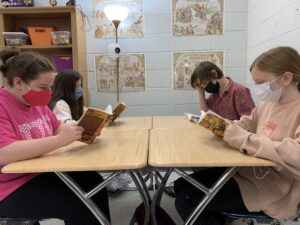
Part of what has made teaching this content so difficult is that very few students have any background knowledge about the earliest civilizations. If they do, that knowledge is usually limited (Egypt’s pyramids and mummies) or inaccurate (Greece according to Percy Jackson  or 300). It’s hard for my students to make connections to material when there is no foundational information to attach to. My dilemma was how to present enough content so learners can connect the dots without overwhelming them.  

Introducing Historical Fiction in the Social Studies Classroom
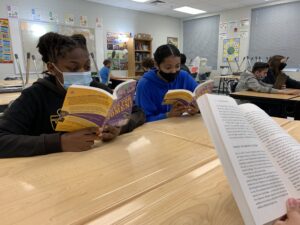
Wendy Garrett, a friend and mentor, introduced me to the idea of using historical fiction to build my students’ background knowledge. She had students participate in a class reading of a book she selected in addition to their daily warm-up questions. The thought was to kindle an enjoyment of reading AND sneak a little historical context in at the same time.   Many of our students were academically below grade level and reluctant to attempt a typical novel study. We chose to scrap the usual process and keep things focused on the reading – no vocabulary, no character studies, no plot diagrams. If students ask about the meaning of a word, we’ll discuss it, try to decipher it. If students wanted to discuss things or had questions about the plot or theme, we would talk. Our intent was to present some details about ancient civilizations and historical events while we remind students how enjoyable reading could be.  We let student interest guide our actions and activities. Everything was low stakes.  
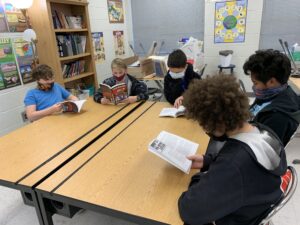
As I included daily readings into my lessons, what I found was encouraging. The first 2-3 weeks were long as I had to demonstrate and promote expected behavior during the read aloud time. When students accepted and started living into these new expectations, all of us could focus more on the information in the book. We were able to take a few minutes to practice using context clues to determine the meaning of new words. Afterwards, it became a game – who could find an appropriate  time and place to use these new words. If an actual person was mentioned in our book, a student would give us a 60 second biography of the character. When an historical event was involved in the story, someone gave us a quick recap of what happened. The payoff came when students saw these same people and events in our regular class discussions and were able to recall information we had covered before. I could take another minute and help students put together the cause-and-effect of concepts we were learning. Lots of wins on multiple fronts!!!

Useful Tips when Integrating Historical Fiction into the Classroom: 

  • Explicitly teach your expectations for this reading time. If you are part of a teaching team and your ELA partner has procedures for this activity, try to mirror it. Consistency will make implementation easier. Have an anchor chart to use as a visual reminder of what you want to see and hear during this time.
  • Save your voice and use an audio reader system when possible.  
  • Befriend your media center person.  They are often the keeper of class sets. They know what’s available, what’s on order, what’s popular. They may have connections with other media centers and can arrange a loan of a class set from another school.
  • Give your students some input about what your class reads. I get single copies of books and let my students “test drive” them. All I want to know is, “Did you enjoy it? Would you recommend it to a friend?” If a student can give you more details, write it down. These details are an invaluable resource in determining what will grab your students’ attention and can guide future choices.
  • Get comfortable with looking for additional sources of funding. Until schools are better funded, it is hard to get class sets of the “latest and greatest titles” that are more likely to hold students’ attention. I have purchased several class sets through Donors Choose. I have several grant portals bookmarked. I’m always looking for ways to keep my classroom library fresh.
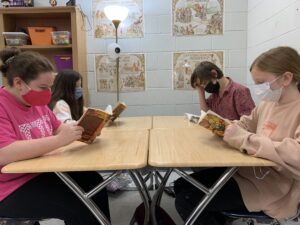
The skills that building background knowledge allows your students to practice, are the ones that will make them more engaged citizens and more valuable employees. Recognizing links between people, events and ideas are a building block of critical thinking. Critical thinkers identify situations, gather information, analyze information, and present solutions. These are the people that will make a difference in the future, if we take the time to teach them to solve problems. Teaching these new and different skills won’t be easy, but giving our students those skills will be worth every ounce of that effort.

About the Author

Kim is a second-career teacher with 13 years of experience.  She’s currently working to bring ancient history to life at Cane Bay Middle School in Summerville, SC.


Culturally Sustaining Pedagogy and the Classroom Library

Teaching

By: Lexington Hendricks, South Carolina High School Teacher

As a classroom teacher, it is my job to make sure that my classroom is a safe space for students, a place where they can be who they are and not have to hide any aspect of their identity. This includes students’ individual backgrounds and cultures. Students come from many different backgrounds even if they grew up in the same town, and it is important to recognize that all students may think and view materials differently because of this.

Experience has shown me that not all students, no matter their backgrounds, enjoy reading. Most would even claim to hate it. Many times this stems from being forced to read novels that are dated and have no relation to students whatsoever. If students struggle to connect or relate to something, there is a good chance they will not gain knowledge from whatever they are attempting to read. Think about their social media; students choose to follow people or pages that they have some form of connection or relation to. This also varies from student to student because of their backgrounds and cultures. The same can be applied to what students read. This is why it is crucial not only to have a classroom library but also to create an intentional classroom library. 

Creating my Classroom Library

Creating a classroom library is already a daunting task. I remember my first year teaching and buying the cheapest books I could find just so students would have the option to borrow books from me and to see them in my classroom. Throughout conversations with my students over the years, I have learned that many of them find the school library overwhelming because of the amount of books to choose from. Also, many libraries are organized by the author’s last name which can make finding books on topics students are interested in more difficult. When students are able to see books in their classrooms on a smaller scale, the overwhelming feeling of choosing one book out of hundreds disappears. When creating a classroom library, the first step is to thoughtfully organize books so that they are easily accessible to students. The second, and in my opinion, most important step is choosing the books that go into the library. 

At first, I just bought whatever I had access to and what was easiest on the budget. There was no intentionality in what books I chose. I also did not have any organization at all. I just put them on bookshelves and hoped for the best and found myself frustrated when none of my students wanted to go to the shelves and pick out books to read−not my proudest classroom library moment. I think I realized that in order for my classroom library to be useful, I needed to do two things: organize the books in a more accessible way and add books that were culturally relevant to my students. 

How to make your Classroom Library more Accessible

1) Sort by Genre

To make books more accessible to students, I sorted them by genre instead of the author’s last name. I had to remind myself that students probably care more about what the book is about than who wrote it. I chose the genres that our school librarian used so students would have consistency when choosing books. I color coded the genres and added that same color to the corresponding books so that students could easily put books back in their place when they were finished. That was actually the easy part.

2) Find Culturally Relevant Books

Finding culturally relevant books was a little more challenging. What did culturally relevant even mean? Thankfully, we live in an age where the internet and Google are both handy. I did my research and learned that I needed to find books that fit not only where my students come from physically but also mentally, meaning books students could relate to in regards of hobbies, identity, and what they believe.

3) Keep your Student Population in mind

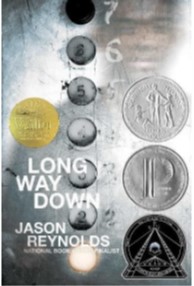
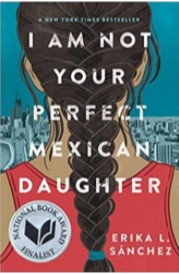
Our school has a high population of English Language Learners (ELLs), so I added in books that brought in their cultures and made sure that some of these were Spanish versions for those who are still learning the basics of English. I also used conversations with my students to determine what other types of books I wanted to include. The images you see throughout this post include some of the books I bought when I first started intentionally buying culturally relevant books. It is important to note that each classroom is different; the best way to determine what books to buy for your classroom library is to have intentional conversations with students that allow you to get to know them beyond an academic level.  

Students need to see themselves or parts of themselves in the books they read to make real connections. When this happens, they can see that you not only value them as students but also as who they are as human beings. This often means more to them than academics. On that same note, it means even more to students if you read the books that relate to their cultures. Students see that we care about them and want to know them, not just their academic abilities. I love to see students’ faces light up when I can introduce them to books that I know they will love and relate to because I have also read them myself.

4) Be Intentional in book Selection for your Library

I had one student who had some struggles about fitting in and being her true self, and she seemed down a lot in class on top of slacking when it came to school work, which was not at all like her. I asked her about it, and she told me about how she was struggling to figure out who she was and did not know what to do. I was able to recommend a book to her that I had just read. This book is light-hearted but also touches on a breakup and how to keep going, which I knew this student had recently gone through. I recommended the book What if it’s Us? by Becky Albertalli and Adam Silvera in hopes she would see that even when life is hard, good things can still come. As she was reading, she would note certain aspects of the novel that she could relate to and wanted to read more books like that one after. This led to me wanting to be able to recommend more books to not only her but my other students as well. I then decided that I not only need to build my classroom library intentionally, but also read the books I picked out as well. This student felt cared about and represented because I was able to give her a book that she could relate to and see parts of herself in. This mattered more to her than anything else. 

You see, the bottom line is that when students feel they are represented, they are more likely to invest in whatever the activity is, and in this case, it is reading. Incorporating students’ backgrounds and cultures into the curriculum can be challenging. If you do not feel like you are ready for that challenge, start small. Be intentional with the books you put in your classroom library. Choose books that represent the students in your classroom. Let them know that you care about who they are and where they come from. 

The more you show that you care about students, the more likely they are to read something if you ask them to, and the more students read, the more likely they are to improve overall academically, even if they are just reading books that they can relate to. They may even begin to enjoy reading. I always say, “Students don’t actually hate reading. They just haven’t found the right book yet.”

About the Author

Lexie Hendricks has been teaching for five years at Palmetto High School. 

Photo by J on Unsplash

Lotería: The Reimagining

Teaching

By: James Campbell, South Carolina High School Spanish Teacher

Students were arriving to their first day of AP Spanish class, some timid and some visibly relieved to be in a familiar classroom. Many had taken a Spanish-for-heritage-learners’ course with me, most had experienced being in a Spanish class designed for students well below their proficiency level. We discussed their academic experiences a little to start the short semester. We all listened quietly while students took turns telling stories about how they were called “cheaters” for knowing Spanish already, how they had all been approached to “share” their work with other students, how other students were surprised that they could speak English, and how they were always tasked with the “Spanish part” of any collaborative project they were doing. After hearing them describe the antiquated academic requirements in a system not designed for them, I stared blankly over the silent classroom into the painting on the back wall. “We should go over the syllabus,” I thought. “We only have a few months before the exam and we have a lot to cover,” but I just couldn’t get myself to say it out loud. One student said, “Well, those students aren’t going to get college credit for knowing Spanish,” keenly aware of the irony. “When are we going to play Lotería?” we heard from a quiet student in the center of the room. The room exploded with excitement.

The Original Game

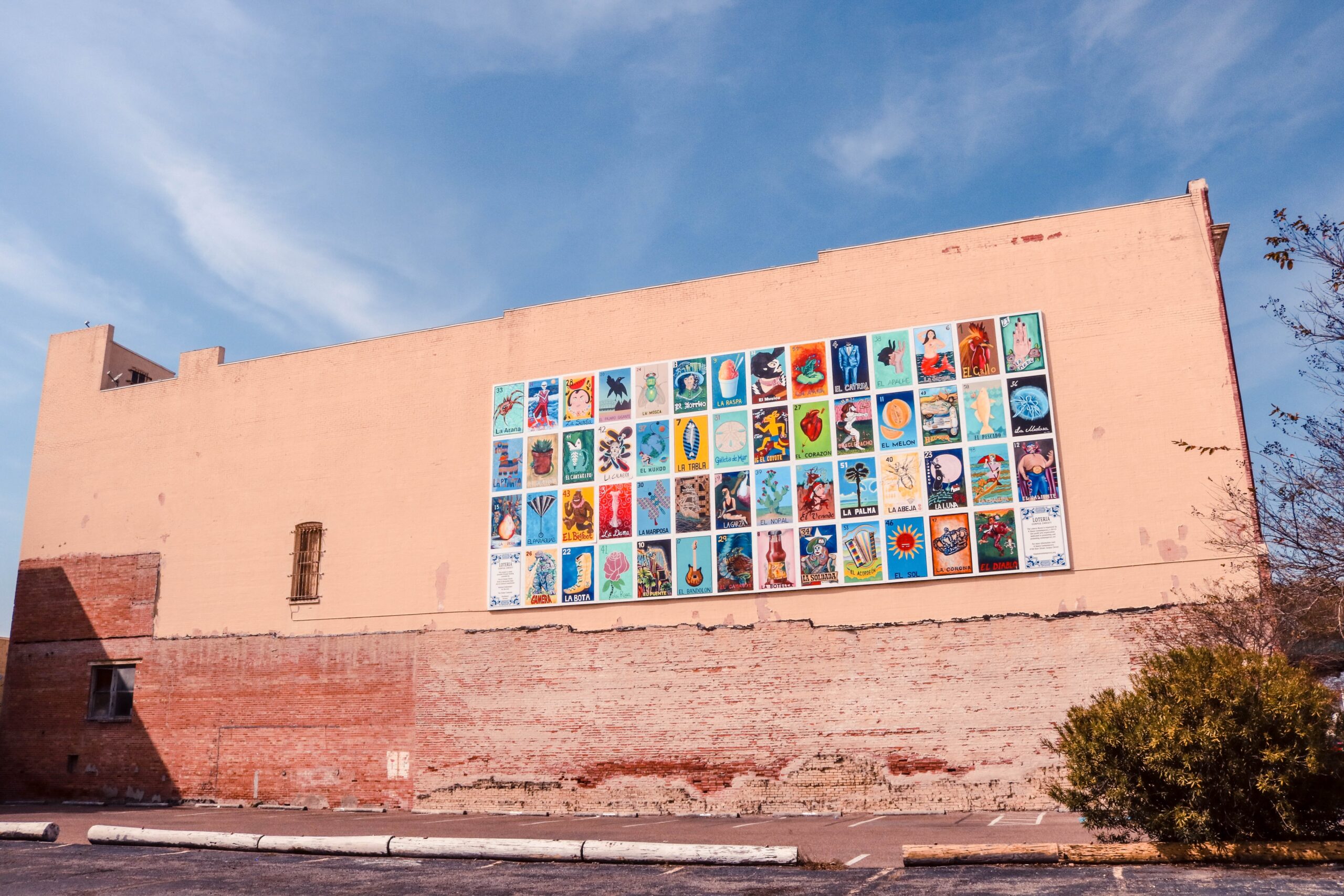
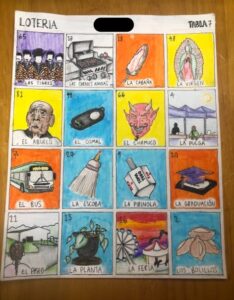
Lotería is a bingo-like game with images that represent different elements of traditional Mexican culture, though the game is not only played in Mexico. I am not Mexican or Hispanic but I love seeing the nostalgic mood rush over many of my Spanish-speaking students who almost hum hearing the short verses on the back of each card, who argue over how to play according to their family’s reglas, and who have memorized an entire tabla (a 4 x 4 grid on which the game is played). It is a great listening game with the entire room silent until someone calls out “¡Lotería!” with a full tabla. It is an authentic game that everyone can play. It does, however, have some problematic elements. 

One day, after one of my Spanish 3 Honors students asked, “Are we going to play that racist bingo game again?” I thought more about the disclaimer I give about some of the images in the game. I never tried to explain them away but challenged them to research where they came from and how they ended up in the game. I discussed this some more with my AP students that next period, and it hit us almost simultaneously – we should update some of the images for our classes.

The New Game

So, we began our year-long journey to re-imagine a highly recognizable piece of Mexican culture. As with any project that begins as organically as this, their trajectory almost immediately began to shift from changing just a few of the images on the board to a weeks-long brainstorm on reimaging the entire gameboard to represent the diverse Hispanic experiences in the Upstate of South Carolina. The students drew from a seemingly endless mental library of personal and familial experiences to create a list of over 200 people, animals, places, foods, clothing items, and more. The students, from different parts of the Spanish-speaking world, began to see how similar some of their experiences were as Hispanic students and how unique they all were at the same time, not just the stereotypes others had for them or that they might have had of each other. After much discussion and debate, the students were able to reduce their ideas to the standard 54 images, which they divided amongst themselves. Each student produced a visual concept and a catchy phrase, poem, or quote for their peer-assigned tarjetas. 

Student sample.

They then presented them to the class, one-by-one, each fielding questions and feedback from their critical peers. The students took the feedback seriously, not personally. Our classroom artists decided on a cohesive theme for the boards. Our creative writers went to work rewording some of their classmates’ verses on the back of the cards. Other students spent time making sure not to repeat the reason they started this whole thing and took votes on replacing some that may unintentionally perpetuate unhealthy stereotypes of themselves. They spent the last 20-30 minutes of each 90-minute class in a buzz of “do this,” “don’t forget to mention that,” “should we add this?” and “who was in charge of these?” completely owning what would become a way to tell the story of their community. I, their teacher, had become a giddy observer, fully convinced that they could produce and distribute their version of this game to the community.

In what I can only describe as a completely serendipitous moment, I ran across a painting done by an artist in South Carolina that told the story of an immigrant girl in the format of a Lotería tabla. It was a moving piece with an even more incredible story behind it. I talked to the artist and set up a visit for later that month. In the meantime, I showed my students the painting, at which time they immediately wanted to drop everything and make their own. “Working together is just too exhausting,” one said. After a couple apologies and recommitments, everyone was back on board. A week later was our last day of the semester together due to COVID-19 (I just checked, and the Google Doc we were working on was last edited on March 13, 2020). The biggest and most exciting project that my students had ever come up with was over. Or so I thought.

After a few weeks of figuring out eLearning and doing what we could to prepare for who-knows-what the AP test would look like, we had our first virtual class meeting. After getting updates from everyone and going over their virtual assignments they all wanted to know what would become of their Lotería project. Not wanting to stress students out any more than I needed, I sadly told them I had no plans to continue it collaboratively but they were welcome to continue it on their own. “It’s just too hard to facilitate such a big project together right now,” I said. Then, without hesitation, a student suggested they all make their own board, “You know. Like that artist did”. 

The Final Product

Photo by Christy Ash on Unsplash

Over the last two months of the semester, as the students prepared for an abridged AP Spanish exam, they drew, took pictures, wrote reflections, and all designed a tabla that told the story of their own journey of how they got to where they are now. During this time, we hosted virtual visits with Hispanic community members, writers, artists, and teachers from across the Carolinas. The students’ voices grew more confident with each new guest and, since I got to hear them repeat their stories multiple times, I noticed them embracing images that told stories of deep, personal sorrow and joy. Their classmates noticed this too. One of my younger students, in tears, shared at the end of the course how glad he was to be a part of listening to his classmates’ stories even when he wasn’t as comfortable sharing his at first because he thought it wasn’t as cool as the others’. “No, no, no,” an older classmate chimed in, “we couldn’t have done it without you.”

I think about this project almost every day. Even though they all designed and presented individual products, there was a sense that this was a complete group effort, even in its final iteration. It makes me wonder how I could ever again do a project in my class where a student says (or even thinks!), “we couldn’t have done it without you” at the end of it to another student. But, I know that something like this will never happen again if I can’t learn to listen to and trust students. It won’t happen again if I don’t find space in my curriculum for students to find their voice. And, students will never have as big an impact on each other’s learning and emotional well-being as they did with their Lotería boards if they don’t feel safe enough to share their voice. They did this and proved this together and I couldn’t have done it without them.

About the Author

James is in his 14th year as a Spanish teacher and is the 2020-21 Teacher of the Year at Carolina High School.

Seeing Themselves in the Text: Exploring How Critical Literacy Aids in Student’s Examining Their Position in the Spaces They Occupy

Teaching

By: Steven Jernigan, South Carolina English Language Arts Teacher

Photo by Nicholas Beel on Unsplash

In her 2021 inaugural poem “The Hill We Climb,” poet Amanda Gorman says, “We, the successors of a country and a time where a skinny Black / girl descended from slaves and raised by a single mother can / dream of becoming president, only to find herself reciting for one.” The quote establishes Gorman’s position in the pageantry as the public figure representing art and youth and diversity, while also fully cementing that position in the context of the arduous journey it took to get there – her personal history and the country’s alike. There’s more in that poem – and moment – that is worth dissecting and poring over, but it is that line specifically – high visibility and positioning oneself within the narrative – that there lies a connection between culturally sustaining pedagogy and student’s emotional wellbeing. Author Jennifer Buehler (2019) writes, “We are always making sense of our own and others’ lives in terms of storylines that tell us what to expect in social situations” (pg. 12). Here, Gorman is providing the narrative and the storyline wherein Black children – Black girls specifically – can be seen and heard and admired. One must ask however, what happens if that narrative is not the dominating one in the classroom? It should lead to educators asking questions of their practice such as: What storylines and narratives are we presenting to our students? Furthermore, what are these stories conveying about a student’s own position in the classroom and the world around them? 

Narratives in the ELA Classroom

Photo by Brad Neathery on Unsplash

During my time as an English teacher, these questions have served as the basis for most of the teaching decisions. The texts we choose to read in class, if not directly offering students the ability to see themselves in the classroom, are often centered around discourse and writing where students examine and analyze their position both in the classroom and broader society as a whole. Authors Baker-Bell, Butler, and Johnson (2017), in their article “The Pain and the Wounds: A Call for Critical Race English Education in the Wake of Racial Violence,” highlight how English teachers “invoke racial violence when we don’t cultivate critical media literacies that Black and Brown youth can use to critique, rewrite, and dismantle the damaging narratives that mainstream media has written about them” (pg. 124). While the call here is to provide students with the tools and knowledge for how to identify and rectify the power structures they are subjected to and perhaps even uphold, the consequence of not doing so should not go unnoticed – the continued upholding of a system that enacts violence on the bodies of Black and Brown youth. And while that consequence provides enough justification for critical examination in the classroom, it is worth noting that research (Andolina & Gonklin, 2019; Scriuba, 2014) suggests engaging students in such practices promotes the building of empathy, importance of community, and need for equity within our students. 

Creating a Culturally Sustaining ELA Environment

In specifically addressing these questions and concerns in my classroom this year, I and the other English 2 teachers have centered our world literature curriculum around the pairing of whole class text with student choice, YA novels. As a whole, our school has actively engaged in students doing some version of self selected, independent reading. At its best, this practice was used to dedicate one day a week to sustained reading with perhaps a whole class discussion follow up. At its worst however, it was used to fill time after quizzes and tests. While there is nothing inherently wrong with using time after assessment as an opportunity to get students to read, we felt that this year there was something more we could do. So, we went about finding YA books that fit with the more traditional texts that had been a part of the curriculum for years. In our reading of Shakespeare’s Othello for example, we are having students choose from a selection of works that sit systemic racism as a central conflict in their narratives. We are then setting aside one day a week to the readings of these choice texts. During these readings, we will also be breaking students up into groups where they will participate in conversations around text-to-text, text-to-self, and text-to-world comparisons. In addition, the students will be maintaining blogs as a space to talk about their conversations and overall impressions from their study of the two works of literature. A project similar to this – students created text sets that related to central ideas of their two novels – was done with the reading of Achebe’s Things Fall Apart; those projects allowed for some excellent conversation around the ways in which societies – both our own and others – struggle with progress and tradition. 

Photo by Seven Shooter on Unsplash

Aside from fully revamping a course’s entire curriculum however, there are other ways to get storylines and narratives into the classroom that have students examine, critique, and see themselves in the world they occupy. In my English 3 American Literature course, this has been done by examining poetry like Amanda Gorman’s. In looking at poetry as both a form of argumentation and as emotional expression, students are reading Gorman’s and Angelou’s inaugural poems to see how poets – Black poets specifically – were using their craft to discuss and critique American society. The students are to not only examine the argument present in both these works, but to identify challenges and obstacles that are present in their own lives and communities that could be addressed with poetry too. While the dream would be to have a room full poet laureates that all have my class to thank as their genesis, the overall goal is for these students to see themselves as agents of change in their own world – to position themselves in places they are heard, seen, and appreciated. 

The specific practices offered here sit not as quick fixes to systemic, holistic problems, but rather as a push to get educators to acknowledge the narratives and stories elevated in their classroom. As noted in Kristina Montero’s book review of Paris and Alim’s Culturally Sustaining Pedagogies: Teaching and Learning for Justice in a Changing World (2017), creating a more equitable world for our students means rooting out the white supremacist and colonial practices that have and continue to pervade our field. Doing so, requires self-examination and identification of our own role in the maintenance of a system that oppresses and silences. In other words, the work is inward as much as it is outward. As noted by Gorman however, “For there is always light / If only we are brave enough to see it / If only we are brave enough to be it.”

References: 

Andolina, M. W., & Conklin, H. G. (2020). Fostering Democratic and Social-Emotional Learning in Action Civics Programming: Factors That Shape Students’ Learning From Project Soapbox. American Educational Research Journal, 57(3), 1203–1240. https://doi.org/10.3102/0002831219869599

Baker-Bell, A., Butler, T., Johnson, L. (2017). The Pain and the Wounds: A Call for Critical Race English Education in the Wake of Racial Violence. English Education, volume 49 (2), 115-129. Retrieved From https://library.ncte.org/journals/ee/issues/v49-2/28917. 

Buehler, Jennifer (2019). Positioning Theory: Exploring power, Social Location, and Moral Choices of the American Dream in American Street. In R. Ginsberg and W. J. Glenn (Eds.), Engaging with Multicultural YA Literacy in the Secondary Classroom (pp. 11-21). Taylor and Francis Group. 

Montero, M. (2019). Creating Cultural Sustenance in the Classroom: A Review of Culturally Sustaining Pedagogies: Teaching and Learning for Justice in a Changing World. Journal of Adolescent & Adult Literacy, 62(6), 698–701. https://doi.org/10.1002/jaal.956Sciurba, Katie (2014).

Texts as Mirrors, Texts as Windows: Black Adolescent Boys and the Complexities of Textual Relevance. Journal of Adolescent and Adult Literacy, 58( 4), 308– 316. doi: 10.1002/jaal.358.

About the Author

Steven Jernigan has three years of teaching experience and is currently an English Language Arts teacher in Greenville, South Carolina and a Graduate Student in the Literacy Masters Program at Clemson University.

Photo by Jon Tyson on Unsplash

What’s in a Name?

Teaching

By: Antoinetta J. Rogers

“Schooling is the process by which you institutionalize people to accept their place in a society… Education is the process through which you teach them to transform it.”- Dr. Jeff Duncan-Andrade

What’s in a name? 

This is a very common and loaded question.  Asunción Cummings Hostin, Euphemia LatiQue Sumpter, Uzoamaka Nwanneka Aduba, and Antoinetta Jamika Rogers prove there is always a story behind a name.  

Asunción Hostin is an American lawyer and a very intelligent, articulate, and charismatic cohost of the Daytime Emmy Award winning talk show The View.  She is commonly known as Sunny Hostin.  During an interview with People Magazine, Sunny stated that when she began working on Court TV with Nancy Grace, the famed legal commentator, she had a difficult time pronouncing her name.  Acknowledging that Sunny was indeed quite talented, Nancy Grace feared that because most people may find it difficult to pronounce her name that she shorten it to make it easier to pronounce. So, instead of Asunción Hostin, Sunny Hostin is the famous household name.  Euphemia LatiQue Sumpter is an American actress.  Known for her flair, fortitude, and fascinating role on the highly acclaimed series Tyler Perry’s The Haves and Have Nots, she mentioned in an interview that although she was beautiful and talented the name Euphemia just was not “it.”  So, instead of Euphemia Sumpter, Tika Sumpter is the famous household name.

Uzoamaka Nwanneka Aduba is a dynamic, vibrant, and effervescent, Nigerian American actress who is best known for her roles in the Netflix series Orange is the New Black and the film Miss Virginia. She is commonly known as Uzo Aduba.  A video surfaced of Uzo stating that she hated her name.  The hate seemed to stem from other people having a difficult time pronouncing it. Growing up in a small New England town, she explained that there were not a lot of Nigerian Americans. Uzoamaka means “The road is good.”  What was quite noticeable in her candid oration was the visible mentioning of teachers finding it difficult to pronounce her name.  One day upon returning home from school, she casually asked her mom to call her Zoey. Her mom simply stated that if people can learn to say Tchaikovsky, people will and would learn to pronounce Uzoamaka.

So, what does an English teacher from a small rural town in South Carolina have in common with the aforementioned Hollywood stars?  Antoinetta Jamika Rogers is my name.  Nobody calls me by my first name Antoinetta, instead I go by Jamie.  Antoinetta has ten letters, four syllables and is often pronounced as (An-tw-un-Et) instead of (An-tw-un-Et-Uh).  So, growing up Jamie was more adaptable and easier than Antoinetta.  It became my nickname. Nicknames are convenient, but seldom created as a courtesy or in favor of the person in which the shortened name is given.  What’s in a name? Absolutely everything! A person’s name is a huge and important part of a person’s cultural identity; therefore culturally responsive teaching is very imperative and quite a necessity to say the least in an ever changing and evolving world.

Culturally Responsive Teaching

Photo by sydney Rae on Unsplash

Culturally Responsive Teaching is the practice of teaching cultural competence.  States and school districts already have educational standards and curriculums established that are usually adjusted and molded according to society’s norms.  However, in the classroom it is so important that teachers make it a norm to not only teach, but practice cultural competence. Cultural competence is the ability to understand, communicate with, and effectively interact with people across cultures. One’s own awareness of cultural competence includes developing positive attitudes towards cultural differences and gaining knowledge of cultural practices and world views. I realized that regardless of the demographics of students I teach, classrooms should be increasingly diverse with diverse teaching materials, methods, and strategies.  If the demographics are all the same, this does not mean that cultural competence and sensitivity should not be inclusive. All students should feel welcomed into a learning environment that celebrates diversity and multiculturalism. Most curriculums and lessons include an aspect of diversity, but it should be woven into the atmosphere of the classroom.

Real World Implications

Photo by Markus Spiske on Unsplash

According to the Center for the Professional Education of Teachers (CPET), school practices currently reflect the norms of monolingual, white, middle class students, which often excludes students who come from diverse cultural and linguistic backgrounds. Students who are excluded from these norms are often viewed through a deficit lens.  South Carolina College and Career Ready Standards are the standards that I am required to use as a certified classroom teacher.  So, the overall goal is for students to be prepared to enter an institution of higher learning, the workforce, and/or the military.  Not only should students be academically prepared, but students should be culturally prepared as well.  Thus, a simple yet complex task of accepting and pronouncing an individual’s name can possibly have an everlasting positive impact.

Society has a habit of associating certain sounding names with certain races and ethnicities. According to the National Bureau of Economic Research Issue No. 9. “Employers’ Replies to Racial Names,” a job applicant with a name that sounds like it might belong to an African-American – say, Lakisha Washington or Jamal Jones – can find it harder to get a job. Despite laws against discrimination, affirmative action, a degree of employer enlightenment, and the desire by some businesses to enhance profits by hiring those most qualified regardless of race, African-Americans are twice as likely as whites to be unemployed and they earn nearly 25 percent less when they are employed.  Pronouncing an individual’s name correctly and accepting that the name may have cultural attachment to it is important for the advancement of society. 

Classroom Applications

I make sure that I pronounce a student’s name correctly as well as the student’s peers in my class because names represent a heritage, a lineage, and a legacy. This is also common courtesy and a sign of respect.  A name is a representation that we should be proud of and not something that anyone, in this case specifically students, should have to worry about changing or shortening in the future, because we live and exist in a society where certain names make people uncomfortable for a quick minute or two.  If teachers discuss or present this topic in the classroom and really show and teach through experiments, instructional strategies, and projects, this can begin to turn the tide and become the norm therefore possibly preventing society from having a perception of “racial names.”   

 The world is a colossal entity that embodies diverse, multicultural, racial, ethnic, and linguistic backgrounds.  If students are taught to be culturally competent and responsible people, then as the world continues to progress and move forward, teachers will be a major part of molding and shaping well- rounded culturally aware individuals. Awareness promotes respect and acknowledgement.  In foresight, these individuals will not haste to say names such as Asunción, Euphemia, Uzoamaka, and Antoinetta because of their phonetic pronunciation, but make embracing and sharing the importance of all names and all things that represent heritage, culture, and diverse backgrounds the standard.

About the Author

Antoinetta J. Rogers has seven years of teaching experience and currently teaches Secondary English at Richland Northeast High School.

Building Blocks

Collaboration Through Student-Centered PLCs

Collaboration

By: Shanna Towery, South Carolina ELA Teacher

Greeting a classroom full of students and then closing out the rest of the school world with a firmly shut door seems to be the norm for many classroom teachers today. The autonomy afforded to teachers has its benefits, but it can also be detrimental to the mental health of teachers as well as the overall culture of a school.  

What’s Wrong with Collaboration?

It would be hard to pinpoint exactly what is to blame for the general ill-will often felt by educators towards collaboration or the dreaded PLC. Maybe it’s the sense of competition garnered from high-stakes testing or the half-hearted attempts at professional development where many teachers are sure to be found half-listening with a stack of ungraded papers.  Whatever the cause, the real casualties when collaboration is not fostered, encouraged, and celebrated are the ones who need it the most–our students.  
Collaboration:  For the Students or For the Students?

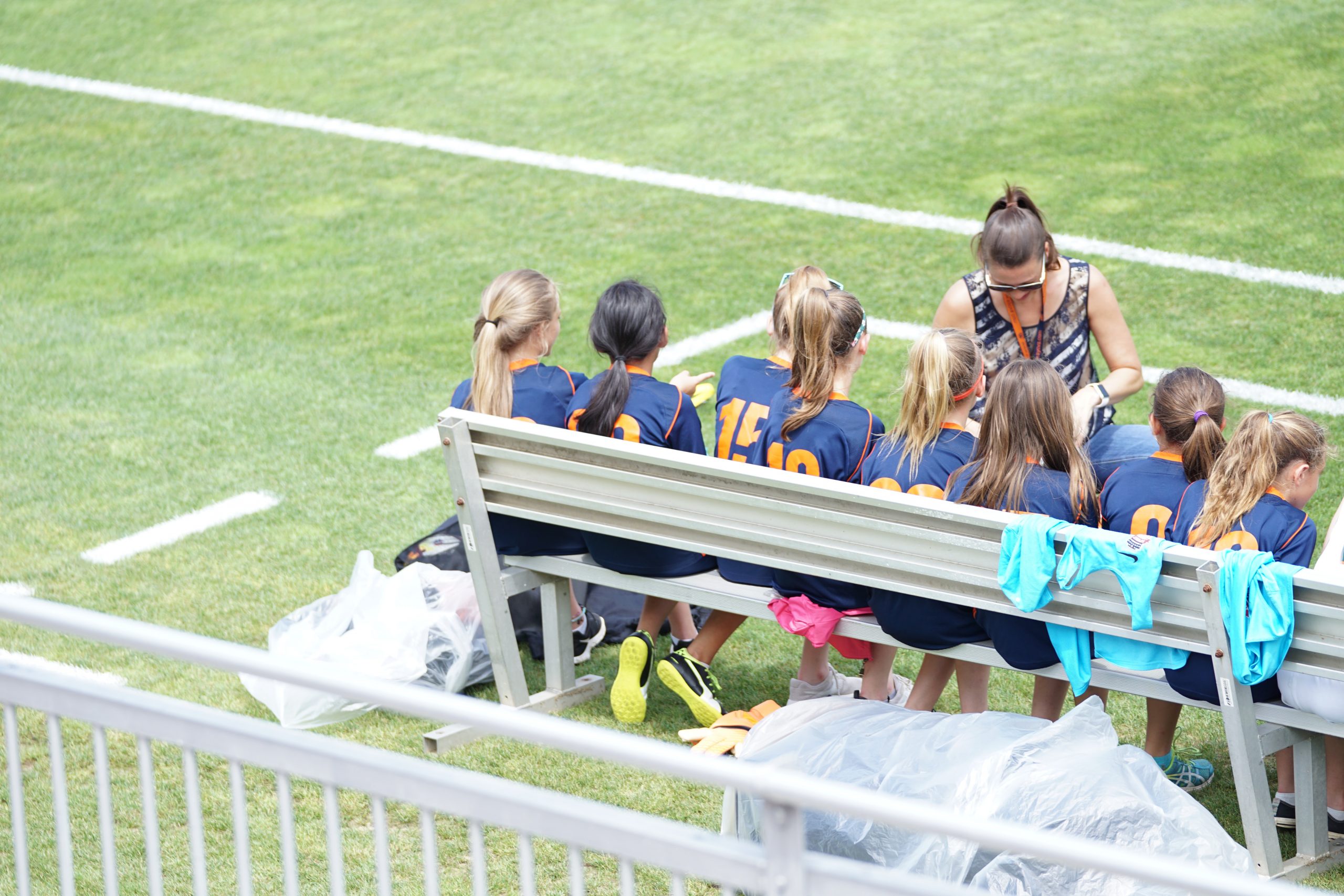
Most teachers would agree that students are social creatures.  As such, we can utilize their tendencies for communication through class discussion, turn-and-talk strategies, or collaborative groups as effective teaching tools.  In this sense, educators are encouraged to use collaboration among students to foster learning in the classroom, but are teachers as willing to collaborate together to ensure every student truly learns?  How often do teachers meet in your building to use real classroom data to authentically discuss student progress, successes, needs, for enrichment?  

A tree, in a forest, with a question mark painted on it.
Photo by Evan Dennis on Unsplash

For too many schools, the answer to these inquiries would be disappointing to advocates for professional collaboration. Why is it that collaboration among students in the classroom is a non-negotiable, while the adults in the building do their best to cling to their autonomy?  When did we outgrow communication as a means to deepen and build mutual understanding? How can we be so willing to participate in discussion forums, Facebook groups, book clubs, or Bible studies, but hesitate to collaborate with the colleagues in our buildings?  And most importantly, what can we do to turn this around?

PLC:  More Than Meets the Eye

Bulls-eye
Photo by Oliver Buchmann on Unsplash

Professional Learning Communities have gotten a bad rep thanks to half-hearted attempts done simply to check a proverbial box.  In reality, PLCs have so much more potential and value when utilized correctly.  While book studies and grade level/department level meetings are important and definitely have their place in a positive school climate, the kind of PLCs I have found success with are more about student achievement than they are teacher-centered.  In this type of PLC, teachers would meet together prior to teaching to discuss learning goals and objectives. The teachers would not discuss activities or lesson plans so much as they would discuss what they truly wanted their students to gain from upcoming lessons.  Only when the goals have been identified would teachers discuss how best to teach for the goals as well as how they would know whether or not the goals had been met (think: assessments).  After teaching, the teachers would gather the data from the classroom assessments and meet again to compare notes and discuss patterns, ahas, or concerns.  A step often missed here is what to do next–will re-teaching be necessary? Is there room for enrichment?  And with true Professional Learning Communities, the cycle would then begin again!  

Literacy coaches will recognize what I have described as student-centered coaching cycles (Sweeney, 2011), but as evidenced by a professional development session I was privileged to attend with select members of my district through Solution Tree, this type of PLC has various formats and can take place with or without a literacy coach.  Ideally, proper school leadership would encourage this type of student-centered learning approach throughout the building, but all it takes is a few teachers willing to work through a few cycles for it to catch on. As a 6th grade ELA teacher, I was able to conduct a few cycles with a 7th grade social studies teacher last spring before school ended abruptly to offer some insight to her regarding disciplinary literacy.  We put our individual expertise together to determine goals for “reading” primary documents and then analyzed data together to inform her teaching.  I was able to help her create a rubric for assessment based on our goals and it became very clear through this process what students were understanding and what needed to be re-taught or further scaffolded. It was such a refreshing and rewarding experience to feel that we were collaborating in a way that would truly be useful to both teaching and student learning!  Afterwards, I was able to carry the type of work we had done into my grade level ELA planning meetings.  

A Call to Action

After years of thinking I knew all there was to know about PLCs and professional development, I found this reimagining of the student-centered PLC to be just the kind of collaboration I could get behind. My hope is that others will see how incredibly beneficial collaboration can be when professionals are willing to meet together on behalf of their students in a non-judgemental or threatening way.  Our students deserve it!  

Sweeney, D. (2011). Students-centered coaching: A guide for K-8 coaches and principals. Corwin

About the Author

Shanna Towery has sixteen years teaching experience across a total of four school districts in South Carolina.  She is a recent M.Ed. graduate from Clemson University and is currently a 6th grade ELA teacher.  

Student Collaboration in the Virtual Classroom

Collaboration

By: Victoria Young, a South Carolina Teacher

When I began teaching virtually this school year, I was excited to utilize all of the technological resources and techniques I learned in university that I hadn’t had the chance to try out. However, as most teachers know, it is almost impossible to effectively teach content in a meaningful way to kids when they are unable to connect with the content and one another. In the virtual classroom, students are unable to simply turn to their neighbor and discuss a problem or quickly whisper questions and comments to one another in class. Sure, no teacher will deny the fact that the mute button is a game changer for classroom management, but they will agree that it does damage the classroom community. The social barrier created by virtual learning seemed to put the important skill of collaboration on hold for this generation of students. So how do we as teachers reignite this connectivity in the virtual classroom?

Tip #1: Build confidence with anonymity

Photo by Philippe Bourhis on Unsplash
Photo by Philippe Bourhis on Unsplash

For me, it was a long process filled with patience. The first day of school is always awkward; but with technical difficulties and lack of participation, the first day shyness lasted the first two weeks. The way I approached a lack of classroom engagement was by treating virtual classes like a shy kid. You know the one – shoulders hunched, little eye contact, and always chooses to do the group assignment alone without asking. With tools such as Nearpod, Polleverywhere, and Google Forms, I did activities in and out of class that allowed students to express themselves and their thoughts and opinions with anonymity. As a class, we would see how we all think alike or learn new perspectives. I would ask for opinions on silly things like what I should eat for lunch for kids who are more outgoing to speak up without pressure of being ‘wrong’. When the more outgoing kids started to lead the way with the easy interactions, I saw that even the quieter students begin to speak up in the chat or even unmute! Eventually, through these distant interactions, I noticed more and more students interacting in class in day to day conversations and in content related discussions. They began to gain confidence once they saw that they are safe to share their ideas.

Tip #2: Use mainstream tools to your advantage

Once we broke the 10 layers of ice, I began to do more collaboration boards and Flipgrids without anonymity in order to encourage more discussion in class. In my very social classes, I have even gone on to do partner projects through remote learning. Middle and high school students are on every type of social media; so many of my students chatted via Snapchat, Instagram, and even Discord. Other students with less access to social media simply communicated via email. All that to say, students are collaborating all the time, we just have to use their methods to our advantage! (If you can’t beat them, join them!) I was never given any issues with participation despite how different this form of collaboration is and how it appears more arduous than simply sitting next to a partner in class. It is as if the ability to collaborate without a teacher facilitating every step was freeing; therefore, I began to see their personalities shine through their work.

Tip #3: Find common ground

Of course, not every class can achieve the same level of collaboration in the virtual world. That doesn’t mean, however, that it can’t be achieved! One of my classes’ favorite activities is to play Among Us as review before an assessment. While talking about our weekend plans, I told my students I was going to play video games with some friends. This built a quick connection between me and my classes. Eureka! We finally had something in common besides being stuck in quarantine. On Gimkit.com, there is an activity that allows students to review material while playing in a similar format of the popular game Among Us. Students get very competitive and have to interrogate one another in order to win. There are also several other games that allow collaboration; but I always start with a solo game to help students get used to the mechanics. Nothing says virtual like video games and they are a great way to build community and collaborate in order to learn! 

No matter the grade level or content you teach, collaboration is achievable in your classroom whether you are in person or online (or both!) this school year. Remember that at the end of the day, the goal of collaboration is to build relationships and problem solving skills. If you notice that your student collaboration is lacking in the qualitative results you want in your content, try to treat it more as a social skill. If you nurture your classroom’s environment first with collaboration, the learning will come along with it. Find a common interest, talk to a child or teen about what they like to do in their free time, and use those things to your advantage! Take away the fear of failure and show that you are all just as human as each other and soon your students will see that learning can be found all around us, not just in a school or textbook. And isn’t that the most powerful lesson that we can teach?

About the Author

Victoria Young, B.A. Secondary Education/Social Studies, is a geography and world history teacher at Greenville Technical Charter High School in South Carolina.

Photo by Tim Marshall on Unsplash

Misery Loves Company or Better Together?

Collaboration

By: Charlene Aldrich, retired South Carolina Literacy Instructor

In education, there are times when it’s a little bit of both.  I like to believe that Better Together overcomes Misery so that Company discovers possibilities rather than ponders problems.  

Too often educators, unknowingly, develop a silo mindset in their quest to accomplish everything that needs to be done to meet everyone’s needs – the state, the district, the administrators, the students, the parents, and the support staff members.  It’s a gradual process and, unlike the business definition of a silo mindset, is a re-action rather than a pro-action. A silo mindset in business develops when co-workers refuse to work together as a team – hoarding resources and hiding ideas that benefit the whole.  Personal recognition trumps the greater good.  Fear of losing out overshadows building relationships.

Photo by Jari Hytönen on Unsplash

In education, however, silo mindsets develop in response to overwhelming workloads, little downtime, and too much paperwork!  It becomes easy to say, ‘I don’t have time to collaborate,’ and ‘I just want to get home.’  There’s not even time to contemplate the fact that ‘better together’ results in efficient and effective instruction as well as developing a support network. I’d like to suggest three ways to promote collaboration in a school:  grade level, content area, and schoolwide.

Intradisciplinary Collaboration

Intradisciplinary collaboration within a school is big picture collaboration; it involves planning curriculum that has continuity, scope, and sequence from an intro course to the AP offering.  Long-term planning such as this happens outside of the regular school year.  The biology team or the Algebra team or the Honors ELA team meets at least two times a year: one to look back and one to look forward.  Another model is a two-day retreat with the same idea – looking back and looking forward.  Priorities include sequenced content area text resources, scaffolded instruction from course to course, and intentional development of disciplinary literacy practices. Collaboration between teachers who teach the same courses should focus on dissecting the course standards into individual lessons to develop content area knowledge necessary to meet them.  

Grade Level Collaboration

Photo by Nathan Dumlao on Unsplash

Grade level collaboration, on the other hand, is an ongoing effort among colleagues to develop ways to build relationships between the content of each other’s courses.  In an effort to provide real world connections and context for learning, teachers work together to plan content overlap that is mutually reinforcing.  Literature pairs well with history; mathematics pairs well with business and economics.  The arts curriculum overlaps with history as artists’ and musicians’ compositions reflect the culture in which they were created. Lyrics in music correlate to poetry in ELA. Sciences and math are mutually reinforcing; construction trades, culinary, and physical education include math calculations, conversions, and statistics.  And every content area has significant people whose lives are told through biographies and autobiographies which are just one of the many categories of literature taught by ELA teachers.  

Collaborating across a grade level doesn’t even have to be synchronous to be effective. Connected content introduced in one discipline becomes background knowledge in preparation for future content of another discipline; it also serves as a source for applying content knowledge to new learning situations. Long term retention is accomplished as connected content surfaces a variety of courses that review, connect, and extend content for deep understanding.

Synchronous School-wide Collaboration

Synchronous school-wide collaboration is possible several times a year in response to awkward calendar planning.  For example, the day of Halloween and the day after Halloween are sometimes void of learning because excitement replaces focus.  Thematic collaboration on these isolated days rescue students and teachers from wasted time and potential behavior management issues.  Two days of hype and sugar-highs are replaced with inquiry and fact-finding: history, cultural celebrations, economic impact, spending statistics, chemistry, nutrition, poetry, drama, short stories, music, art, and even physical education!  All it takes is a little creativity mixed with a lot of enthusiasm to connect content, include a course requirement, and engage students throughout the school around a common theme two or three times a year. I can personally recommend this NewsELA article as a place to begin: 

https://newsela.com/read/halloween-spending/id/46288/?utm_source=email&utm_campaign=share&utm_medium=web (It will ask you to make an account to read the article; the article as well as all of their ‘news’ articles are free.  Other content needs a subscription.  All of their free news articles make great themes for collaboration or connecting to specific lessons in your content area.)

What are the ‘down days’ at your school? There should never be a class day that a student can say, ‘It’s Halloween. The teachers never do anything important on Halloween. I can stay home.’  If you are reading this, then you may be the one who can make collaboration happen in your school!  Find the First Follower in YOUR school and do it! 

About the Author

After 20 years of growing literacy in under-prepared college students, Charlene retired to focus on state-wide literacy initiatives such as LiD, 6-12 and her R2S approved literacy courses at College of Charleston.  She lets her life speak by empowering teachers to have the confidence and competence to implement a literacy model of instruction in any content area and at every grade level. Her best Covid-19 memory is teaching her grandson Algebra 1 via phone calls, Zoom, text messaging, and FaceTime.  It was online instruction at its best – synchronously and interactively.

Photo by Jeffrey F Lin on Unsplash

Literacy Coaching During A Pandemic

Collaboration

By: Meagan Wagner, South Carolina Middle/High School Teacher

Coloring pages.  That’s what it took, this week, to motivate my eighth grade boys’ book club to read their assigned pages in the novel. Donuts weren’t appealing and candy is lackluster after Halloween. Yes, I bribe students with goodies. Or, in educator-speak, I provide extrinsic motivation for my students. And if you thought coloring pages would be too elementary for teenagers, then you’d be wrong. I am their literacy coach – and they do not receive a grade from me, so creativity is required to engage and motivate. In fact, that last statement pretty much sums up what it is like to be a literacy coach during a pandemic.  

In a normal, non-COVID-19 school year, being a literacy coach means fulfilling many duties. Organizer of novel sets. Assessor of reading fluency and comprehension. Analyzer of standardized testing data. Listener to teacher meltdowns. Bulletin board decorator. Book pusher.  My daily role also consists of working within English language arts classrooms as a co-teacher of sorts, pulling struggling readers for reading strategy conferences, conducting walkthrough observations in classrooms, and designing/facilitating professional development opportunities for my faculty. This is not that sort of year.  

Photo by Andy Falconer on Unsplash

COVID-19 presented unique parameters within my rural school district. First, the last time we saw our students was six months prior to when they returned to buildings on a new alternating-day hybrid schedule. Second, we were quickly distributing devices to students for the first time ever, because our schools were adamantly NOT one-to-one with computers. Third, many families chose our district-provided virtual option. In an English language arts (ELA) class that would normally consist of twenty-eight students, and would benefit from my co-teaching assistance, we might have eight students on a strong attendance day; most days are not strong attendance days. Fourth, my colleagues are balancing the workload like never before: creating in-class lessons that are not allowed to include group work, providing additional work for the students’ at-home days, providing quarantine packets for students sent home, all while learning new technology.  

Making Collaborative Adjustments for COVID-19

I knew before walking into the building in August, that this was not the time to be a normal literacy coach. Co-teaching in a group of eight or less might not be the best use of my time. Conducting walkthroughs to identify instructional needs is NOT a good idea right now — this is not a normal instructional year. Professional development opportunities on incorporating literacy into the content areas is obviously not a priority. This does not mean that my role is not important or valuable for teachers during this time. Creativity is required to engage and motivate  teachers AND students.

Coaching Priority #1 – Determine the Best way to support the teachers.

In the same way that we differentiate for students, we should differentiate for teachers. My sixth grade teachers wanted help with grammar: so weekly lessons from me are a go. My seventh and eighth grade teachers wanted to be able to reserve times with me instead of having an assigned visit per week because, too often, my assigned time in their class was filled with helping students who came back from quarantine, or organizing a messy student’s binder.

Photo by Eric Rothermel on Unsplash

While these activities have their merit, it was not the best use of my time. Therefore, I created a Google Doc schedule and shared it with my department. This engaged and motivated my teachers to use me in new ways.  They have booked me for stations and review lessons, re-teaching small groups, book clubs, and read alouds. As a department, we saw a need to help students learn how to pick out books that are good choices for them.  A series of stations and book talks ensued. My high school teachers wanted help furthering independent reading interest for students they only see in person twice a week. I began booktalk videos and trailers that they could provide via technology.  

Coaching Priority #2 – Be the voice of encouragement

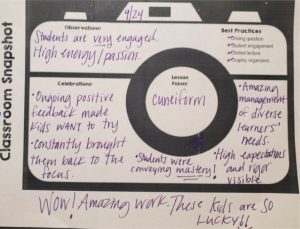
Teachers, not just in English language arts, were reporting burnout and lack of encouragement. I began walkthrough snapshots — as a means to celebrate the amazing adjustments seen in classrooms. I visit the room, take photos with permission, and leave a note for the teacher that lists all the positives I saw happening. Feedback suggested that teachers want to show off the ways they are adjusting — and rightly so. They are doing amazing things with technology, social distancing, and keeping themselves safe all the while. I have since seen my snapshot celebration forms hanging above teacher desks.  

Every stakeholder in education has made major changes to adjust to COVID-19.  Administrators, parents, students, teachers, coaches, secretaries, media specialists, custodians, and so many more.  The fact that we have managed to rise to the occasion is something to be celebrated and to unite us.  We are all in this together and we will do whatever it takes — even if that means printing coloring pages.

About the Author:  

Meagan Wagner, M.Ed., NBCT, is a literacy coach for middle and high school in South Carolina. She is also a doctoral candidate at the University of South Carolina, in Curriculum & Instruction.  

DEVELOPING STUDENTS AS SELF-ASSESSORS

Research

BY: Laura Greenstein, ED.D.

When I was asked to problematize assessment, I was puzzled. Does that mean to turn something that is not a problem into one, or rather, quantifying students’ mistakes and pursuing accountability?  Turning assessment into a problem implies that something has gone wrong when in truth, it has merely gone astray from its Latin root “Assidere,” which means to sit nearby and guide. Regrettably, assessment has been taken out of the hands of educationalists who accentuate improvement and have been replaced by periodic testing that quantifies learning and generates numerical comparisons. As of yet, scoring technologies cannot distinguish between a learner’s lack of knowledge and their misinterpretation of the question, nor can they provide advice on remediation. Below are 3 steps that can.

STEP 1: REVISIT FUNDAMENTAL IDEAS and PRINCIPLES OF ASSESSMENT


While some believe tests and assessments mean the same thing, the definitions below illuminate noteworthy differences in purpose and process. 

Photo by Annie Spratt on Unsplash

TESTs are periodic procedures that establish the capacity or performance of someone or something (Merriam-Webster). They are explicit strategies to ascertain and verify a learner’s skills and knowledge (Wikipedia). Tests tend to be more standardized, analytical, and judgmental.

ASSESSMENTS are processes used throughout teaching and learning to check for understanding, monitor progress, identify lingering gaps, and guide improvement. They rely on varied practices to gauge learning such as rubrics, exit slips, fix the mistake, student reflections, and progress trackers. They are more adaptable and personalizable than tests (Assessment Network).

STEP 2: INCORPORATE STUDENT SELF-ASSESSMENT to DEEPEN, ENRICH, and develop OWNERSHIP of  LEARNING

Photo by Karla Vidal on Unsplash


Classroom assessments generally offer more insights into learning than standardized tests. Student self-assessment further illuminates competencies and leads to higher-level thinking, problem-solving, and self-efficacy (Panadero, Jonsson, and Botella, 2017). 

Learners engaged in their own assessment increase self-awareness. Prompts such as “I used to think__, but now I know__.” encourage insights into learning. As Anisha, a 6th grader, says, “I used to think communication was just talking and writing, but now I know it also includes listening, looking, thinking, AND patience.” 

Students rarely take tests once they exit the education system, but they continue to be evaluated on their proficiencies, initiative, productivity, and more. The ability to gauge, reflect, and modify thoughts and actions is indispensable at work and home, throughout the lifespan. 

STEP 3: HELP STUDENTS “SOAR” AS SELF-ASSESSORS


Have you ever said or heard something like this? “I know you believe you understand what you think I said, but I’m not sure you realize that what you heard is not what I meant” (Attributed to Allan Greenspan). Assessment can be like the Tower of Babel, where it is not easy to disentangle ever-changing and contradictory dialects. Mary Ann Burke and I have designed a straightforward and actionable acronym to support all learners as self-assessors. We call it S.O.A.R. 

The  SOAR model connotes Student Ownership and Agency leads to Results. It puts Students at the center of assessment by purposefully transferring Ownership to them and facilitating their Agency in ways that improve the Results and outcomes of learning. Here’s how it works:

  1. Put STUDENTS at the center of assessment by helping them clarify and visualize what they will be learning, compare that to what they already know and can do, describe how they plan to learn, and ways they can use their learning. In Practice: Students complete an expanded KWL chart that includes: What I think we will learn, What I know now, What I want to know, How I will find out, How can I show/use my learning. 
  2. Offer opportunities for students to take OWNERSHIP of their learning purpose, process, and products. For example, let them decide how to organize, summarize, and display their learning using words, visuals, or performances. In Practice: Rely on coherent rubrics, sequenced through the taxonomy, that align with learning intentions. For example: Explain the main idea in your own words, elaborate on the significance of 3 key steps/events, draw conclusions or critique it, and design/produce original products and ideas.
  3. When students become AGENTS of assessment, they take greater charge/responsibility of their path, become participants in the learning process, and strengthen self-reliance. As learners develop deeper understanding, they gain self-confidence and become resources for each other. In Practice: Learners explain or demonstrate their understanding of the main ideas, how the author captures the reader’s attention and extends learning for deeper meaning. They may also defend a position or suggest improvements. 
  4. The RESULTS of students being at the center of their own assessment become evident in learning outcomes. In Practice: As traditional measures evolve into student-owned assessment, they take increasing responsibility, seek to alleviate problems, and generate original ideas and solutions.  Rather than relying solely on traditional test questions, learners can better reflect, investigate, analyze, and formulate ideas. 

Using the SOAR sequence develops every students’ life-long self-assessment skills. In doing so, they become more accountable for their learning outcomes, analyze, can explain their misunderstandings, identify knowledge and skills in need of improvement, and self-correct their own learning. Indeed, these skills support all students in moving from academic distress to confident and successful learners.

References

Greenstein, L., and Burke, Mary Ann (2020)  Rowman and Littlefield, “Student-Engaged Assessment: Strategies to Empower All Learners”

Assessment Network: Toolbox and Blogs https://www.assessmentnetwork.net/blog/  and also https://www.assessmentnetwork.net/2017/02/5-assessment-myths/

Greenstein, L. (2018) MUSTs of Assessment: in Restorative Assessment, Corwin, 2017 https://us.corwin.com/en-us/nam/restorative-assessment/book258057 

Panadero, E., Jonsson, A., & Botella, J. (2017). Effects of self-assessment on self-regulated learning and self-efficacy: Four meta-analyses. Education Research Review, 22, 74–98. 

Boyer, M. (2019). Balancing Skepticism and Utility in Machine Scoring.  https://www.NCIEA.org/blog/essa/balancing-skepticism-and-utility-machine-scoring

About the Author

Laura is a lifelong learner and educator who has taught and assessed from preschool to graduate school, across subject areas. Her passion for educational assessment began with her dissertation and is evident throughout her work as an author of 5 books on the topic, founder of and blogger at the Assessment Network, and mentor to many teachers and learners. Through her workshops, she brings fresh ideas on a range of assessment topics from standardized to classroom, including formative, authentic, multicultural, differentiated, brain-friendly, and balanced. (Sometimes, she even talks about standardized tests.)