Bringing Data to Life: Using Disciplinary Literacy Skills to Teach Data Interpretation in Agriculture

Blog, Student Contribution, Teaching

Inspiration: Why Data Interpretation and Analysis?

When I was first introduced to the concept of disciplinary literacy last semester, I found myself reflecting on my own educational experiences. I’ve always felt like I processed information differently from my peers. I often struggled to understand certain concepts and found myself repeatedly reteaching to myself what I had learned. Over time, I realized I had never fully understood my learning style and how it affected my academic success. This realization made me think about my future students. I never wanted them to feel the same way I did—to feel like they weren’t “smart enough” because they couldn’t identify their learning style. I wanted to create a classroom environment where all students could thrive, no matter how they learned. 

For my final project in Multiple Literacies in Secondary Education, I was tasked with exploring a literacy skill focusing on its application in a specific discipline. As part of the assignment, I had to design a project where I took on the role of an agriculture teacher, teaching other agriculture educators about a literacy strategy they could use in their classrooms. After much thought, I chose visual comprehension as my literacy skill as I’m a visual learner myself. However, as I dug deeper into the research, I found a significant gap in resources related to agricultural literacy. There was very little research connecting disciplinary literacy with agriculture. Recognizing how vital data in agriculture is—especially in areas like plant and soil sciences—I decided to take a STEM-based approach and adapt the research to fit the agricultural context. Agriculture, Food, and Natural Resources (AFNR) often relies on data analysis, which pulls together basic concepts from chemistry and biology. Without it, we can’t make informed decisions in farming, sustainability, or food production. So, I decided to explore this gap and make it the focus of my project.

Lesson Development: Structuring the Nearpod Lesson

When I first started developing my Nearpod lesson, I felt overwhelmed. The task seemed daunting, and I wasn’t sure where to begin. But then I shifted my perspective. I realized that one of my strengths is lesson planning—I love it! So, I approached the project like I would any other lesson: what’s the main topic (importance of agricultural literacy and visual comprehension in AFNR), and how can I teach it effectively? I structured the lesson to guide educators through understanding the connection between literacy and data interpretation in agriculture. I wanted to make sure that teachers could not only grasp the concept but also apply it to their own classrooms.

I began by explaining what visual comprehension is—the ability to understand, interpret, and extract meaning from visual representations of information. This includes images, diagrams, symbols, charts, graphs, maps, and other visual aids. Visual comprehension is a critical skill in education, as it helps students process complex data, recognize relationships between elements, and draw meaningful conclusions without relying solely on text. In agriculture, this skill is especially important for interpreting data related to crop production, soil quality, livestock growth, and environmental factors. For example, students might analyze weather maps to predict climate patterns, study livestock growth charts to assess health trends, or interpret soil composition diagrams to determine nutrient levels. By strengthening students’ visual comprehension skills, educators can help them navigate and analyze agricultural data more effectively, improving their overall agricultural literacy.

After establishing the importance of visual comprehension, I introduced how data in agriculture—whether it’s about crop yields, soil quality, or livestock growth—can be interpreted through visual means, such as graphs, charts, and diagrams. From there, I incorporated faded scaffolding, a strategy where teachers provide support initially and gradually reduce it as students become more independent. I chose Nearpod because it allows for real-time interaction. The platform provided an opportunity for educators to engage with the content at their own pace, ask questions, and even participate in a matching game to reinforce the concepts.

Disciplinary Literacy Connection: Why Does This Matter in Agriculture?

Disciplinary literacy in agriculture is crucial. It’s not just about reading and writing—it’s about thinking critically and analyzing data, skills that are essential in any agricultural or STEM-related field. This lesson connects literacy skills with real-world applications in agriculture, helping students develop problem-solving abilities vital for solving pressing issues in the agricultural industry. As global populations rise and the demand for food increases, the agricultural sector faces more complex challenges. One of the most pressing issues is climate change, which directly impacts food production through rising temperatures, shifting weather patterns, and increased frequency of extreme weather events such as droughts, floods, and hurricanes. 

These changes threaten crop yields, disrupt planting and harvesting cycles, and contribute to soil degradation, making it harder to sustain food production. Addressing these challenges requires innovative solutions driven by data analysis and critical thinking. We need thinkers and problem-solvers who can interpret data to make informed decisions—whether it’s optimizing crop production, implementing sustainable farming practices, or assessing environmental impacts. By integrating faded scaffolding, we help students build their independence so they can think critically about agricultural issues, analyze data, and develop solutions. This method prepares them for real-world problem-solving in agriculture and beyond, equipping them to tackle climate-related agricultural challenges and contribute to a more sustainable future.

Impact: Why is This Lesson Important?

This lesson is important because data interpretation is at the core of solving many challenges in agriculture specifically and science generally. The ability to analyze trends, patterns, and data points is not just a useful skill—it’s essential for the sustainability of food production systems around the world. For agriculture students, especially those entering the workforce, the ability to interpret agricultural data is a key competency. This lesson empowers them to see the bigger picture, connecting literacy to real-world agriculture.

Beyond the classroom, these skills prepare students for a wide range of careers in the agricultural and STEM fields. Agronomists, for example, study soil and crop health, using data to determine the best ways to grow the food we eat every day. Precision agriculture specialists use technology like drones and GPS mapping to help farmers apply fertilizers and water more efficiently, which helps keep grocery store prices stable and reduces environmental impact. Agricultural engineers design better irrigation systems and farm machinery to improve food production, ensuring that fresh fruits, vegetables, and grains make it to consumers’ tables. Even beyond the farm, these skills impact daily life. Food scientists analyze production data to ensure that the milk, meat, and packaged foods in stores meet safety and quality standards. Agricultural economists study supply chains and pricing trends to help farmers and businesses keep food affordable. Environmental consultants work to balance agricultural production with sustainability, ensuring that future generations can continue to rely on farming for food, fuel, and fiber.

By helping students develop these critical thinking and analytical skills, we are not only preparing them for careers in agriculture but also ensuring that consumers continue to have access to safe, affordable, and sustainably produced food.

Final Thoughts: What Did I Learn from This Experience?

Throughout this project, I discovered a noticeable lack of research on disciplinary literacy in agriculture, particularly in relation to data interpretation. I believe this gap exists because agriculture education is often region-specific, with AFNR (Agriculture, Food, and Natural Resources) classes only offered in certain districts and locations. However, as the global population continues to grow, the importance of agriculture—both as a science and as a vital industry—has never been greater. Agriculture is deeply rooted in scientific principles, from soil chemistry to genetics and environmental sustainability, making literacy strategies like faded scaffolding and data analysis essential for student success.

These strategies will help prepare future agricultural professionals to interpret complex information, solve real-world problems, and address the challenges facing the industry. Looking ahead, I am excited to apply and test these methods in my methods block, helping students develop the critical thinking skills necessary for success in agricultural science.

About the Presenter

Alicia Machuca is a senior dual majoring in Interdisciplinary Agriculture and Education at Sam Houston State University. Passionate about teaching, she is dedicated to creating an accessible and meaningful learning experience for her future students. Alicia’s goal is to represent and uplift students who share similar backgrounds and experiences, ensuring that every child feels valued and empowered in the classroom. She hopes to inspire a love for agriculture in her students, just as it has inspired her.

Growing Knowledge: A 7th Grade Teacher in Cleveland, Mississippi is Cultivating Agriculture Skills and Tackling Food Insecurity

Blog, Student Contribution, Teaching, Uncategorized

Stephanie: As a literacy teacher educator whose scholarship has primarily focused on agricultural literacy development in K-12 classrooms over the last 5 years, I have been fortunate to meet many dedicated, amazing K-12 Mississippi classroom teachers. Through four United States Department of Agriculture/National Institute of Food and Agriculture (USDA/NIFA) grants on professional development in agricultural literacy, I’ve been able to work with a wide range of teachers including gifted education, social studies, all elementary subjects, mathematics, welding, library, college-and-career readiness, science, and agriculture education. One of those rock star teachers is Mrs. Tammie Marlow, a 7th grade science teacher at Cleveland Central Middle School, in Cleveland, MS located in the heart of the Mississippi Delta. Tammie is an award-winning science teacher; she recently was awarded the Rural Teacher of the Year for her congressional district in Mississippi (an award given from the Program for Research and Evaluation for Public Schools housed at William Carey University). She participated in two of my USDA/NIFA grants in summer 2022/academic year 2022-2023 and summer 2023/academic year 2023-2024.  The Agricultural Science Professional Development [ACRE] program focused on animal science, with a heavy emphasis on livestock, plant science, meat science, literacy instruction, and teacher leadership. The Agricultural Science Professional Development 2.0 [ACRE 2.0] program focused on poultry and food science, socio-emotional learning, and literacy instruction. Over those two years, Tammie took many of the ideas presented in these professional developments and incorporated them into her 7th-grade science class, expanding the curriculum to include a large focus on hands-on agricultural education. Below, I interview Tammie about her work at Cleveland Central Middle School in order to share with you many of the ways she has incorporated agriculture lessons into her classroom instruction.

Tammie, can you please share with readers your reasoning behind starting the Home-Garden-Science Club?

Tammie: The district that I teach in is the last district to consolidate in Mississippi. This brought many challenges, especially combined with the timing of the Covid epidemic.  We are the only middle school in our district, and we serve as a bottle-neck transition to 6 local elementary schools plus students that move in from outside areas.  Students were placed in this new environment and did not know their peers in this educational transition time in their lives. They didn’t have any time at school for downtime to visit and get to know each other.  With this realization, my family and I decided to start an after-school program that would give them a safe place to meet, make new friends, and learn practical skills that will make their lives better.  We called it Home-Garden-Science Club because we did everything including experiments, planting gardens, teaching students how to sew, holding cooking classes, and doing crafts together.

Picture: A student in the Cleveland Central Middle School Home-Garden-Science Club

This after school program has grown into an outdoor learning space that encompasses an outdoor classroom with electricity, a plowed field, an orchard, a tractor with attachments, multiple gardening tools, a three-door tractor shed with electricity and water, new fencing, and a greenhouse. This is a testament that people want to help, and when they see things happening, they will help.  When we first started, we had students stand in line waiting their turn to use a hoe and shovel.  We had to teach students how to use a water hose to water plants.  You cannot assume that students know how to do what you know. It still amazes me to think that this all started from letting kids meet after school one day a week to have a safe place to have fun together and learn.

Picture: Students working in the garden at Cleveland Central Middle School

Stephanie: That sounds wonderful, Tammie. I know the students have enjoyed working in the garden and seeing the fruits of their labor with the produce it has yielded. Can you share with me some in-class, hands-on agriculture labs you have done with your students that have made an positive impact on their agricultural literacy development?

Tammie: Most students really enjoy lessons that they are involved in and take active parts in leading the learning activity, especially the labs that include food.  I facilitate student-lead lessons in as many classes as I can. I believe students learn better when they have fun, can relate information to their personal lives in the real-world, and are physically active in the lesson with hands-on activities, literacy activities, maps, collections of specimens to explore/investigate, Guest Speaker interaction, field trips (actual and virtual) and labs that reinforce the standards. Project-based learning works well for all of my classes. Hydroponics, Micro-Green Farming, and Earth Cycles are 3 project-based lessons that we completed this year.  Students really enjoyed constructing wildlife habitats.  MSU Extension officers taught my 7th grade students how to use both power tools and hand tools in order to build the habitats.

For example, one of our state standards in 7th Grade Science is: “Explain how disruptions in cycles (e.g., water, oxygen, carbon, and nitrogen) affect biodiversity and ecosystem services (e.g., water, food, and medications) which are needed to sustain human life on Earth.”  Together with an Ag student from MDCC, a USDA specialist, and my co- 7th Grade Science Teacher collected soybeans while at their prime and planned a Legume Lab for our students.  Students were first given a pretest on soybeans and other legumes.  The need was clear; they needed hands-on experience with soybeans or other legumes. Soybeans make up the number 1 top-row crop in Mississippi and come just behind poultry on the list of agricultural commodities.  Most students didn’t know what soybean plants looked like even though they live in a rural area surrounded by large soybean farms.  We held the Legume Lab outside and the USDA specialist showed us how they use toothpicks as a tool in the soybean programs.  Students were given toothpicks to dissect the soybean plants which are legumes. They were to locate and dissect the nodules that house Nitrogen-Fixing Bacteria that are responsible for Nitrogen Cycling into usable forms for living things.  This was probably one of the most valuable labs conducted by our 7th Grade Science students.  They completed lab sheets, and we took lots of pictures to serve as evidence of their findings.  These students now know what soybeans are and how important they are as a food source along with information they learned about Nutrient Cycling.  We now grow soybeans, with the other plants, in our school garden and the Home-Garden-Science after school club cares for them. This is a much-needed lab for not just rural students but for every student.  Students need to be educated about the importance of nutrient cycling, our land. and where our food comes from.

Picture: Students engage in the Legume Lab in class.

Further, I was so shocked to learn during ACRE that the Mississippi Delta is in the middle of a food desert. According to Uproot Mississippi (2024), Mississippi has been considered the most food insecure state for the last decade. Bolivar County, where Cleveland resides, had a population of over 6,500 individuals who experience food insecurities as of 2022, and an annual food budget shortfall of over $4,000 (Feeding America, 2025). Food insecurity is prevalent in this area where people don’t know when they’ll get their next nutritious meal that they can afford.  This is the area where I was raised, and I never thought about food insecurity.

Stephanie: I was shocked to learn about food deserts and their prevalence in Mississippi as well. I know this has become an important topic to you. Can you describe ways in which your students have learned more about food deserts?

Picture: Students engage in the Legume Lab in class.

Tammie:  I was raised on a 5-generation farm and we always had large gardens that we called “patches”.  We had a “pea patch”, a “pumpkin patch”, a “green patch”, a “corn patch”, and other mini fields where we grew food for our families and the community.  I have learned in my adult years that most people don’t live where they can grow their own food.  After learning about the food deserts, I developed a research project for my students on food deserts and solutions that each student can be a part of.  Because of this realization from the ACRE influenced project my 7th grade students are working with our community to plant a student-community food forest to help fight against food insecurity in the food desert in which we live. 

Picture: Students presentation on overcoming community food insecurity.

As part of the solution students want to plant this food forest in a place where everyone could harvest fresh free food anytime they want to.  The place they decided to do this was our local park because it has the land to plant the food-plants on and plenty of parking that would be safe for everyone. Students also learned that planting more trees can help with climate change by removing excess carbon dioxide from the atmosphere which will lessen the greenhouse effect.  This can in turn keep our weather from having great fluctuations, decreasing droughts and floods.  I am so proud of what my students have learned and their desire to help others.  Students learn about problems, but they also need to learn how to be part of the solutions. 

Picture: Garden beds at Cleveland Central Middle School

Stephanie: Last question Tammie. Can you provide me with an example of how you have intentionally provided opportunities for your students to reflect as a demonstration of their learning?

Tammie: Finally, as I introduce my students to real-world science problems, and they play a role in forming solutions, I have incorporated more literacy instruction teaching it with “more zest” in my classes after the training that I received in ACRE and ACRE 2.0. For example, to get students to write and learn more deeply about vocabulary, I use strategies such as journaling, ABC brainstorming sheets and Frayer models. In teaching my science vocabulary, I have put a greater emphasis on teaching my students morphology–affixes (prefixes and suffixes and root words). 

Students also write lab reports after engaging in real world labs. We engage in close reading of various sources. I also have implemented a talking ball in class to help facilitate class discussions. Students have engaged in oral presentations and poster projects as well. This focus on literacy, coupled with the extensive hands-on learning in my science classroom (both indoors and outside) has provided my students with opportunities to deeply learn scientific and agricultural content as well as be able to communicate effectively about that content because I’ve prioritized the importance of reading, writing, and speaking like a scientist or agriculturalist in my classroom as well. Ultimately, I believe as teachers, we need to make sure that we aren’t just teaching content but how to be good stewards of our world.  We only have these precious students for just a little time, we need to make sure we make the most of teaching them and giving them opportunities to be good stewards.  I want to challenge every teacher to take part with their students in planting a food forest to help feed our world… one plant at a time.

References

Feeding America. (2025). Hunger and poverty in Mississippi. Food insecurity among the overall population in Bolivar County. https://map.feedingamerica.org/county/2022/overall/mississippi/county/bolivar

Uproot Mississippi. (2024). Addressing food insecurity in the nations ‘hungriest state’. https://uprootms.org/addressing-food-insecurity-in-the-nations-hungriest-state/ 

About the Authors

Stephanie M. Lemley is an Associate Professor of Literacy Education in the Department of Teacher Education and Leadership in the College of Education at Mississippi State University. Her research agenda focuses on increasing agricultural literacy, through hands-on learning and instruction with agricultural texts, in the K-16 population. She can be reached at smb748@msstate.edu.

Mrs. Tammie Marlow is an award-winning science teacher at Cleveland Central Middle School in Cleveland, MS. She has taught for 25 years in Mississippi, Louisiana, Alabama, and North Carolina. In North Carolina, she was a parent liaison that tutored students after school, helped students in classes, and filled in for teachers. In Louisiana, she taught HeadStart in Plaquemine Parish and used the Pacing System in a Christian Outreach School for students that lived in the Marsh (we had a School-Boat instead of a School-Bus to transport our students). Tammie has taught US History, 8th grade science, Biology, Biology II, Aquatic Science, Science Skills, Environmental Science, and Forensics.  She can be reached at tmarlow@cleveland.k12.ms.us.

Infusing socio-emotional learning into K-12 classrooms utilizing “hunger” as an agricultural context

Student Contribution, Teaching

Dr. Stephanie Lemley develops socio-economic awareness as students experience disciplinary literacy in an agricultural setting. Read more about Dr. Lemley at the end of her blog.


As a literacy teacher educator and a PI or Co-PI on three United States Department of Agriculture/National Institute of Food and Agriculture (USDA/NIFA) grants for professional development in agricultural literacy, I have been fortunate to work with teachers across Mississippi on infusing agricultural literacy into their classroom instruction. Two of my grants have enabled me to create a summer professional development and then host the teachers on the university campus in the fall and spring for follow-up days. This school year I am working with colleagues from Agricultural Education, Leadership, and Communication, Poultry Science, and Food Science and 28 amazing K-12 teachers from across the state. The teachers’ experiences range from starting their first year of teaching to 25+ years in the classroom. We are currently working with content areas such as special education (e.g., gifted and inclusion classrooms), mathematics, ELA, science, welding, and agriculture. During a four-day, intensive workshop this summer, the teachers learned how to incorporate poultry science and food science content knowledge and lab investigations, literacy instruction, and socio-emotional learning (SEL) skills into their classroom.

 This is important because most Americans are agriculturally illiterate (Taylor, 2021, July 7). In fact, in most cases, individuals are three generations removed from the farm, which means more and more people are not aware of where their food comes from (Brandon, 2012, March 30). The American Farm Bureau Foundation for Agriculture (2012) has created pillars of ag literacy, one of which is understanding the connections between agriculture and the environment. Hubert et al. (2000) posited that teachers can use agriculture as a topic to teach about the environment and the world around them. This focus on the natural world can also be a great way to infuse socio-emotional learning (SEL) skills into the curriculum as well (Carter, 2016).

Socio-emotional learning (SEL) skills is an “umbrella term used to describe psychological constructs such as personality traits, motivation, or values” (Danner et al., 2021). When teachers teach these skills to their students, they are helping them become efficient workers who know how to build trusting relationships with others, cope with change, serve as leaders, and produce creative solutions to solve problems (Danner et al., 2021). These skills include responsible decision making, self-awareness, self-management, and relationship skills (National University, 2022, Aug. 17). Agricultural topics are the perfect place to teach socio-emotional skills to students because of the diversity of content and emphasis on problem solving. For example, when discussing food choices, students are practicing the socio-emotional skill of responsible decision making; when working in groups to complete labs, students will be practicing the socio-emotional skills of social awareness and relationship skills.

Here’s an example of how teachers who work with me in the four-day workshop investigate the topic of ‘hunger in Mississippi’ through book readings (How Did That Get in My Lunchbox?: The Story of Food by Chris Butterworth, Maddi’s Fridge by Lois Brandt, and Free Lunch by Rex Ogle), online investigations, and proposed solutions to food waste in local communities. We tied the topic of hunger to a variety of Mississippi state science standards.

Table 1. Example Mississippi College-and-Career Readiness Standards for Science

Example Science Standards
L.K.1A Students will demonstrate an understanding of living and nonliving things. L.K.3A Students will demonstrate an understanding of what animals and plants need to live and grow.L.2.3A Students will demonstrate an understanding of the interdependence of living things and the environment in which they live. L.2.3A.1 Evaluate and communicate findings from informational text or other media to describe how animals change and respond to rapid or slow changes in their environment (fire, pollution, changes in tide, availability of food/water). L.5.3B Students will demonstrate an understanding of a healthy ecosystem with a stable web of life and the roles of living things within a food chain and/or food web, 
including producers, primary and secondary consumers, and decomposers. L.5.3B.1 Obtain and evaluate scientific information regarding the characteristics of different ecosystems and the organisms they support (e.g., salt and fresh water, deserts, grasslands, forests, rain forests, or polar tundra lands). L.5.3B.2 Develop and use a food chain model to classify organisms as producers, consumers, or decomposers. Trace the energy flow to explain how each group of organisms obtains energy. L.7.3 Students will demonstrate an understanding of the importance that matter cycles between living and nonliving parts of the ecosystem to sustain life on Earth. L.7.3.5 Design solutions for sustaining the health of ecosystems to maintain biodiversity and the resources needed by humans for survival (e.g., water purification, nutrient recycling, prevention of soil erosion, and prevention management of invasive species).    

On the first day of the workshop, teachers investigate ‘hunger’ in their local school district, local community, and the state. First, they searched “hunger in Mississippi” and looked at sites such as Mississippi Food Network (https://www.msfoodnet.org/about-us/hunger/) and Feeding America (https://www.feedingamerica.org/hunger-in-america/mississippi). Then, they searched “hunger in [insert county or city name]. Finally, they looked at hunger in their own school district. One source of data they looked at was from the Mississippi Department of Education (https://www.mdek12.org/sites/default/files/documents/OCN/2023/SFSP/free_and_reduced_data_report_2022-23.pdf). They wrote information that they found on sticky notes and then shared out the information with the rest of the class.

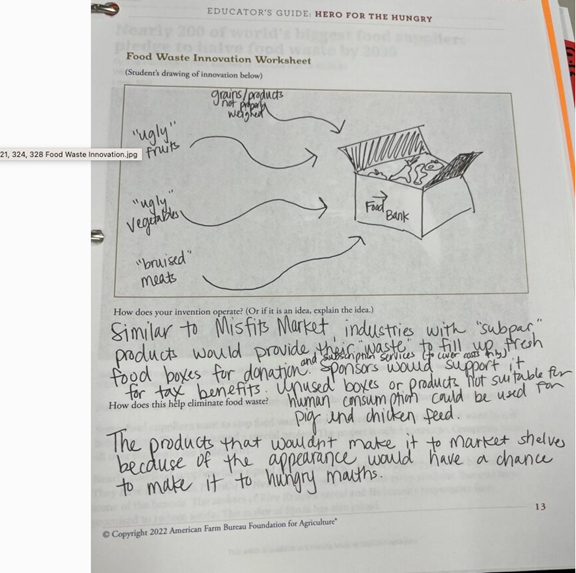
This initial foray into hunger allowed the teachers to learn more about this impactful issue across the state. For many, it reinforced information they already knew about their own community, but it was eye-opening for many to see how big of a problem it is statewide. For example, in looking at the free and reduced lunch data, many were surprised that some of the perceived ‘affluent’ counties in the state still had multiple schools with high percentages of free and reduced lunch. As such, this topic introduced them to a part of environmental and agricultural literacy—food literacy (Siegner, 2019). Food literacy is defined as “the scaffolding that empowers individuals, households, communities, and nations to protect diet quality through change and strengthen dietary resilience over time. It is composed of a collection of inter-related knowledge, skills, and behaviours required to plan, manage, select, prepare, and eat food to meet needs and determine intake” (Vidgen & Gallegos, 2014, p. 54).  In addition, this investigation reinforced the SEL skill of social awareness—showing understanding and empathy to others—because it required them to reflect on their own students and how many of them might come to school hungry and need additional sustenance to stay focused during the school day. The second day, the teachers worked in groups to create an innovative way to address food waste in communities. This activity required them to think scientifically and utilize precise science and engineering terminology and design methods to create their solution. We chose this activity because many of the teachers had recently talked about how much food was wasted either at restaurants or at their schools during lunch and how they would like to put some of that food to good use in their community.

Figure 1. Food Waste Innovation

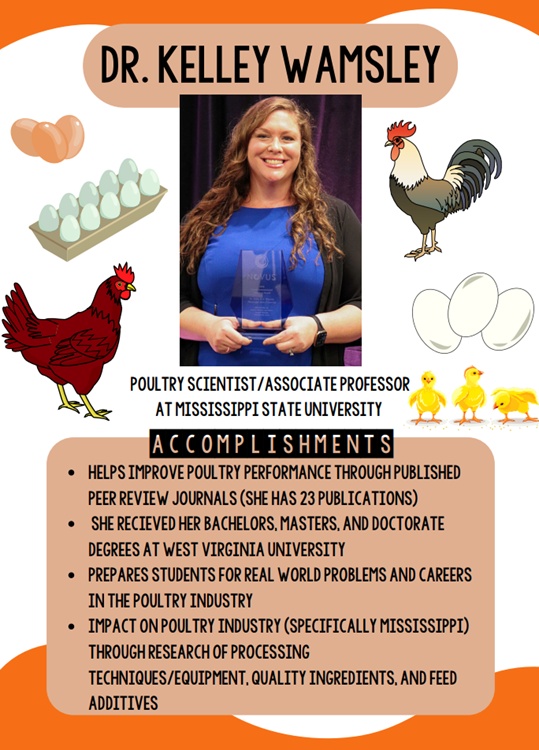
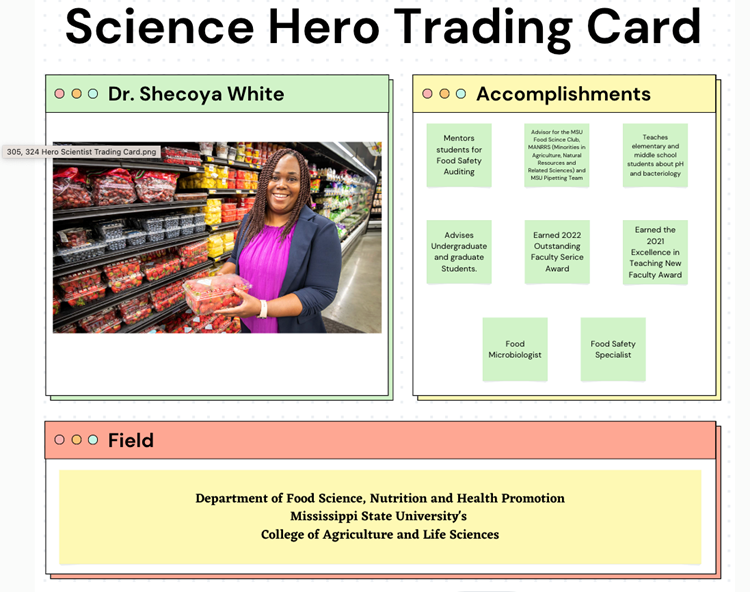
On the third day, the teachers, in groups, created hero scientist cards on a food science or poultry science scientist who has done work that impacts hunger in the state. This activity required the teachers to showcase a scientist who has had a positive impact in improving Mississippi’s environment and its agricultural industry. This activity also required the teachers to not only work on SEL skills such as relationship skills and self-management, but also to use discipline-specific terminology related to the food science or poultry science field when adding information to their trading card.

Figure 2. Poultry Science Hero Scientist Trading Card
Figure 3. Food Scientist Hero Scientist Trading Card

After the summer PD, the teachers returned to their classrooms and implemented lessons that we had done with them in their own teaching. Many used the agriculture texts to teach SEL skills and the food supply. They used the strategies and activities we taught them, and they also shared their new knowledge with their colleagues at their school site or in their district. During the fall follow-up day, the teachers continued to investigate hunger, but this time looked at it not just from a regional and state perspective but also a worldwide perspective. I chose to focus on hunger more broadly this time to show them how they could have their students consider hunger in their own community first (as we did in the summer) but then have them realize that hunger is not just a Mississippi problem—in fact it is a problem in our region, country, and world as well. The lesson and activities I implemented were also tied to state standards in the science, mathematics, social studies, and ELA standards.

Table 2. Example Mississippi College-and-Career Readiness Standards.

Mississippi College-and-Career Readiness Standards for Social StudiesMississippi College-and-Career Readiness Standards for ScienceMississippi College-and-Career Readiness Standards for English/Language Arts
6.8 Examine how humans and the physical environment are impacted by the extraction of resources and by natural hazards 3. Assess the opportunities and constraints for human activities created by the physical environment.ENV.4 Students will demonstrate an understanding of the interdependence of human sustainability and the environment. ENV.4.3 Enrichment: Research and analyze case studies to determine the impact of human‐related and natural environmental changes on human health and communicate possible solutions to reduce/resolve the dilemma.RI.6.7 Integrate information presented in different media or formats (e.g., visually, quantitatively) as well as in words to develop a coherent understanding of a topic or issue.

First, they watched a video about the area of Memphis, TN, that is a food desert (see link in resources). The video was then tied into the National Agriculture in the Classroom lesson on ‘Hunger and Malnutrition (see link in resources). In this lesson, students investigate the importance of eating a variety of nutritious foods and explore diets around the world. The teachers were introduced to more health and food science terminology such as nutrient, undernourishment, food bank, staples, accompanying foods, and hunger. They then used the National Geographic website, What the World Eats, and answered the following questions:

  1. Which country consumes the most calories in a day?
  2. Which country consumes the fewest calories in a day?
  3. Which country consumes the most 1) red meat, 2) grain, 3) sugar, and 4) fat?
  4. Which country consumes the least 1) red meat, 2) grain, 3) sugar, and 4) fat?

After they had worked on this investigation, we discussed what they found across groups. These activities continued reinforcing SEL skills such as social awareness, relationship skills, and self-management as they negotiated group tasks. It also provided them an opportunity to continue to investigate environmental and agricultural literacies specifically food literacy. This is important because part of being agriculturally literacy involves understanding the food system and the importance of plants and animals to our environment.  The workshop concluded with the teachers being introduced to two short films from Mississippi State University Films: one of which was on food insecurity, and one of which was on a local school district response to schools shutting down during the COVID-19 pandemic and getting food to the students who relied on school lunch as part of their food sources daily. These videos provided a real-world example of people using socio-emotional skills, such as responsible decision making, compassion, and relationship-building to make a difference in the local community. Further, the teachers learned about ways that community members are stepping up to help end food insecurity in their own backyards through the creation of local farmers markets and other means. This can help further develop their agricultural literacy knowledge because they have a deeper understanding of the food system.

I wanted to share these lessons and resources with my teachers because I wanted to show them how they could help their students become more agriculturally literate with a topic that is relevant to everyone—hunger and food. Over the school year, some teachers have emailed me to share how impactful these agricultural literacy SEL lessons have been for their students, particularly reading the book Free Lunch with their class and then investigating hunger in their community and where food comes from.  Others expressed this in their delayed post follow up survey. For example, one teacher wrote that creating trading cards has been the most successful activity with their classes. They noted, “The kids love it and are all 100% into it.” Creating the trading cards on scientists allowed students to showcase their learning in a creative way. Another teacher wrote that participating this year helped them have “more opportunities for students to learn agriculture in different cultures, bringing awareness of food deserts and waste.” The teacher said the students particularly enjoyed exploring the National Geographic website and watching the videos about Memphis and food insecurity in the Mississippi Delta; learning about this topic had them think about what nutritious food was available to them on a regular basis outside of school.  Another teacher wrote participating in the professional learning gave her “an enhanced sensitivity to food deprivation within my classroom.” These lessons over the past year opened this teachers’ eyes to hunger in their own students and the teacher has made it a priority to have nutritious snacks available for the students. Two others wrote, “All of the SEL!” for their response. Finally, one additional teacher wrote, “From ACRE 2.0, I’ve already used interactive simulations and hands-on experiments in my class. Next, I plan to add collaborative projects and real-world problem-solving tasks. These activities deepen understanding and build teamwork skills. Additionally, I’ll integrate more tech tools for personalized learning.”

References

American Farm Bureau Foundation for Agriculture (2012. Pillars of agricultural literacy. https://www.agfoundation.org/files/PillarsPacket062016.pdf

Brandon, H. (2012, March 30). At what cost the disconnect between agriculture and the public? https://www.farmprogress.com/commentary/at-what-cost-the-disconnect-between-agriculture-and-the-public-

Carter, D. (2016). A nature-based social-emotional approach to supporting young children’s holistic development in classrooms with and without walls: The socio-emotional and environmental education development (SEED) framework. International Journal of Early Childhood Environmental Education, 9-24.

Danner, D., Lechner, C.M., & Spengler, M. (2021). Editorial: Do we need socio-emotional skills? Frontiers in Psychology, 12, 1-3. 10.3389/fpsyg.2021.723470.

Hubert, D., Frank, A., & Igo, C. (2000). Environmental and agricultural literacy education. Water, Air, Soil Pollution, 123, 525-532. https;//doi.org/10.1023/A:1005260816483

National University. (2022, August 17). What is social emotional learning (SEL): Why it matters. https://www.nu.edu/blog/social-emotional-learning-sel-why-it-matters-for-educators/

Siegner, A.B. (2019). Growing environmental literacy: On small-scale farms, in the urban agroecosystem, and in school garden classrooms [Doctoral dissertation, University of California Berkeley]. UC Campus Repository. https://escholarship.org/content/qt4p16p53v/qt4p16p53v_noSplash_53f7a6e2917068410defb11335b7ac1b.pdf?t=q6z2hg

Taylor, B. (2021, July 7). Ag illiteracy: What happened, and where do we go from here? https://www.agdaily.com/insights/ag-illiteracy-what-happened-where-to-go/

Vidgen, H.A., & Gallegos, D. (2014). Defining food literacy and its components. Appetite, 76, 50-59. https://dx.doi.org/10.1016/j.appet.2014.01.010

Resources

Judd-Murray, R. (2013). Hunger and malnutrition (grades 3-5). National Agriculture in the Classroom. https://agclassroom.org/matrix/lesson/388/

Mississippi Department of Education. (2023). Mississippi college-and-career readiness standards. https://www.mdek12.org/OAE/college-and-career-readiness-standards

Team, I. W. D. (2024, February 14). The hungriest state. MSU Films. https://www.films.msstate.edu/series/the-hungriest-state

What the world eats. National Geographic. (n.d.). https://www.nationalgeographic.com/what-the-world-eats/

YouTube. (2019, November 20). The food deserts of Memphis: Inside America’s hunger capital | divided cities. YouTube. https://www.youtube.com/watch?v=E6ZpkhPciaUxs

Funding Statement:

This work is supported by the USDA/NIFA National Institute of Food and Agriculture, AFRI Agricultural Workforce Training Priority Area, award # 2022-08873.


Stephanie Lemley; Studio Portrait.(photo by Logan Kirkland / © Mississippi State University)

About the Author:

Dr. Stephanie M. Lemley is an Associate Professor of Content-Area Literacy and Disciplinary Literacy Instruction in the elementary education program in the Department of Teacher Education and Leadership in the College of Education at Mississippi State University. She is the recipient of three USDA/NIFA grants on professional development in agriculturally literacy (either as PI or Co-PI) and in the last four years has worked with approximately 150 K-12 teachers across the state, either virtually or through face-to-face instruction, on infusing agricultural literacy into their classroom instruction. She can be contacted at smb748@msstate.edu .

For Teachers Desiring to Be Anti-Racist

Student Contribution

By: Amber Burton,  Addison Lee, Nicole Mesimer, Kathleen Pennyway, and Eliana Pinckney

This list was developed by several students and teachers at Dreher High School. The students involved led a series of community gatherings called “Get Woke Talks” that centered around issues such as racism, gender identity, and activism. These recommendations come from the lived experiences of the writers. We hope you find them useful.

DO’s

1) Demonstrate care and compassion for your students’ identities.

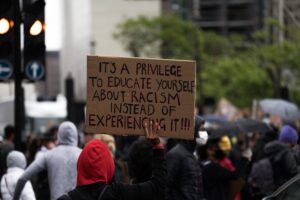
Photo by Isaac Quesada on Unsplash
  • Allow students to attend Black History Month Celebrations and other celebrations of their history and culture. These celebrations are not “extra,” they are essential.
  • Find books and materials that resonate with your students’ cultural identities. Cover them in class if possible or offer them to students who you know will be interested.
  • Show up for your students. If your student is a member of the dance team, or the volleyball team, or the debate team, support them and their interests. 

2) Make a consistent effort to correctly pronounce a student’s name.

  • Names represent culture. Correctly pronouncing a student’s name can strengthen the relationship with that student, making them feel accepted and included. 
  • Taking the time to learn a student’s name correctly also shows them that you believe they matter. If you say “it’s too hard” or “I’m never going to learn it,” you are really saying that you do not want to take the time to learn it. 
  • Don’t give them or ask if they have a nickname, unless they tell you first. By asking your students for an alternate name, you continue the pattern of asking students of color to assimilate to white culture. You are renaming them to make you and/or others more comfortable.

3) Show your students that you are human too.

  • Let students know about your failures as well as your successes.
  • One of the things discussed in our group was trying to get a banned book approved for the classroom and getting pushback from other stakeholders in the community. This failure led to honest conversations about what teachers can and cannot do in the classroom.
  • If you make a mistake or cause harm, apologize, do what you can to repair the harm, and don’t make the mistake again. Expect the same from your students.

4) Be brave enough to take a stand.

  • When you encounter injustice, think about the consequences of staying silent, not just the consequences of speaking up.
  • Your students of color are watching how you handle racism in the classroom.
  • If a student makes a racist comment in your classroom and you say nothing, you are choosing your own comfort over the safety of your BIPOC students. 

5) Call things what they are.

  • Call racism and other forms of oppression by their names.

6) Be intersectional.

  • Kimberlé Crenshaw coined the term “intersectionality” which is a theory describing how all our identities work together and intersect to create different areas of privilege and discrimination.
  • Understand that both you and your students interact with the world through various identities.
  • When someone speaks from a different lived experience, do not question their truth because you haven’t experienced it. 

7) Treat all students of color the same, regardless of the type of classes they take. 

  • A student who takes all AP and honors classes should be treated the same as a student who only takes CP classes.

8) Include authors from different backgrounds, and not just for work regarding their identity

  • BIPOC authors do not just write about racism and racial trauma. There are amazing books that highlight the joy and resilience of BIPOC. Make sure you are including those books as well as ones about racism.
  • You don’t have to just use a Black author for books about race; authors create stories for every aspect and concept of life. 

9) Make additional efforts to build relationships with students of color and their families.

  • Realize that your knowledge of family and cultures is specific, not universal. 

DON’Ts

1) Don’t try to be comfortable.

  • This work doesn’t end, and if you are comfortable then you are accepting the status quo.

2) Don’t assume that parents are talking to their kids about racism and cultural history.

Photo by James Eades on Unsplash
  • Students have different needs and backgrounds. 
  • Many historical textbooks used in classrooms were written by white authors. Only recently has the erasure of histories of BIPOC been made widely available and accessible. 

3) Don’t ask a student of color to speak on behalf of their entire race.

  • Communities of color are not monolithic. 
  • Putting your students of color on the spot and asking them to speak for their race is harmful and unfair.

4) For white teachers: Do not be a white savior. Don’t extend help based on what you assume a student of color needs. This feeds into the assumption all students of color undergo the same issues.

  • The white savior complex is ego-driven. It comes from the belief that students of color need “fixing” and that you have the power to do so. This is harmful.  
  • If a student of color is having a bad day, don’t assume it’s because of the stereotypes associated with BIPOC. (Not all students of color come from low-income households or live with a single-parent, etc.) These students are affected by the same issues non-students of color are affected by. 
  • A great example of a white savior in the classroom is the movie Freedom Writers.

Learn More About Antiracist Work

This list is not intended to be a complete list of everything you need to know about antiracist teaching, but hopefully this can give you some things to think about as you move forward in your journey. Some other resources you may find useful are listed below.

  • Ibram X Kendi’s How to Be an Antiracist and Stamped from the Beginning
  • Zaretta Hammond’s Culturally Responsive Teaching and the Brain
  • Ijeoma Oluo’s So You Want to Talk About Race

About the Authors

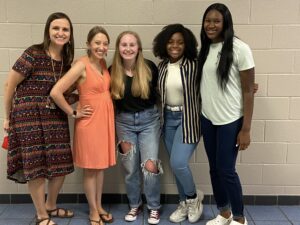
Pictured left to right are Nicole Mesimer, Kathleen Pennyway, Addison Lee, Eliana Pinckney, Amber Burton.
  • Amber Burton is 18. In the fall, she will be attending North Carolina A&T State University. She plans to double major in political science and African American studies, with aspirations of becoming a civil rights attorney and a political analyst.
  • Addison Lee is 17 and will be attending the University of South Carolina to major in public health. She hopes to minor in Women and Gender Studies in order to work on policy making and advocating for underserved communities.
  • Eliana Pinckney is 17. She will be attending Temple University in the fall to major in musical theatre and public relations. 
  • Nicole Mesimer teaches Spanish at Dreher High School.
  • Kathleen Pennyway teaches Theatre at Dreher High School.

Choosing Perspective

Student Contribution

By: Addie Laney, South Carolina High School Student

Perspective. Many of us learned this word in art class when we were younger, but didn’t quite understand how it would apply to our lives on a broader scale, not yet. I thought it was an art term, then I learned this word is more than an art term. Perspective is the opinion form around a topic and how you choose to view issues. When thinking about the Coronavirus, the first thing to come to mind are negative thoughts, which is natural. As the cases rise, so does the fear, and so does the trauma that some people experience. 

There are questions we never thought we would be asking, like: “What if i get it?” “What if my loved ones get it?” “When will I see my friends again?” Now those are questions we hear everyday. It’s okay to feel this way. No one knows what the next steps are involving the world’s peculiar situation right now. 

Even though the level of uncertainty is so high involving the Coronavirus, one thing we can be certain of and have control over is our perspective. 

I asked my friends to share negatives and positives they have found during this time of quarantine and social distancing. The video proves the undeniable truth and power of perspective. During this time we can choose to focus on how the stores aren’t open, how we can’t see all of our friends, or even how much we miss stepping into a school building everyday to learn. Or, we could focus on the good. We can spend more time with our families and reconnect with them again. We can focus on other values we have in life, like religion. We can learn new hobbies that help us find out new stuff about ourselves. Most importantly, we can learn how to truly appreciate what we have. 

This is how we can view not only the situation involving the Coronavirus, but any situation life throws at us. Focusing on the negative, in a time like this, isn’t going to change anything or how anyone is feeling, it just feeds our trauma. We can choose to turn what could be a traumatic experience into a good, life changing experience and instead choose to heal ourselves, better ourselves and support ourselves. I choose to smile and stay safe.  I hope you will too by focusing your perspective not on the negative, but on the positive.

About the Author

Addie Laney is a rising junior. She is the Fine Arts Chair of Student Council, President of Fellowship of Christian Athletes, a member of Future Farmers of America, a member of Youth Leadership for her county of residence and the Public Relations Chair for National Honor Society. She is also a member of her high school tennis team and a member of the senior dance in dance academy. She aspires to attend USC and become a therapist.