This webinar features Beth Shaver and provides resources for collecting Social Studies resources from multiple perspectives. Click here to access.
This webinar features Beth Shaver and provides resources for collecting Social Studies resources from multiple perspectives. Click here to access.

This blog is written by Katie Kelly to remind us how and why to teach a more current and accurate history curriculum. Read more about Katie at the bottom of her post.
Looking Back
For far too long, social studies has been taught (if taught at all) through a teacher-centered model comprised of lectures, note-taking, and task-oriented textbook reading. Students are assigned chapters with questions to answer and are later tested on the content. History becomes rote memorization of key dates and figures without meaningful context or deep learning. Therefore, we should not be surprised that many students lack understanding of significant historical events and find social studies both boring and irrelevant. A 2020 survey of adults under forty revealed that ten percent of respondents were unfamiliar with the Holocaust, and sixty-three percent of those surveyed did not know that over six million Jews were murdered in the Holocaust (Pew Research Center, 2020).
This is frightening and concerning. Not only do we need to ensure that young people are learning history but also that they are learning about it from multiple perspectives in order to weave a more complete tapestry of truth. Dr. Gholdy Muhammad (2020) reminds us to consider how our curriculum and instruction help us understand power, equity, and anti-oppression. Our teaching practices must be responsive to the historical events that shape the present if we aim to help students understand content from marginalized perspectives (Muhammad, 2020).
Teaching Today
Textbooks remain the primary source of social studies content in many classrooms (Brophy & Alleman, 2009). One problem with relying solely on textbooks is that they are designed as an overview of vast periods of time and lack depth and breadth on specific topics. As a result, textbooks often convey oversimplified information and are frequently told from a single perspective that omits the voices and stories of historically marginalized groups (Yearta & Kelly, 2021). This results in a narrow, biased, white-washed curriculum. Sanitized versions of history induce a sense of patriotism while ignoring the complicated past and present (Demoiny & Ferraras-Stone, 2018). As James W. Lowen writes in Lies My Teacher Told Me: Everything Your American History Textbook Got Wrong (2018),“The stories that history textbooks tell are all predictable; every problem has already been solved or is about to be solved… Textbooks exclude conflict or real suspense. They leave out anything that might reflect badly upon on national character.”
We cannot ignore our complicated and difficult past if we seek a better tomorrow for future generations. To foster increased engagement in learning a more complete and accurate history, we must build our capacity and willingness to include multiple perspectives and acknowledge that every perspective is true and partial (Hamilton et al., 2020).
Moving Forward
In order to teach a more complete and accurate history, we can incorporate multiperspective text sets including books, articles, primary sources, multimodal resources, etc. featuring the stories and perspectives that have traditionally been silenced or marginalized. Multiperspective text sets help students layer their learning about complex history to develop a more nuanced and accurate understanding of how it influences the present. When students have opportunities to connect the past to the present, history becomes more relatable and relevant to their lives (Kelly et al., 2023).
In our book, Critical Comprehension: Lessons for Guiding Students to Deeper Meaning (2023), we offer a multiple read framework to help students move beyond passive acceptance of information towards a deeper critical analysis of text by questioning the author’s intent, the information included/excluded, how the text positions the reader, and who benefits or is harmed by it. The return read seeks to disrupt and interrupt widely accepted narratives, the writer’s intention, and the reader’s stance to uncover hidden truths. This return read, or critical read, is necessary when examining the ways in which history is presented. As readers deconstruct texts, they think critically about historical and current events to examine power relations revealed in text and mirrored in society (Jones, 2006; Vasquez, 2010).
Sample questions for critical reading:
These questions serve as a framework to help students move beyond the dominant narrative to explore counter narratives and expand their perspectives and understanding of our country’s past and present. History textbooks often center the stories of the victor, the hero, the white male. For example, we think of our founding fathers and our first president and general of the Continental Army who led us toward independence. The Declaration of Independence stated that all men were created equal. We celebrate the Fourth of July with displays of patriotism from waving flags, red, white and blue clothing, parades, and fireworks displays. Yet, history textbooks rarely explain that neither women nor people of color had independence and freedom. In fact, slavery was not abolished for another 86 years when Abraham Lincoln signed the Emancipation Proclamation. Even then, it took three years for this information to reach enslaved people in Texas. On June 19, 1865, federal troops traveled to Galveston, Texas, to bring the news of freedom. This day has been commemorated as Juneteenth, and though Black citizens have long celebrated it, it has largely been overlooked until recently. Juneteenth became a federal holiday in the U.S. in 2021 amidst continued activism and the momentum of the Black Lives Matter movement. Teaching about Juneteenth is one way to help students bridge the past to the present to learn the nuanced and more complete truth of this part of U.S. history. This Book Buzz blog post offers a sample text set to help students deepen their understanding of the importance of Juneteenth.
Our country has a long history of centering the power of dominant voices. This perspective is privileged in the curriculum in our schools as well. Therefore, we must work to ensure that multiple perspectives are included when teaching social studies. Consider your own school experiences. What were you taught? What weren’t you taught? Whose stories were included? Whose were left out? How did that shape your beliefs about the world and your place in it? (Kelly et al., 2023).
Critical comprehension requires deeper reading to consciously question the text, the world, and the stories we’ve been told. Critical readers seek a more nuanced understanding by uncovering silenced voices, omitted narratives, and multiple perspectives needed to weave a more informed and complete tapestry of truth.
References
Brophy, J., & Alleman, J. (2009). Meaningful social studies for elementary students. Teachers and Teaching, 15(3), 357– 376.
Demoiny, S.B. & Ferraras-Stone, J. (2018). Critical Literacy in Elementary Social Studies:
Juxtaposing Historical Master and Counter Narratives in Picture Books. The Social Studies, 109(2), 64-73.
Hamilton, D.M., Wilson, G.M., & Loh, K.M. (2020). Compassionate Conversations: How to speak and listen from the heart. Boulder, CO: Shambhala.
Jones, S. (2006). Girls, social class and literacy: What teachers can do to make a difference. Portsmouth, NH: Heinemann.
Kelly, K., Laminack, L. & Vasquez, V. (2023). Critical Comprehension: Lessons for Guiding
Students to Deeper Meaning. Thousand Oaks, CA: Corwin Press.
Lowen, J. W. (2018). Lies My Teacher Told Me: Everything Your American History Textbook Got
Wrong. New York: The New Press.
Muhammad, G. (2020). Cultivating Genius: An Equity Framework for Culturally and Historically Responsive Literature. New York: Scholastic.
Pew Research Center, Jan. 22, 2020, “What Americans Know About the Holocaust”. Retrieved from https://www.pewresearch.org/religion/2020/01/22/what-americans-know-about-the-holocaust/.
Vasquez, V. (2010). Getting beyond “I like the book”: Creating space for critical literacy in K-6 classrooms. Newark, DE: International Reading Association.
Yearta, L. & Kelly, K.(2021). Digital Storytelling to Enhance Social Studies Content Knowledge, Explore Multiple Perspectives, and Advocate for Social Justice. In J. Tussey & L. Haas (Eds.). Connecting Disciplinary Literacy and Digital Storytelling in K-12 Education. IGI Global.


This blog is written by Tori Young and shows us how to scaffold written essays resulting in a video essay. Read more about Tori at the bottom of her post.
Have you ever caught yourself in the never-ending rabbit hole of online video essays? Conspiracy theories, movie plot analyses, theme park history and so many more topics are explained in a thorough manner with research and analysis weaving together ideas and backgrounds you never would have put together. Even if you have not stumbled into this online phenomenon, I can assure you that your students have. Whether hour long YouTube deep-dives, or short TikTok synopsis series, students are being presented with researched information about a wide range of topics even if they do not recognize it. After noticing this for myself, I asked “why aren’t more essays like this?”
Research papers and argumentative essays are the primary form of essay writing used in my history classroom. I want my students to know how to be informed citizens and communicate their ideas and beliefs in a way that is grounded in historical truth and facts. I typically scaffold this process throughout the year using activities based on the content. Typically, I start out with an exit ticket asking students to pick a side on a tough topic (no in between!) and tell me why they chose their stance. Nothing formal just to get them to practice how to take a stance. Slowly I will make them add facts from a document we read in class to back up their positions and eventually start teaching the research process by having them look for reliable sources of their own to support their side. Eventually, all that information can be used to organize and create a well-written paper for social studies.

The broad goals of this process are to teach students how to make informed decisions and communicate their ideas effectively. While a traditional essay is an excellent way to practice those skills, many teachers like me have seen the difficulties for students that come with that ultimate step of writing the paper. For many students, the formal language or length of the writing assignment can be daunting to approach, causing them to shut down before trying. But we look at them confused; they have already practically written the paper with their summaries and research. Why can’t they just fill in the gaps with just a few sentences?
I found myself asking these questions every year. When I asked my students to verbalize their answers, I got great insight and connections to the content from them. They know this content, in fact many of them get passionate about it when it is time for them to argue. As I pondered this, I concluded that most of my students will only share their research and findings about topics verbally in their futures. Why am I not adding a verbal layer of assessment to this process?
This is where the wonderful world of video essays came into play for me and my classes. A video essay takes on the same structure as an essay but uses visual aids and commentary to present the information. Just like a good historical essay, it begins with background information on the topic and a clear thesis. It is then followed by key points that are supported by examples. And lastly, the video concludes with the creator’s main idea and the topic’s historical impact. Video essays help students practice research skills, organizing ideas and examples, but instead of writing, they are practicing presentation skills!

An example of this in my high school US History classes is during our unit on the Antebellum era. There are a lot of names of important people during this period; abolitionists, women’s rights activists, and politicians. I let my students pick from a list of key figures to research to share their life story. I give loose parameters on the assignment, asking students to provide the background of the person’s life, their contributions to Antebellum America, and their lasting impact on the United States. Some students may need more guidance, so it may be helpful to provide examples of information you are looking for such as their birthplace, career, and writings to name a few possibilities. I then ask students to record a two-minute video using WeVideo or Screencastify to present their findings using media to support their discussion.
I have seen my quietest students speak without hesitation in these videos, presenting on topics with great care and speaking skills. The key is that I do not show them in front of the class. Once the fear of being judged by their peers is taken away, students become comfortable with the process. They also begin to get creative with their media. Many will create a PowerPoint to display and follow along with for their video. However, I have seen animations, skits, and eulogies come out of this assignment as students begin to find their creativity with this medium.
Students are still practicing all the skills I need them to learn for my goals, but by incorporating video essays I have seen higher levels of engagement with historical content. This is not meant to take away from the importance of formal writing. While not all our students will go on to university and academia, they will still need to write important emails and apply for jobs. Formal writing is an important skill, but if you also notice students needing an extra step in scaffolding the writing process in social studies then consider video essays. Students will even surprise themselves with how much they know!
Images courtesy of Pexels
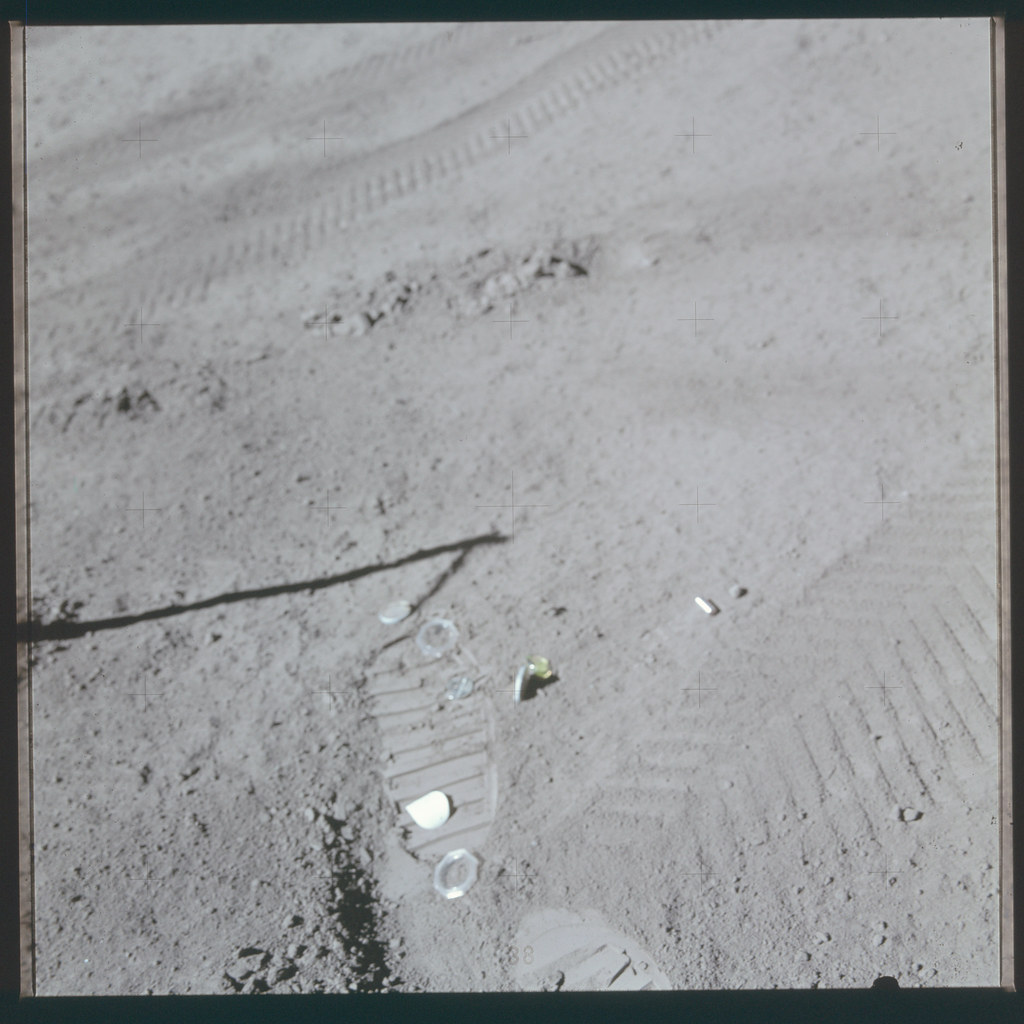
This blog is written by Rebecca G. W. Mueller and is about the powerful effect of images as an instructional tool. Read more about Rebecca at the bottom of her post.
Let’s do a quick exercise.
Take a moment to revisit several recent blog posts.
How many blogs included visuals? What type of visuals? Did you pay much attention to the visuals as you read the blogs? Did you think about how the visuals interacted with the text and communicated their own meaning?
We are surrounded by visuals – from emojis and selfies to infographics and data charts. Visuals are an important communication tool that we must read just like we do text, but readers do not always bring the same critical eye to visuals as they do words. Readers often deem visuals as objective depictions of information and forget that, for example, a photographer makes many decisions about how to best capture a moment just as a speech writer carefully selects their words.
A key facet of literacy in social studies classrooms is strengthening students’ abilities to critically engage with visuals (Callahan, 2013; Roberts & Brugar, 2017). Because students’ worlds are often saturated with visuals, teachers may presume that students have the skills to read them, but one’s ability to select the most flattering filter does not necessarily transfer to considering a political cartoon’s symbolism. Critically engaging with visuals requires substantial vocabulary and background knowledge, particularly around symbols, artistic conventions, and statistics. Below, I introduce some tools teachers can use to scaffold students’ work with visuals and discuss how building this capacity supports disciplinary literacy.
Useful tools
The Stanford History Education Group (SHEG) has an extensive array of resources, lessons, and assessments that support content and disciplinary literacy. SHEG recently turned its attention to civic online reasoning and has developed materials that address skills necessary for sense-making in a visual-filled digital world, including evaluating photos and evaluating data. All visitors can view student-friendly crash course videos, but a free-account is required to access some resources (e.g., assessment tools, rubrics, sample responses), most of which are most appropriate for middle or high school students. Using the three-question scaffold Who’s behind the information? What’s the evidence? and What do other sources say?, students develop the disposition to encounter visuals with healthy skepticism.
Both the Library of Congress and National Archives have document analysis tools and support materials to guide students’ work with visual sources. Both sites provide a general guide and specific guides that are tailored for particular source types, including charts and graphs, maps, photographs, and political cartoons. For example, the Library of Congress’ basic tool prompts students to observe, reflect, and question. The analysis tool modified for use with political cartoons includes guiding questions such as What do you see that might be a symbol? What was happening when this cartoon was made? and What methods does the cartoonist use to persuade the audience? These documents, which include versions appropriate for different readiness levels, prompt students to utilize core literacy practices while also emphasizing the influence of form and function on how we create and read visuals.Project Zero’s Thinking Routine Toolbox includes an array of strategies suitable for various disciplines and ages. The Toolbox has identified strategies that are well suited to exploring art, images, and objects. One of my favorites is See, Think, Wonder because it stresses the importance of looking closely before drawing conclusions and identifying additional information that will strengthen those conclusions. This simple, flexible strategy demands similar practices as the scaffolds described above but with language accessible to all ages.
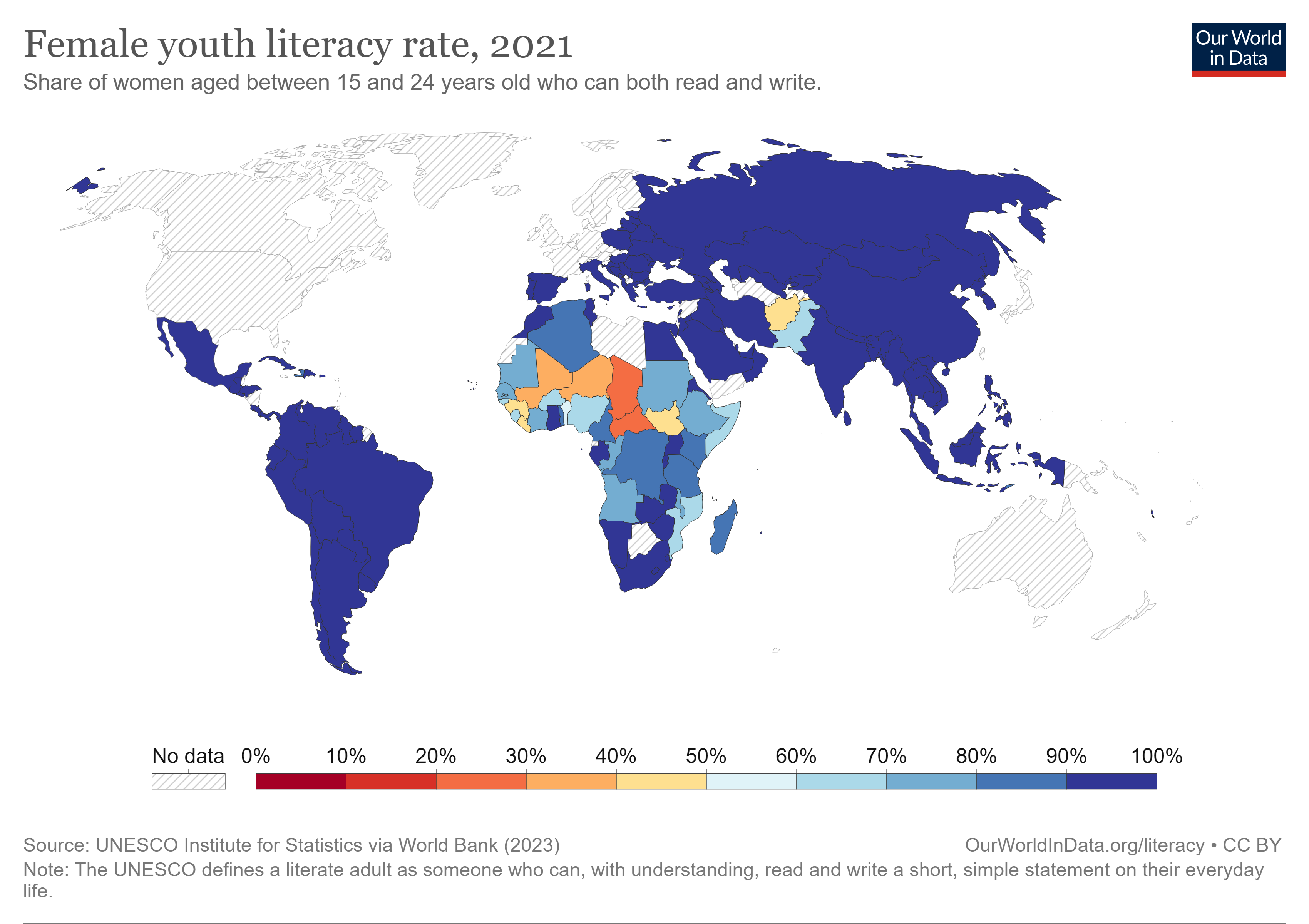
Retrieved from https://ourworldindata.org/literacy
See, Think, Wonder can be paired with Zoom In, which prompts students to consider increasingly larger portions of an image and revise their conclusions based on new information. In both cases, students build the dispositions to root conclusions in evidence, be open to revising conclusions based on new information, and reflect on how their personal experiences and biases may influence the way they interpret visuals.
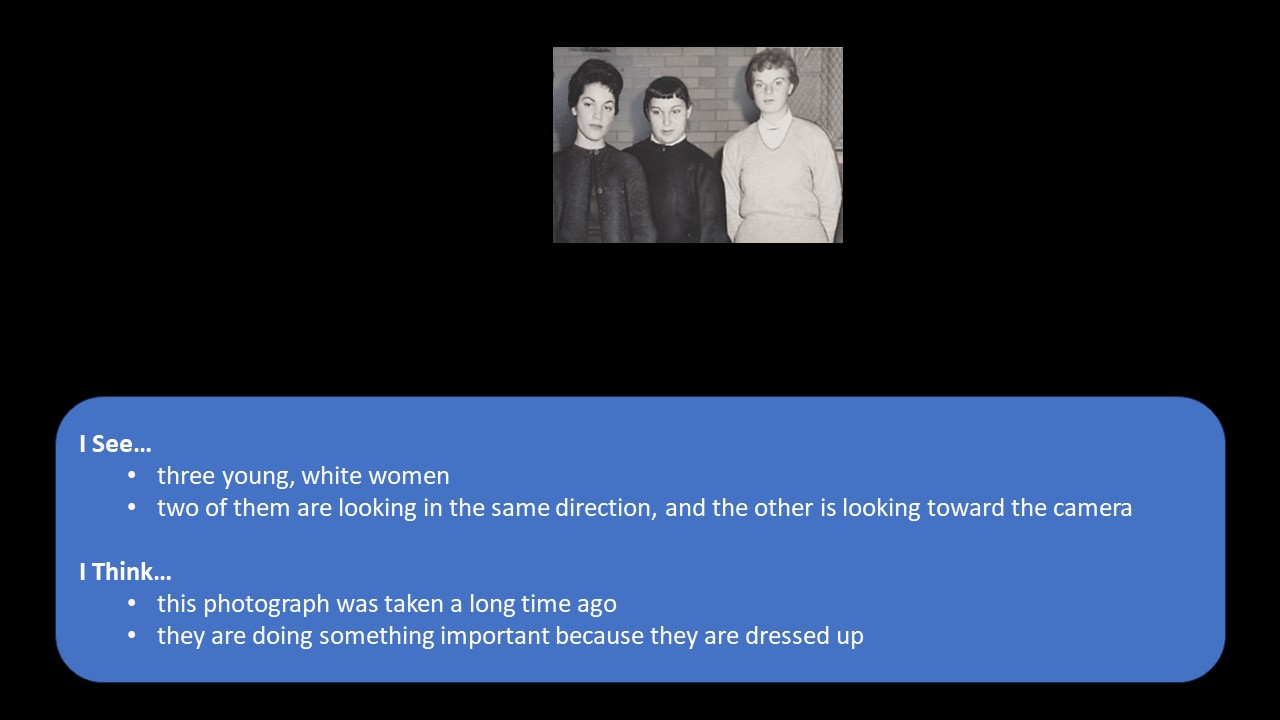
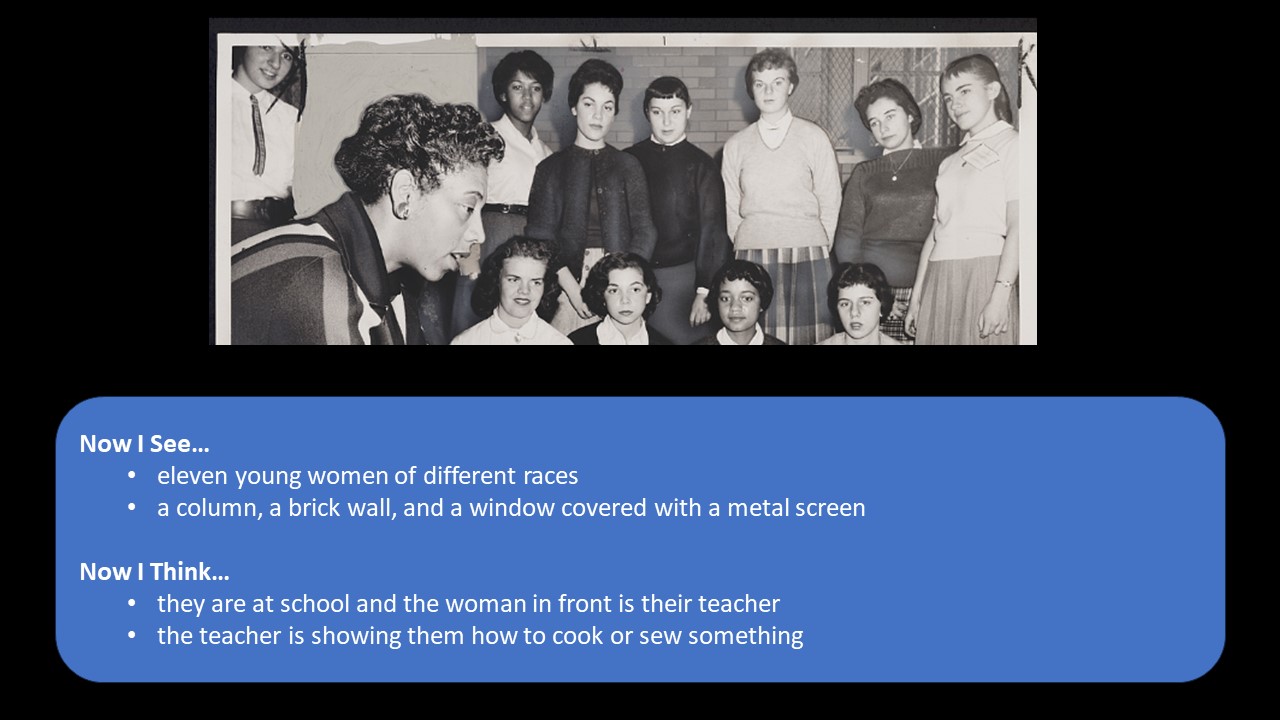
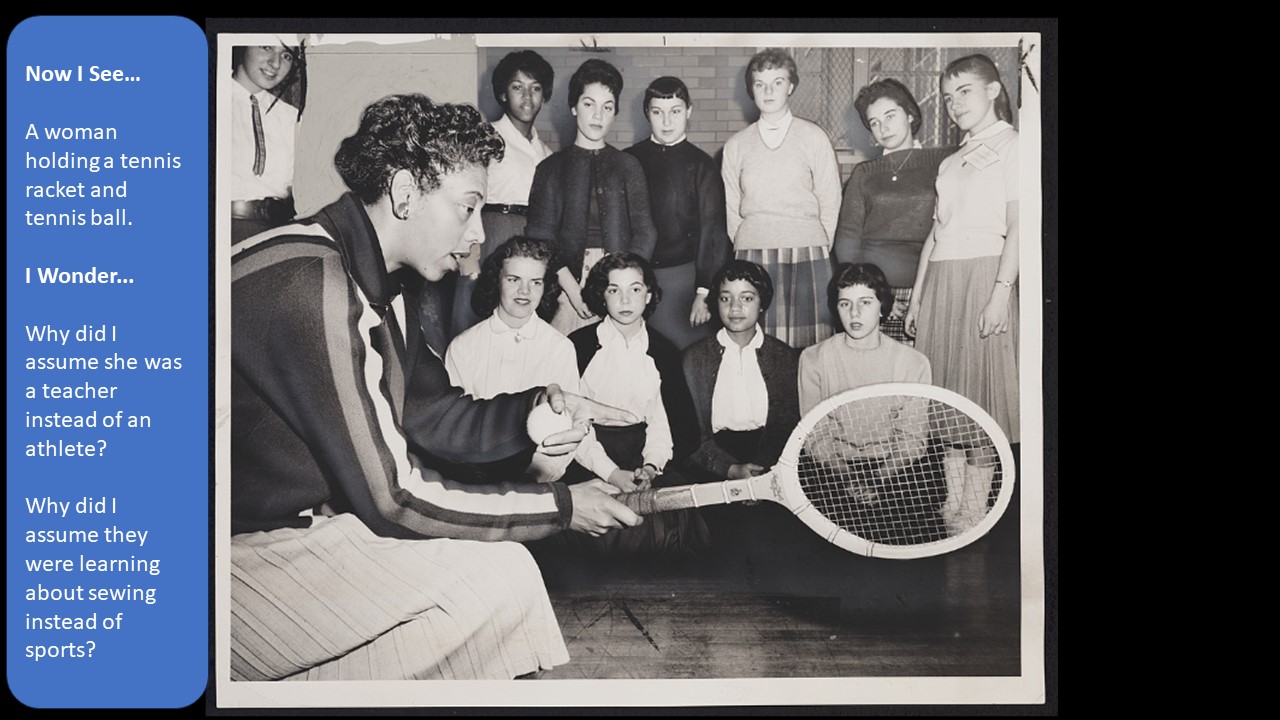
Ford, E., photographer. (1957). Tennis talk Althea Gibson, U.S. and Wimbledon tennis champion, gives some pointers on the game which has brought her international fame. Some 500 students attended the tennis clinic yesterday at Midwood HS, directed by Murray Eisenstadt, varsity coach // World Telegram & Sun photo by Ed. Ford. New York, 1957. December. [Photograph] Retrieved from the Library of Congress, https://www.loc.gov/item/2013650115.
Visual literacy as civic literacy
Researchers affiliated with SHEG’s Civic Online Reasoning project have argued that “the health of a democracy depends on people’s ability to access reliable information” (Breakstone, et al., 2021, p. 505). Because so much of the information we encounter is visual, building students’ visual literacy is fundamental to civic literacy. Utilizing the tools discussed above strengthens students’ awareness of the constructed nature of visuals and their ability to apply disciplinary sourcing practices to better understand how context and intention influence the way we create and read visuals.
References:
Breakstone, J., Smith, M., Wineburg, S., Rapaport, A., Carle, J., Garland, M., &
Saavedra, A. (2021). Students’ civic online reasoning: A national portrait. Educational Researcher, 50(8), 505-515.
Callahan, C. (2013). Analyzing historical photographs to promote civic competence.
Social Studies Research and Practice, 8(1), 77-88.
Roberts, K. L., & Brugar, K. A. (2017). The view from here: The emergence of
graphical literacy. Reading Psychology, 38, 733-777.

Literacy in the Disciplines, 6-12 (LiD) is pleased to announce our next webinar.
One of the greatest challenges secondary educators face is supporting students as they navigate challenging disciplinary texts. In this webinar, we make the case that being more intentional with selecting mentor texts aligned to meaningful disciplinary purposes. We will clarify our definition of “text”, consider what it means to apprentice students into the disciplinary text, and define a process for intentional text selection in service of a problem frame. Resources will be provided to support the application in participants’ contexts.
This webinar was held on June 15 2023. Cost: Free. LiD6-12 is funded by the South Carolina Middle Grades Initiative.
The video for this webinar is available here or embedded below.
This webinar featured Jenelle Williams, Oakland Schools, Michigan.
Jenelle Williams is a Literacy Consultant at
Oakland Schools, Michigan. She joined
the organization in 2017 following 18 years
of experience in public schools at the
elementary, middle, and high school
levels. She has served as a classroom
teacher, International Baccalaureate
Middle Years Programme Coordinator, IB
Educator and Examiner, and adjunct
professor. Jenelle recently stepped into
the position of co-editor of the Michigan
Reading Journal. She holds an Education
Specialist in Leadership and a Master’s
degree in Reading and Language Arts.
Jenelle works with teachers, building
leaders, and central office administrators
throughout Michigan as Co-Chair of the
statewide Disciplinary Literacy Task Force.
Follow and like Literacy in the Disciplines, 6-12 on Twitter
Photo by Jehyun Sung on Unsplash
This post is written by Jenelle Williams. You can read more about Jenelle at the bottom of this post.
I have served in public education since 1999, and I can attest to the fact that this school year has been a doozy. I have served as a middle school and elementary teacher, an instructional coach/coordinator, and now I am serving as a consultant. Working both regionally and across the state of Michigan with secondary teachers, building principals, and central office administrators, it’s easy for me to get lost in all of the challenges. Despite this reality, I have been lucky enough to witness positive momentum in the schools and districts I serve across Oakland County, Michigan. Working as a secondary literacy consultant for the 28 individual school districts in my county provides me with endless variety–though my area of focus is adolescent literacy, each district within my service area represents a wide array of contexts, sizes, strengths, and needs.
Working with other content-area colleagues, we developed a plan of support around disciplinary literacy in our region for this school year. As is the case with most educational contexts, we began planning while still in the midst of the previous school year, so there were many unknowns. Would we experience another surge of COVID? How would districts navigate large teacher turnover? Would educators even be ready to re-engage with a shared professional learning focus? Despite the unknowns, we built a service plan based on the following beliefs:
What can this look like? In one district, the “tight and loose” construction has looked like having multiple professional learning sessions for all educators throughout the year–use of district professional learning days and staff meetings has provided opportunities to bring middle- and high-school teachers together, both in disciplinary and interdisciplinary groupings. The Essential Instructional Practices in Disciplinary Literacy (2019), originally drafted by Dr. Elizabeth Moje at the University of Michigan and refined over the years by statewide experts, is a foundational document that has provided this district (and all districts in our network) with possible areas for professional learning. After gathering teacher perception data and engaging in data dialogue conversation, leaders in this district decided to begin professional learning with a focus on Essential Instructional Practice 2, which calls for the development of abundant, diverse disciplinary texts and reading opportunities.
The loose part in this district’s implementation involved optional Study Group sessions on other Essential Instructional Practices in Disciplinary Literacy, with an opportunity for participating educators to share their learning with staff later this Spring. For a more in-depth discussion of how professional learning can allow for a shared focus AND teacher autonomy, we recommend Investigating Disciplinary Literacy: A Framework for Collaborative Professional Learning by Christina Dobbs, Jacy Ippolito, and Megin Charner-Laird (2017).
Keeping our core beliefs at the forefront of our thinking, my colleagues and I created a predictable structure for network meetings. We asked participating districts to select a month when they would like to host the meeting. One of us acted as a point of contact, gathering necessary information about the location and communicating with the network. Each network meeting would last for three hours, and hosting districts could select whether to hold the meeting in the morning or afternoon. This structure made it more possible for all participants to attend due to time constraints and a lack of substitute teachers. Each district could select its team–some started with just a few central office administrators, some came with representatives from all levels, and some consisted of one instructional coach. All were welcome. Meetings always began with introductions and agendas, norms, and a connector. Especially at the beginning, we used the connectors as a way to build relationships across districts. As we moved through the year, one of the most popular portions at the start of the meeting was our District Spotlight–the planning team would intentionally reach out to one of the districts with a specific ask, such as, “Can you tell the network about how you’ve been engaging in instructional rounds?” Next, consultants would lead the group in shared learning around portions of the School-Wide Practices for Disciplinary Literacy. Areas of focus were selected based on the time of year and the types of decisions that districts make at those times. For example, as we moved into Spring, it made sense to focus on School-Wide Practice 7, which outlines systemic approaches to evaluating instructional materials. Perfect timing as central office leaders begin making budget decisions! Finally, each meeting ended with at least one hour of team time. Each district was assigned two consultants who would serve as points of contact for any necessary support. Finally, though the planning team had absolutely no expectations in this area, we started to find that each hosting district was excited to outdo the others–specifically as it related to food! In one district, food service employees created a magnificent spread of snacks. The next month, the hosting district asked their Foods teacher (and his students) to create an array of tasty treats. What a way to highlight teacher (and student) excellence!
As I think back, I am sure there were many more beliefs guiding our plan for supporting these participating districts, but the ones described above have been a driving force throughout the year. So what have we learned after engaging with this network since September 2022? And why am I so encouraged? First, we have learned that you don’t have to be a “perfect” district or school in order to get started with this work. What is necessary is a shared vision, passion, and commitment to the work. In one district, nearly all central office administrators are new this year. They have certainly had quite the learning curve as they become familiar with the strengths and needs of their district. However, they have committed to attending network meetings, along with individual consulting sessions with me, to craft a multi-year plan that fits their context. More importantly, we are seeing positive changes: teachers are talking with department colleagues about instruction, staff are using common terminology around disciplinary literacy, and building leaders are seeing the value in having a shared goal across multiple buildings.
We have also learned that despite everything they have experienced over the past few years, educators are just as interested in honing their craft as they have always been. In fact, some are even more concerned than ever before–they want to shake up their approaches in order to engage all learners. Even more heartening is that when provided the chance to invite colleagues and leaders into their classrooms to observe and debrief their practice, middle- and high-school teachers have been willing to open their doors. Debrief sessions from these observations highlight just how reflective and growth-minded classroom teachers continue to be.
The future is bright as we begin service planning for the upcoming school year. Participating districts are overwhelmingly positive about continuing with this work in year two, and several additional districts have expressed interest in joining in the work. We have an incredible array of resources to offer–most importantly, we will continue to make space for the most important resource–each other.
References
Hubbard, W. G., & Sandmann, L. R. (2007). Using diffusion of innovation concepts for improved program evaluation. Journal of Extension, 45(5), 1-7.
Dobbs, C. L., Ippolito, J., & Charner-Laird, M. (2017). Investigating disciplinary literacy: A framework for collaborative professional learning. Harvard Education Press.
Michigan Association of Intermediate School Administrators General Education Leadership Network Disciplinary Literacy Task Force. (2019). Essential instructional practices for disciplinary literacy: grades 6 to 12. Authors
Michigan Association of Intermediate School Administrators General Education Leadership Network Disciplinary Literacy Task Force. (2020). Essential school-wide practices In disciplinary literacy: Grades 6 to 12. Authors
Jenelle Williams is a Literacy Consultant within the Leadership and Continuous Improvement unit at Oakland Schools, an intermediate school district supporting the 28 districts in Oakland County, Michigan. She joined the organization in 2017 following 18 years of experience in public schools at the elementary, middle, and high school levels. She has served as a classroom teacher, IB Middle Years Programme Coordinator, teacher leader, and educational technology coach. An IB Educator and Examiner since 2013, Jenelle leads professional learning workshops and marks e-assessments for the International Baccalaureate Organization. She holds an Education Specialist in Leadership degree and a Master’s degree in Reading and Language Arts through Oakland University. In addition, Jenelle serves as an Adjunct Professor in Grand Valley State University’s Graduate Program and a co-editor of The Michigan Reading Journal, a publication from the Michigan Reading Association. Jenelle is passionate about supporting teachers, building leaders, and central office administrators in the area of secondary literacy, and she is especially excited to be able to support Michigan’s work around disciplinary literacy through her role as Co-Chair of the statewide Disciplinary Literacy Task Force. She can be reached at jenelle.williams@oakland.k12.mi.us, and on Twitter at @JenelleWilliam6 and @GELN612Literacy.
Photo by Felicia Buitenwerf on Unsplash

This post is written by Jennifer D. Morrison. Read more about Jennifer at the bottom of this post.
Over the past twenty years that I have served as an instructional coach, staff development specialist, teacher educator, and National Board candidate mentor, it has been clear to me how important it is to engage in being not only a reflective practitioner but also a professional capable of clearly unpacking my practice. Zeichner and Liston (2014) point out that excellent teachers, and by extrapolation excellent educational leaders, are often not aware of what they have learned and how they enact their practices. They have “tacit knowledge” that is known but not articulated; enacted but not explained. While it may be acceptable for teachers and educational leaders to operate in day-to-day spaces with this tacit knowledge, it does not foster growth of the self or others. If leaders cannot clearly understand and articulate the curricular, instructional, pedagogical, and relational decisions they are making as well as provide the rationale for those decisions, they cannot effectively serve in the leadership capacity needed to facilitate change within a school environment.
Burch (1974) developed a model of the Four States of Competence to help explain the processes in which an individual engages as s/he learns new skills.
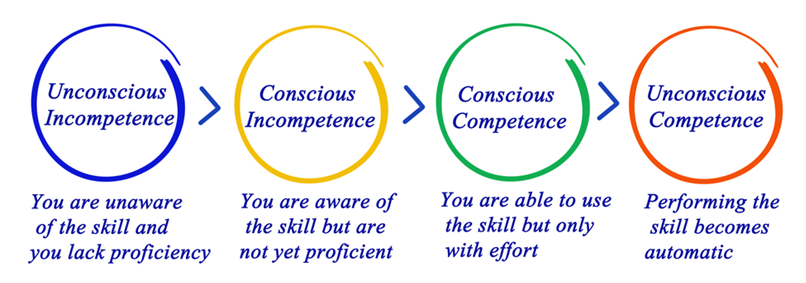
As preservice teachers, we are unconsciously incompetent — we don’t know what we don’t know. We stumble through our teaching, not knowing what we should be doing, if we are doing it right, or even what questions to ask. As we begin to acknowledge our lack of knowing, we move into being consciously incompetent; we now know exactly how little we understand about the subject. It then becomes our mission to learn more, try more, figure out what works and what doesn’t in our attempts to improve. As we seek answers and help, practice, make adjustments, and are acutely aware of our growth, we shift to conscious competence. We know what we are doing and why we are doing it. We have grown; we now know things, and it shows. When these practices gain a level of automaticity — where we no longer have to think about every little action we take and why — we become unconsciously competent. “Right” is now a feeling, a sense that has developed with thought and practice. Any time we move into a new learning space, such as being a literacy coach or administrator, we begin the process again.
This is usually where discussion of Burch’s model ends. However, I advocate for another step. In all my leadership roles, it has been necessary for me to step back into the conscious competence space. Why? Because when I am coaching a teacher in how to differentiate a lesson or teaching adult students about implementing a literacy strategy, it is not enough for me to say: “Yeah, I just do it, and it’s right. Here, watch me.” That does not encourage growth in those with whom I am working. I have to unpack what I am able to do automatically and make it transparent. I have to show that what I am doing is not by accident but the result of many years of experience, lots of reading and reflecting, and lots of corrected mistakes. I have to be able to say: “This is how you do it, and this is why it works.” If I am unconsciously competent, I am not able to provide that form of instruction; and afterall, effective leaders are ultimately teachers. My ability to consciously understand my competence assists others in their moving from incompetence to competence. In order to be reflective teachers and effective literacy leaders, it is important for us to deconstruct the places where we are unconsciously competent. We must be able to understand what we are doing, why we are doing it, how we can improve it, and what might happen if we did it differently. We need to look at what we do automatically with the eyes of an outsider, “making the familiar strange” (Mills, 1959).
What might this look like? This means first, reflecting on our processes and how we engage with literacy learning ourselves. Early in my teaching career, I was assigned an SAT/ACT prep class. My students overall did not do well on the reading comprehension sections of tests. At the same time, I was preparing for the GRE exam to apply for graduate school, and I regularly rolled out near perfect scores on the reading comprehension. For me to better help my students, I had to step back into conscious competence and metacognitively consider what exactly I was doing in my reading of these passages and in my answering of comprehension questions that led me to a successful outcome. How was I engaging with the text? What was I thinking as I read? What kinds of predictions was I making? How did I process the questions? What did I do with vocabulary I didn’t know? Where was I rereading, where was I paraphrasing, and why? Once I unpacked my own process, I could then effectively convey to my students what I did and why through think alouds and walking through examples.
The same can be said when working with preservice and inservice teachers. In workshops or professional learning sessions, it is not enough to provide the formula of how to do a particular technique or strategy; it is imperative to also provide the theoretical reasons and reflective process that undergird the strategy. For example, I often begin my courses by having students complete a literacy autobiography, an activity they can easily enact in their own classrooms. While we do the activity, however, I also parallel the steps with rationales and explanations for what we are doing and why. I walk them through the assignment by modeling my own autobiography first. I show not only what my literacy experiences have been but also how they have shaped me as an individual now. This includes delineating my resultant strengths, challenges, and biases. As we work through their autobiographies, I model for them the unpacking process. What was it like for them to read and write in different subjects when they were younger? Who influenced their literacy habits and preferences? What life experiences influenced their literacy habits and preferences? How have these experiences impacted their views of literacy now? How do these preferences, or reticences, impact the way they interact with literacy now? How can they move beyond the fear, shame, or negative feelings that might have accompanied literacy experiences? How might their experiences impact interactions with students who do or don’t view literacy in the same way they do? For individuals with literacy affinities, the questions help them to see why they have positive dispositions toward reading and writing and to unpack the tacit literacy knowledge that has become automatic. This is important because not only can they better recreate some of the experiences for their students, they are also better able to see the correlation between their experiences and how they view reading and writing, and why other people, including many of their students, may not have the same perspectives. I share with them that Bourdieu (2013) argues our habitus shapes our understanding of the world, our ways of knowing (epistemologies), and the attitudes/beliefs/biases we carry into relationships with others and our teaching spaces. In order to be able to teach children, we have to know where we come from, why we believe what we believe, and consider how we can interrupt the transmission of our unconscious biases, which can be done through engaging in conscious competence and reflexivity. Otherwise, we can inadvertently create environments filled with microaggressions toward particular students, which can deeply impact student learning.
Stepping back into conscious competence and engaging in reflection is, in many ways, emancipating (Zeichner & Liston, 2014). By engaging in thoughtful, conscious teaching and leadership, we free ourselves, our teachers, and our students from the blind following of established routines, policies, and plans. It gives us the freedom — and responsibility — to question, to wonder, to consider, to criticize, to advocate, and to defend. Thinking is a political action, and “teaching is a subversive activity” (Postman & Weingartner, 1971). Reflective teaching and conscious competence empower us to be change agents within our own educational spheres, whether that is in our classrooms, schools, districts, or at home with our own children. We learn to be critical consumers of curricula and policy, and we find our voices to change the status quo. This is how we change the currently negative national narrative for our profession — one child, one classroom, one teacher at a time.
Bourdieu, P. (2013). Outline of a Theory of Practice. Cambridge Press. DOI: https://doi.org/10.1017/CBO9780511812507
Burch, N. (1974). The learning stages model. Solana Beach, CA: Gordon Training International.
Mills, C.W. (1959). The Sociological Imagination. New York: Oxford University Press. (40th anniversary edition, 2000).
Postman, N. & Weingartner, C. (1971). Teaching as a Subversive Activity. Delta Publishing.
Zeichner, K. & Liston, D. (2014). Reflective teaching: An introduction. Second edition. Erlbaum.

Dr. Jennifer D. Morrison is a Clinical Assistant Professor at the University of South Carolina and a National Board Certified Teacher in AYA/ELA. She earned her Ph.D. from the University of Nevada, Reno, in Language, Literacy, and Culture. She worked as a middle and high school English teacher and instructional coach for 19 years. Her research agenda focuses on teacher induction, literacy attainment (particularly digital and multimodal), and teacher inquiry processes. She has been published in such journals as English Journal, Journal of Adolescent and Adult Literacy, Talking Points, Principal Leadership, and Educational Leadership.
Cover Photo by Lindsay Henwood on Unsplash

This post is written by Charlene Aldrich. For more about Charlene, please visit the bottom of this page. The webinar recording for this material is embedded at the bottom of post.
How do we get students to read at home? We probably have to require it. We know in lower school, students are asked to read 15-20 minutes every evening. Students have free choice; parents monitor the requirement by initialing a document. But how can that requirement morph into a habit that positively affects the student’s academic future? “Let them choose” becomes the mantra. When given open choices, it’s human nature to struggle.
BUT when we provide themes, topics, or text sets to choose from, we make a choice manageable. It’s then that students fulfill our targeted purpose for outside reading. It’s then that students look at titles as a way of previewing the content of the text. It’s then that they engage in ‘reading to find out.’ It’s a win-win.
“I don’t have time to hunt down reading selections and/or books!” cry many content-area teachers everywhere. And maybe teachers won’t have the extra time during their first or second year of teaching. Or the first or second month of the year. HOWEVER, when teaching and planning become automatic, time becomes available to investigate the themes and text sets curated and available online. Content-area teachers can introduce reading selections of all genres; these support the ELA curriculum and provide background, cultural understanding, or applications of specific content-area curriculum. This is where the idea of parallel reading emerged – collaborating across the content areas in ways that grow overall literacy proficiency AND reinforce content-area learning.

Parallel – side by side, never touching. Reading – the crosstie that connects content areas. Juxtaposed with another discipline, text is a way to connect things that would otherwise run side by side. Through parallel reading, teachers approach their content from a literacy mindset. Take math, for example. One might say that reading is not necessary to do the math. However, knowing ‘pi’ is essential, but where did it come from? WHO first used it for achieving a measurement? WHEN did it come about? WHY was it necessary? A planning question becomes, “Who were the movers and shakers beginning at the onset of mathematical thinking and going forward?”
How do you implement your new mindset?
Arousing curiosity and satisfying it with reading develops a positive attitude toward reading. It empowers students to read to ‘find out why’. While the answers to those questions are easily found with a Google search, connecting to the culture of the times happens best when biographies or primary sources are available for reading.
Text of all kinds becomes the primary connection between every content area. Students who read first-hand accounts of the Jim Crow era have a deeper understanding of the literature of that time. The struggle of the Indigenous people has a more significant impact when seen through their eyes in diaries, songs, and poetry. Understanding the building process of the pyramids or the Roman aqueducts connects math with sociology or history.
I alluded to curated text sets above and encourage you to investigate some of my favorite resources. NewsELA, ReadWorks, CommonLit are just a few places to find digital text sets created and classified by readability, theme, topic, holiday, and current events. One of my favorite articles is in NewsELA regarding Halloween and how much money is spent: nine billion dollars in 2018! Each of the above resources contains a wide variety of stand-alone reading/writing projects for those short classes on short days where there’s no time for an entire lesson!
Your teaching librarian can also curate book sets that support your curriculum. Other grade-level teachers may welcome the opportunity to collaborate on reading and writing assignments. Making connections across content-areas strengthens learning and increases the likelihood of creating lifelong learners.
Ponder my truisms about lifelong learning:
Parallel reading projects grow a body of students who will begin thinking outside of their high school, content-area silo. That is certainly how they will live upon graduation. Stereotype book reports don’t have to be the outcome of parallel reading. How would your students like to communicate their reading experience to others? Encourage them to move beyond summaries (which can be found online) to how their perspectives have shifted because of the reading selection.
Try it. Identifying the selections is half of the fun! What’s the other half? Sharing them with your students. Through themes and topics, students can connect with text in ways outside of a required curriculum text. They can take ownership of their reading which just might result independent readers and learners.
Photo by Johannes Plenio on Unsplash

Charlene Aldrich is an instructor in the Office of Professional Development at the College of Charleston. While content-area literacy is her specialty, she also teaches Assessments in Reading, Foundations in Reading, and Instructional Practices as required by South Carolina for recertification. She serves as the Treasurer of LiD 6-12.

This post is written by Stephanie M. Lemley. You can find out more about Stephanie at the bottom of this post.
For the past two years, I have had the privilege of working primarily with grades 6-12 Mississippi agriculture and science teachers through a grant entitled Agricultural Sciences Professional Development (ACRE). This professional development for agricultural literacy grant is funded by the U.S. Department of Agriculture, National Institute of Food and Agriculture. In this grant, teachers participate in an intensive, two-week summer institute where they learn animal science, plant science, and meat science content as well as literacy strategies, pedagogy, and teacher leadership. The teachers also participate in two follow-up days—one in the fall semester and one in the spring semester. As a content-area literacy and disciplinary literacy teacher/educator, I work with the teachers on infusing comprehension, writing, and vocabulary strategies into their classroom practice. During the summer institute, the teachers keep an interactive notebook (either hard copy with a spiral notebook or a digital version on a site such as Canva.com) to record their lab data, literacy strategies, and notes from presentations. Previous research on interactive notebooks in science classrooms has shown that such tools can support students’ communication of science understandings (Wilmes & Siry, 2019).
One strategy that has been impactful for both cohorts of teachers is the carousel (Adams & Leininger, 2017). This strategy promotes productive talk in the classroom. On the first day of ACRE, I post chart paper labeled with the different livestock species—dairy cattle, beef cattle, small ruminants (goats/sheep), equine (horses), and swine around the room. I divide the teachers into small groups and have them circle the room, two minutes at each station, recording as much background knowledge about each livestock species as they can. As they rotate around the room, they read what others wrote, correct any misconceptions, and record their own information in a different color marker. At the end of the summer institute, we revisit the carousel to record new knowledge from ACRE.


Image: ACRE teachers completing the carousel about different livestock species.
Another strategy that I teach and we practice in our summer institute is magnet summaries (Buehl, 2014). A magnet summary is a strategy where students construct meaningful summaries, in their own words, about a topic or concept. As a piece of text is read, magnet words—key terms or concepts—are identified from the reading and are organized into a summary.
At our summer institute, I modeled, and we completed together a magnet summary on the term ‘animal scientist’. We introduced this topic to the teachers because the majority of the presenters throughout our two weeks together were practicing animal scientists from the university. We utilized two texts– American Society of Animal Science’s (ASAS) entry on “What is Animal Science?” and the Occupational Outlook Handbook’s entry on Agricultural and Food Scientists.
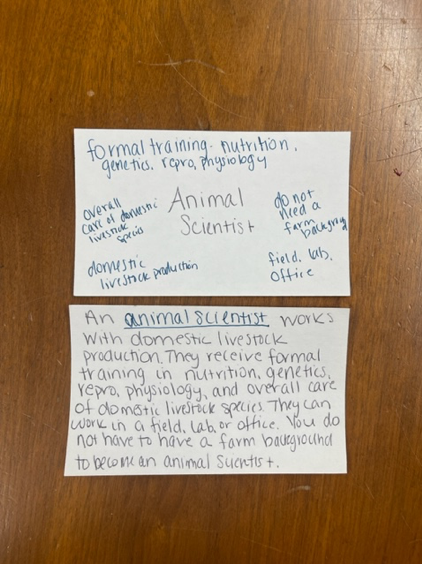
Once we completed the first magnet summary together, the teachers completed another one on a Mississippi commodity (e.g., broilers, cattle, catfish, corn, cotton, horticulture crops, peanuts, rice, sweet potatoes, etc.) utilizing three sources—the Mississippi Farm Bureau Commodity Facts, the Mississippi Agriculture Commodity Directory from the Mississippi Department of Agriculture and Commerce, and the Mississippi State University MS Agricultural and Forestry Experiment Station (MAFES) Mississippi Commodities list.


Images: Magnet summary on the Mississippi commodity ‘soybeans’.
Both of these strategies translated well into classroom practice for our teachers. In our fall follow up, one teacher noted, “The carousel strategy worked well because students enjoyed going back after lessons to see how much they learned.” Another teacher noted that the compilation of strategies in the interactive notebook the students are keeping “allows them make connections with content throughout the term.”
Adams, S., & Leininger, G. (2017). But I’m NOT a reading teacher! Literacy strategies for career and technical educators. Coppell: Sandy +Gwen Always Learning.
Buehl, D. (2014). Classroom strategies for interactive learning (4th ed.). Newark: International Reading Association.
Wilmes, S.E.D., & Siry, C. (2019). Science notebooks as interactional spaces in a multilingual classroom: Not just ideas on paper. Journal of Research in Science Teaching, 999-1027. doi: 10.1002/tea.21615
*This work is supported by the Agriculture and Food Research Initiative’s Professional Development for Agricultural Literacy priority area, grant no. 2021-67037-34210, project accession no. 1025666, from the U.S. Department of Agriculture, National Institute of Food and Agriculture.

Stephanie M. Lemley is an Associate Professor at Mississippi State University where she works with pre-service and in-service teachers on incorporating literacy strategies into their agricultural teaching practices.
Cover Photo by Jonathan Kemper on Unsplash

Literacy in the Disciplines, 6-12 (LiD) is pleased to announce our next after-school Webinar Series session.
Tensions and Supports Between Culturally Responsive-Sustaining Pedagogy and Disciplinary Literacy.
What are Culturally Relevant and Sustaining Pedagogies? What is Disciplinary Literacy? Understanding Ourselves, Our Curriculum, and Our Students. Building Students’ Cultural Competence in Disciplinary Literacy: How Can We Do It? Tensions in Disciplinary Literacy and CSP.
The video recording and the associated slides for the session are available at the bottom of this page.
When: Thursday, June 23, 2022, 6:00 – 7:00 pm ET.
Where: Please register here for the July session. A Zoom link will be sent one day before the session.
Cost: Free. LiD6-12 is funded by the South Carolina Middle Grades Initiative.
This session will feature Drs. Rachelle Savitz and Britnie D. Kane.
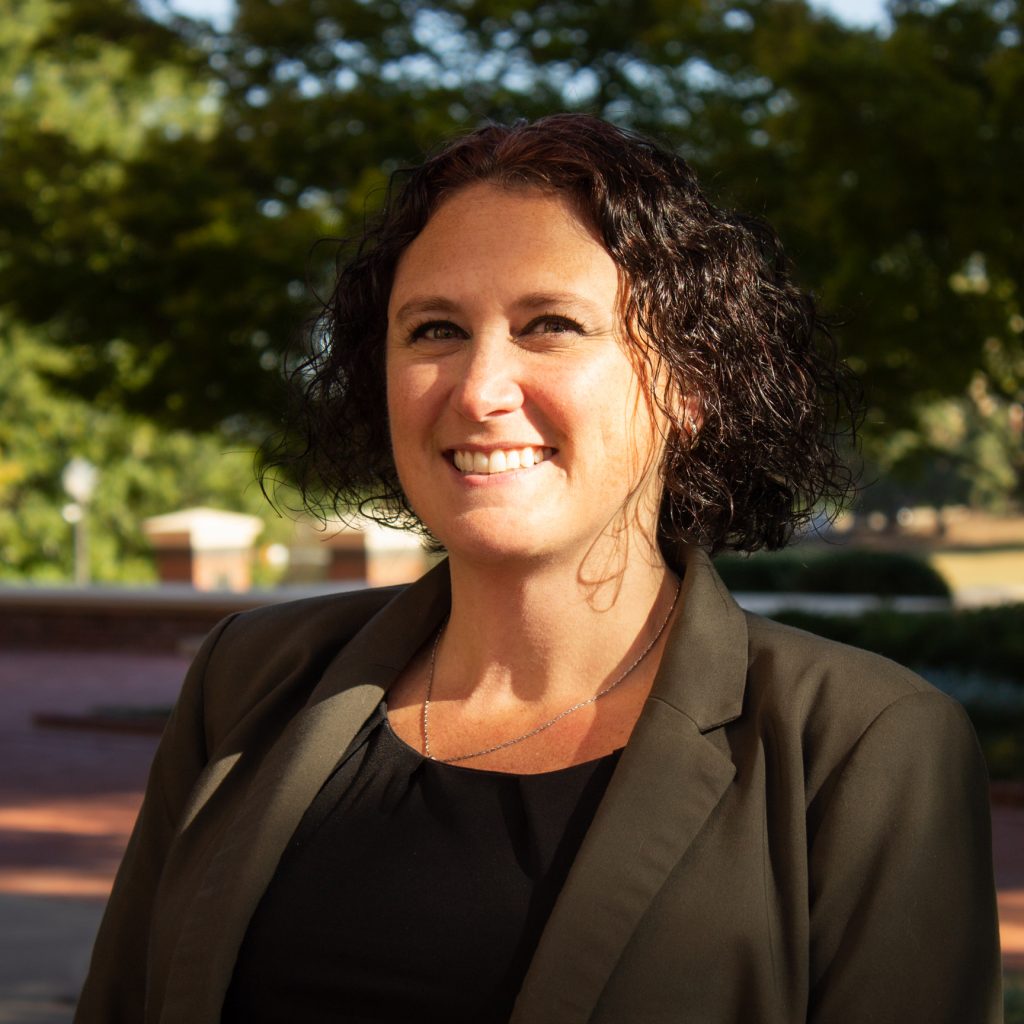
Dr. Rachelle S. Savitz is an assistant professor of adolescent literacy at Clemson University having been a K-12 literacy coach/interventionist and high school reading teacher. She is the recipient of Association of Literacy Educators and Researcher’s Jerry Johns Promising Researcher Award, American Reading Forum’s Gary Moorman Early Career Literacy Scholar Award, finalist for International Literacy Association’s Timothy and Cynthia Shanahan Outstanding Dissertation award, as well as Secondary Reading Council of Florida’s Reading Teacher of the Year award. She has published articles on inquiry-based learning, analysis and use of young adult literature, and response to intervention.
Britnie Delinger Kane is an Associate Professor of Literacy Education at The Citadel’s Zucker Family School of Education. Broadly, her research interests focus on DL and instructional coaching. Dr. Kane has published in Teachers College Record, the Journal of Teacher Education, the American Educational Research Journal, the Journal of the Learning Sciences, and elsewhere. She serves as the Literacy Program Coordinator at her home institution, the Associate Director of the Lowcountry Writing Project, and the Vice President of LiD 6-12.

Please share this professional learning opportunity with your colleagues.
