Treating Ourselves How We Treat Others

Blog, Teacher Self-Care

By: Victoria Young, South Carolina High School Social Studies Teacher

For about nine months every year we provide a form of childcare for dozens to hundreds of children that are not our own. We teach formulas, literary devices, manners, and life lessons. We watch friend groups change and look out for who has a crush on who. We see the highs and lows of their lives and are ready to support them every step of the way. We care. So, why can’t we do the same for ourselves?

Photo by Jared Rice on Unsplash

The concept of self-care usually involves an at-home spa day with bath bombs and candles, and if that is something that makes you happy then by all means relax into that bubble bath! However, as the year goes on and we continue to pour out so much of ourselves into the next generation. We often try to fix our burnout with a night of Netflix or a good book, and claim we are fine because yesterday I managed to fit in some “me time” whenever that time of selfishness isn’t meant to be a hallmark event.

As teachers we try to meet the social-emotional needs of our students whether it pertains to school or not, but neglect to see that we actually have a lot of the same needs. Sure, hopefully you do not need to be comforted because Johnny stole your favorite blue pen and now you two aren’t friends anymore, but we still come into our jobs carrying hurt from our own relationships. While we have developed more emotional control as adults, we still have our inner child that is just as hurt, and we don’t have an awesome teacher to see us every day and tell us that it will all be okay and help us work through it. So, we carry these burdens of hurt, of bills, responsibilities, plans, etc. into our classrooms and try to lock them away.

While none of us would like to carry these burdens and we definitely don’t want them to impact who we are with our students, these things are what help us empathize with our kids when they are hurting! However, that doesn’t mean we should have to hang onto these burdens. 

Self-care is a tool that is meant to be used every day to meet our social-emotional needs. While it may not get rid of the internet bill (and isn’t that the self-care we all need?) it does help to alleviate the pressure we allow the burdens of life to put on us; it helps us prioritize ourselves over our worries. So, how do you practice self-care without having to sit in a bubble bath?

Self-Care Ideas

1) Do what you want to do!

Now I’m not talking about total social anarchy. What I’m saying here is when you have an hour in the evening with nothing pertinent to do, ask yourself “what do I want to do?” Be the kid that just got home from school and plays their favorite video game for an hour, takes a nap, or goes on a walk for some fresh air. It’s okay to check in with yourself and acknowledge that you need to do something for yourself, even if it is stopping by your favorite ice cream shop after work.

2) Don’t just pencil in time for yourself, write it in ink!

Photo by Ravi Palwe on Unsplash

Every teacher has their methods of staying organized. Some have planners with pretty pens and stickers, some are digital agenda pros, and some of us have sticky notes and pieces of paper hidden everywhere. We have busy lives and busy jobs with meetings always changing or friends planning dinners – things we don’t necessarily want to, or can say “no” to. And for those of us who are also parents, that’s multiple schedules you are responsible for! Find one or two days a month that you can block off for yourself and make it non-negotiable, even if it is only for half the day it can make a huge difference. Plan something that you will look forward to – seeing a new movie, going to the zoo with a friend, or even just a day to lay in bed and be lazy. You know what you need, so make time for it and give yourself something to look forward to while you make your sixth parent phone call for the week.

3) Be open to new things.

I don’t know about you, but after this last year of teaching I know I need some consistency in my life. The past 16 months have been full of new things (remember the murder hornets!?) and many of us took to baking bread and learning how to hoard toilet paper. Most of us probably haven’t touched our quarantine hobbies in almost a year, but that time retaught us to try new things, and try again. It also taught us to let go of activities that once brought us joy, but no longer are fulfilling. All of this to say, just because you do something for self-care once and like it, doesn’t mean it will be what works for you always. Eventually you will finish writing that book of poems or the weather will no longer be enjoyable for bike rides with your family. It’s okay to appreciate those things and then move on to something new. 

As we enter a new school year with new students and new problems to solve, remember that you are what makes your classroom great. When you open up that new 2021-2022 planner (or that new pack of sticky notes) and start to organize your lessons for the year, remember that a lot of the meaningful lessons we model as teachers have nothing to do with state standards and have so much to do with how to be human. So, in the meantime, draw that bubble bath, turn on your Xbox, or see what time your local ice cream shop closes, and as you rest and prepare for a new school year ask yourself: how can I treat myself with the kindness I treat others?

About the Author
Victoria Young, B.A. Secondary Education/Social Studies, is a geography and world history teacher at Greenville Technical Charter High School in South Carolina.


The Importance of Self-Care

Blog, Teacher Self-Care

By: Antoinetta J. Rogers, a South Carolina High School ELA Teacher

Photo by Clint Patterson on Unsplash

The Importance of Self-Care is a simple title one would think requires little effort, but it is a very complex issue for teachers.  Within the educational system there is an unspoken hierarchy.  This is not to be confused with the official Maslow’s Hierarchy of Needs. The hierarchy that is being referred to consists of first year teachers, experienced teachers, and then the beloved veteran teachers.  Once upon a time, before the world changing pandemic COVID-19 occurred, the issue of self-care would mainly be engrossed upon first year teachers.  This was of course implemented to make sure that first year teachers would not burn out. The promoting and encouraging of self-care also assisted with turnover rates and teacher retention.  As teachers model, demonstrate, and simply provide so many daily life lessons to students; it is anodyne to say that the 2020-2021 school year taught teachers worldwide that regardless of the years of experience; self-care is essential, vital, and indispensable. 

What is Self-Care?

Self-care is self-dependent. Teachers should take advantage of two things. Realizing when to practice self-care and recognizing when the body is in need of self-care.  According to Google, self-care is the “individual practice of health management without the aid of a medical professional.” In health care, self-care is “any human regulatory function which is under individual control, deliberate and self-initiated, for the purpose of the maintenance of health and wellbeing.” Teachers give of themselves every single day inside and outside of the classroom. The countless hours of planning and anticipating how lessons flow requires not only a lot physically, but mentally and emotionally as well. 

Learning to Disconnect

Photo by Clint Patterson on Unsplash

It is essential that teachers disconnect.  This means time specifically set aside for not checking emails, leaving work at work, and setting reasonable and realistic goals. Teachers, instructional coaches, curriculum leaders, administrators, etc. have to be on the same level across the board when it comes to self-care.  Most of the time, being on one accord looks like displaying compassion and empathy towards counterparts that are in need of self-care.

Why Now?

Self-care became vital for me at the beginning of the 2020-2021 school year.  In my school district, we began teaching in a phase 1 model due to the COVID-19 pandemic.  Phase 1 was completely virtual.  While I can adapt to technology, teaching completely online was very new and required a lot of planning.  I had to rely strictly on technology, and honestly relying stringently on technology can limit plans, but this was the new reality that most teachers had to become accustomed to and rather quickly.  Working remotely, I found that my work day would not end until around 9 p.m. nightly for about a month.  Needless to say, at the end of the month, I was exhausted.  One weekend, I forced myself to make sure that my work was completed by Friday evening and to simply relax on Saturday and Sunday, and it made a huge difference. 

Always Remember

Self-care looks differently to every individual.  So, my advice to teachers and others in the educational arena is to leave work at work and this has to not only be implemented physically, but mentally as well.  As a teacher, I am genuinely connected to my students and their well-being.  While I am a professional in every aspect as possible, I still care deeply for my students. Sometimes, it is hard to disconnect from that at the end of the day. There are countless times when my body is tired and in need of rest, but my mind is wondering about what needs to be done for each individual child as well as my class as a whole.  It is easier said than done, but it is vital to do most of the time and when it is possible.  

Self-care is an obligation. Teachers give time, care, advice, knowledge, and simply themselves daily.  It is important to remember that in order to be the best, we must be at our best and take care of ourselves regularly.

About the Author

Antoinetta J. Rogers has seven years of teaching experience and currently teaches Secondary English at Richland Northeast High School.

For Teachers Desiring to Be Anti-Racist

Blog, Student Contribution

By: Amber Burton,  Addison Lee, Nicole Mesimer, Kathleen Pennyway, and Eliana Pinckney

This list was developed by several students and teachers at Dreher High School. The students involved led a series of community gatherings called “Get Woke Talks” that centered around issues such as racism, gender identity, and activism. These recommendations come from the lived experiences of the writers. We hope you find them useful.

DO’s

1) Demonstrate care and compassion for your students’ identities.

Photo by Isaac Quesada on Unsplash
  • Allow students to attend Black History Month Celebrations and other celebrations of their history and culture. These celebrations are not “extra,” they are essential.
  • Find books and materials that resonate with your students’ cultural identities. Cover them in class if possible or offer them to students who you know will be interested.
  • Show up for your students. If your student is a member of the dance team, or the volleyball team, or the debate team, support them and their interests. 

2) Make a consistent effort to correctly pronounce a student’s name.

  • Names represent culture. Correctly pronouncing a student’s name can strengthen the relationship with that student, making them feel accepted and included. 
  • Taking the time to learn a student’s name correctly also shows them that you believe they matter. If you say “it’s too hard” or “I’m never going to learn it,” you are really saying that you do not want to take the time to learn it. 
  • Don’t give them or ask if they have a nickname, unless they tell you first. By asking your students for an alternate name, you continue the pattern of asking students of color to assimilate to white culture. You are renaming them to make you and/or others more comfortable.

3) Show your students that you are human too.

  • Let students know about your failures as well as your successes.
  • One of the things discussed in our group was trying to get a banned book approved for the classroom and getting pushback from other stakeholders in the community. This failure led to honest conversations about what teachers can and cannot do in the classroom.
  • If you make a mistake or cause harm, apologize, do what you can to repair the harm, and don’t make the mistake again. Expect the same from your students.

4) Be brave enough to take a stand.

  • When you encounter injustice, think about the consequences of staying silent, not just the consequences of speaking up.
  • Your students of color are watching how you handle racism in the classroom.
  • If a student makes a racist comment in your classroom and you say nothing, you are choosing your own comfort over the safety of your BIPOC students. 

5) Call things what they are.

  • Call racism and other forms of oppression by their names.

6) Be intersectional.

  • Kimberlé Crenshaw coined the term “intersectionality” which is a theory describing how all our identities work together and intersect to create different areas of privilege and discrimination.
  • Understand that both you and your students interact with the world through various identities.
  • When someone speaks from a different lived experience, do not question their truth because you haven’t experienced it. 

7) Treat all students of color the same, regardless of the type of classes they take. 

  • A student who takes all AP and honors classes should be treated the same as a student who only takes CP classes.

8) Include authors from different backgrounds, and not just for work regarding their identity

  • BIPOC authors do not just write about racism and racial trauma. There are amazing books that highlight the joy and resilience of BIPOC. Make sure you are including those books as well as ones about racism.
  • You don’t have to just use a Black author for books about race; authors create stories for every aspect and concept of life. 

9) Make additional efforts to build relationships with students of color and their families.

  • Realize that your knowledge of family and cultures is specific, not universal. 

DON’Ts

1) Don’t try to be comfortable.

  • This work doesn’t end, and if you are comfortable then you are accepting the status quo.

2) Don’t assume that parents are talking to their kids about racism and cultural history.

Photo by James Eades on Unsplash
  • Students have different needs and backgrounds. 
  • Many historical textbooks used in classrooms were written by white authors. Only recently has the erasure of histories of BIPOC been made widely available and accessible. 

3) Don’t ask a student of color to speak on behalf of their entire race.

  • Communities of color are not monolithic. 
  • Putting your students of color on the spot and asking them to speak for their race is harmful and unfair.

4) For white teachers: Do not be a white savior. Don’t extend help based on what you assume a student of color needs. This feeds into the assumption all students of color undergo the same issues.

  • The white savior complex is ego-driven. It comes from the belief that students of color need “fixing” and that you have the power to do so. This is harmful.  
  • If a student of color is having a bad day, don’t assume it’s because of the stereotypes associated with BIPOC. (Not all students of color come from low-income households or live with a single-parent, etc.) These students are affected by the same issues non-students of color are affected by. 
  • A great example of a white savior in the classroom is the movie Freedom Writers.

Learn More About Antiracist Work

This list is not intended to be a complete list of everything you need to know about antiracist teaching, but hopefully this can give you some things to think about as you move forward in your journey. Some other resources you may find useful are listed below.

  • Ibram X Kendi’s How to Be an Antiracist and Stamped from the Beginning
  • Zaretta Hammond’s Culturally Responsive Teaching and the Brain
  • Ijeoma Oluo’s So You Want to Talk About Race

About the Authors

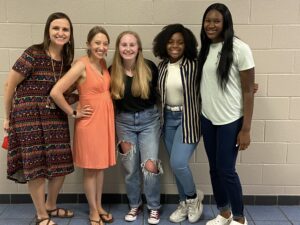
Pictured left to right are Nicole Mesimer, Kathleen Pennyway, Addison Lee, Eliana Pinckney, Amber Burton.
  • Amber Burton is 18. In the fall, she will be attending North Carolina A&T State University. She plans to double major in political science and African American studies, with aspirations of becoming a civil rights attorney and a political analyst.
  • Addison Lee is 17 and will be attending the University of South Carolina to major in public health. She hopes to minor in Women and Gender Studies in order to work on policy making and advocating for underserved communities.
  • Eliana Pinckney is 17. She will be attending Temple University in the fall to major in musical theatre and public relations. 
  • Nicole Mesimer teaches Spanish at Dreher High School.
  • Kathleen Pennyway teaches Theatre at Dreher High School.

Don’t Be Afraid to be Anti-Racist

Blog, Teaching

By: Nikki Griffin, North Carolina High School Social Studies Teacher

Many times in my career, as a classroom history teacher, I have come across colleagues who are fearful of being anti-racists. These mostly well-meaning teachers are by no means racists, but sometimes lack the courage to be ANTI-RACIST. Here is an important distinction to make for ourselves and for our students – being an anti-racist requires more of us than simply not being racist. Being anti-racist requires action, not just a disposition. Being anti-racist moves us to actively address issues of systemic racism in our schools and in our society. Being anti-racist demands expression of anti-racist ideas that directly challenge racist ideas.

My Journey to Being Anti-Racist

Photo by Vince Fleming on Unsplash

Last year, following the horrific murder of George Floyd and the proliferation of protests across the United States and the world in support of Black Lives Matter, I decided to put my own beliefs about being racist into action and to NOT hide behind my role as a teacher to remain on the sidelines of “teaching history” so I could avoid the more uncomfortable role of being anti-racist. Many of my students sent me messages expressing their sense of frustration that there was nothing they could do to be anti-racist or that they did not know how to show action to express their anti-racist views. My answer to them was almost always the same, “Let your voice be heard” or “Counter racist ideas with getting your own anti-racist ideas out there!”  Very often, I would remind these students that they had spent a whole year or more studying history with me and that they had the arsenal of knowledge with which to arm their anti-racist actions. Finally, I decided to take my own advice, step out of my role as classroom teacher, and publish a video called “Opportunity Lost.” Actually, this is a video series that I am still working on and intend to finish this summer.  

My message to teachers is that being a teacher does not mean you can not express your own views to the wider world. Just as you expand understanding of anti-racism in your classroom, your unique knowledge of your subject area, students, and community put you in a unique position to share ideas to the broader world to pursue the goal inspiring anti-racism in the world.

https://www.youtube.com/watch?v=Ea8ULb42vvU&t=7s
https://www.youtube.com/watch?v=xvq3WJ7f0BM&t=31s

About the Author

Nicki Griffin has taught high school social studies in North Carolina for 29 years with a focus on AP History and AP Art History Teacher.  She attended East Carolina University in Greenville, North Carolina. 

Photo by Murat Onder on Unsplash

Supercharging our Content Teaching with Language Objectives

Blog, Teaching

By: Samantha Rainwater, South Carolina High School English Teacher

Back to the Basics

Like every teacher during March of 2020, life threw me quite a difficult curveball: in the course of a few days, I needed to scrap all of the plans and dreams I established with my students and reimagine the rest of the year virtually. I don’t know how y’all handled it, but I was at a complete loss. My very organized book clubs, the brand new unit on The Kite Runner we had just launched, the highly-technical argument unit and Convince Me project we were in the thick of, all of it, upended. I had to start thinking about what—with my very limited time—I would focus on with my students. Ultimately, I decided that literacy through interesting and meaningful reading and writing would be my primary focus for the rest of the year. 

I bring this up specifically to discuss how, even as an English teacher, I have a lot of content that doesn’t fall under the “reading skills” category. However, literacy is the key to our students’ ability to access our content. If I wanted my students to be prepared for the next school year, the task was not to continue my content-heavy units or teach all the figurative terms they would encounter in English 3, but to make sure that students’ literacy skills continued to develop.

We’ve heard it all before, maybe from a district official or an administrator at the beginning of the year: We are all reading teachers. But let’s be real. We have standards and pacing guides and benchmark assessments and end-of-course tests and the list goes on. For content-area teachers, how can we possibly add on the task of developing students’ literacy? After all, they take ELA.

The Case for Disciplinary Literacy

I had a major revelation this year when it came to literacy, and I think in many ways my background as an English teacher kept me from this revelation sooner. Secondary education relies on literacy skills as a means of accessing content knowledge; however, literacy isn’t just literacy. There are two major theories regarding how literacy works: content-area literacy, which suggests reading strategies transfer between content areas (Vacca, Vacca, and Mraz 2011), and disciplinary literacy (Shanahan & Shanahan, 2012), which suggests and “acknowledges that different disciplines contain different purposes for language, ways of communicating, and requirements for precision” (Croce, 2017). While it’s important to understand that some reading strategies do transfer, it is also important to acknowledge the merits of disciplinary literacy. It’s not like kids learn to read, then immediately their literary lives are unlocked, and they can henceforth access all written knowledge presented in all subject areas. Each academic discipline has its own discourse styles and structures that students have to learn and master because they are so unique and different from the typical ways we engage and use language socially. The literacy and discourse structures that are taught in the ELA classroom might not be sufficient for students dealing with the very specific types of literacy present in the science or math classrooms. For this reason, the very best teachers of literacy in content-area classes are the content-area teachers themselves! I know, what does an English teacher have to say about literacy in other disciplines? But hear me out. It might even make teaching your content more effective.

An Example: Disciplinary Literacy in the Science Classroom

Science teaching, for example, depends on informational texts to communicate content knowledge, to teach facts to students. However, what happens when a student’s observations of the world around them do not match the facts being presented in the scientific texts they are reading? What understandings of the scientific method and peer review process do students have to understand in order to comprehend and learn from these texts? Consider the words of Croce (2017): 

“According to conceptual change theory, a number of conditions need to be met in order for a student to change his or her mind about a science concept. Would a student be considered a poor reader if those conditions were not met and the student did not change his mind (in other words, learn a concept) after reading the text? I would argue that a student is not a poor reader if he or she does not immediately change his or her mind about a science topic after reading a text. This is because when we assess students as readers of science, it is impossible to separate who a student is as a scientist from who he or she is as a reader (emphasis added) (Croce, 2015).”

Being an effective scientist depends on being literate in scientific discourse styles, specifically. If we expect students to learn how hurricanes are formed through reading a text, we have to approach the reading of that text as scientists, which requires different literacy foundations than what is required in their English class (and reading in science, math, and social studies often has different goals than in ELA). Scientific texts also have unique language patterns (i.e. cause and effect relationships in scientific sequences) that need to be explicitly taught to students. Students reading in their literature classes may never encounter those specific language patterns. When students are taught these discourse styles, they are then able to make sense of the content presented in these texts. 

First Steps: Introducing Language Objectives

I don’t think that we necessarily have to be reading specialists on top of our content-area and pedagogical expertise. I do think, though, that we need to be aware of how our disciplines use language and provide instruction for our students so language isn’t a barrier to learning the content. One of the most meaningful ways that I’ve started doing this in my own classroom is through language objectives. Language objectives are similar to content objectives in that they articulate what students’ will be able to achieve by the end of a lesson or period of time. The only difference is that while content objectives describe what students will know and be able to do, language objectives describe how students need to use language in order for the content to be accessible. If you need a place to start in terms of understanding how language should be used at different proficiency levels, I recommend viewing WIDA’s Can Do statements. 

As you are planning a lesson, ask yourself a few questions: What discipline-specific and general academic vocabulary do my students need to know to meet the content objectives? How is language functioning in this lesson (Are we listening to a speech made by an historical figure? Recording observations in a science experiment? Describing? Predicting? Comparing? What language styles and structures do we need to employ to do these things?) What language structures or grammatical features are common in this lesson? (Are we reading an academic text with frequent passive voice? Imperatives? Does the organization of the text need to be understood for students to comprehend it better?) What functional language is used during this lesson? What do I observe about my students’ needs when it comes to language? 

By doing this, we will become more aware how language works in our disciplines, and we can then work to lower the linguistic hurdles students need to overcome to understand and excel in our content. We can also take the answers to these questions and design focused objectives and direct instruction related to the language of our disciplines. The beauty of designing language objectives is that it occurs alongside the teaching of our content objectives; we don’t pause our instruction to teach language and grow literacy. This can happen with small mini-lessons embedded in the larger instruction for the day. For example, in a high school chemistry lesson, the language objective might be that “Students will be able to use adverbs of time in their lab report to describe their observations (first, next, later)” (Echevarria et. al, 2011). Maybe, in a math lesson, students need to understand the language of conditionality in order to solve a word problem. From there, you would design a language objective. This might take all of 10 minutes, but it will enable students to meet the task of writing their scientific observations within their lab reports. 

Developing and strengthening literacy specific to our disciplines is not a separate, full-time job. Instead, we can use language objectives to make our content teaching even more effective.

About the Author

Samantha Rainwater is the current English department chair at Richland Northeast High School in Columbia, South Carolina. She has eight years of teaching experience in the ELA classroom and is currently working to complete her ESOL certification. 
How I’m Surviving The Earthquake of 2019

Blog, Teaching

By: Kimberly Dunbar, Social Studies Teacher at Cane Bay Middle School

There was an 8.2 intensity earthquake rippling through upper elementary and middle schools classrooms in the summer 2019. After years of wrangling, new social studies standards were adopted by our State Department of Education, and there were substantial changes in content for grades 3 – 7. As usually happens, it was now up to the teachers of South Carolina to make everything work. For sixth grade teachers like me, the changes were exactly what we knew were coming but had long been dreading – we were supposed to teach all of human history in 180 days. It was difficult enough to complete when we stopped after the Age of Exploration. The task now felt unattainable.  

Part of what has made teaching this content so difficult is that very few students have any background knowledge about the earliest civilizations. If they do, that knowledge is usually limited (Egypt’s pyramids and mummies) or inaccurate (Greece according to Percy Jackson  or 300). It’s hard for my students to make connections to material when there is no foundational information to attach to. My dilemma was how to present enough content so learners can connect the dots without overwhelming them.  

Introducing Historical Fiction in the Social Studies Classroom

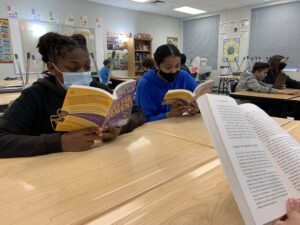
Wendy Garrett, a friend and mentor, introduced me to the idea of using historical fiction to build my students’ background knowledge. She had students participate in a class reading of a book she selected in addition to their daily warm-up questions. The thought was to kindle an enjoyment of reading AND sneak a little historical context in at the same time.   Many of our students were academically below grade level and reluctant to attempt a typical novel study. We chose to scrap the usual process and keep things focused on the reading – no vocabulary, no character studies, no plot diagrams. If students ask about the meaning of a word, we’ll discuss it, try to decipher it. If students wanted to discuss things or had questions about the plot or theme, we would talk. Our intent was to present some details about ancient civilizations and historical events while we remind students how enjoyable reading could be.  We let student interest guide our actions and activities. Everything was low stakes.  

As I included daily readings into my lessons, what I found was encouraging. The first 2-3 weeks were long as I had to demonstrate and promote expected behavior during the read aloud time. When students accepted and started living into these new expectations, all of us could focus more on the information in the book. We were able to take a few minutes to practice using context clues to determine the meaning of new words. Afterwards, it became a game – who could find an appropriate  time and place to use these new words. If an actual person was mentioned in our book, a student would give us a 60 second biography of the character. When an historical event was involved in the story, someone gave us a quick recap of what happened. The payoff came when students saw these same people and events in our regular class discussions and were able to recall information we had covered before. I could take another minute and help students put together the cause-and-effect of concepts we were learning. Lots of wins on multiple fronts!!!

Useful Tips when Integrating Historical Fiction into the Classroom: 

  • Explicitly teach your expectations for this reading time. If you are part of a teaching team and your ELA partner has procedures for this activity, try to mirror it. Consistency will make implementation easier. Have an anchor chart to use as a visual reminder of what you want to see and hear during this time.
  • Save your voice and use an audio reader system when possible.  
  • Befriend your media center person.  They are often the keeper of class sets. They know what’s available, what’s on order, what’s popular. They may have connections with other media centers and can arrange a loan of a class set from another school.
  • Give your students some input about what your class reads. I get single copies of books and let my students “test drive” them. All I want to know is, “Did you enjoy it? Would you recommend it to a friend?” If a student can give you more details, write it down. These details are an invaluable resource in determining what will grab your students’ attention and can guide future choices.
  • Get comfortable with looking for additional sources of funding. Until schools are better funded, it is hard to get class sets of the “latest and greatest titles” that are more likely to hold students’ attention. I have purchased several class sets through Donors Choose. I have several grant portals bookmarked. I’m always looking for ways to keep my classroom library fresh.

The skills that building background knowledge allows your students to practice, are the ones that will make them more engaged citizens and more valuable employees. Recognizing links between people, events and ideas are a building block of critical thinking. Critical thinkers identify situations, gather information, analyze information, and present solutions. These are the people that will make a difference in the future, if we take the time to teach them to solve problems. Teaching these new and different skills won’t be easy, but giving our students those skills will be worth every ounce of that effort.

About the Author

Kim is a second-career teacher with 13 years of experience.  She’s currently working to bring ancient history to life at Cane Bay Middle School in Summerville, SC.

Culturally Sustaining Pedagogy and the Classroom Library

Blog, Teaching

By: Lexington Hendricks, South Carolina High School Teacher

As a classroom teacher, it is my job to make sure that my classroom is a safe space for students, a place where they can be who they are and not have to hide any aspect of their identity. This includes students’ individual backgrounds and cultures. Students come from many different backgrounds even if they grew up in the same town, and it is important to recognize that all students may think and view materials differently because of this.

Experience has shown me that not all students, no matter their backgrounds, enjoy reading. Most would even claim to hate it. Many times this stems from being forced to read novels that are dated and have no relation to students whatsoever. If students struggle to connect or relate to something, there is a good chance they will not gain knowledge from whatever they are attempting to read. Think about their social media; students choose to follow people or pages that they have some form of connection or relation to. This also varies from student to student because of their backgrounds and cultures. The same can be applied to what students read. This is why it is crucial not only to have a classroom library but also to create an intentional classroom library. 

Creating my Classroom Library

Creating a classroom library is already a daunting task. I remember my first year teaching and buying the cheapest books I could find just so students would have the option to borrow books from me and to see them in my classroom. Throughout conversations with my students over the years, I have learned that many of them find the school library overwhelming because of the amount of books to choose from. Also, many libraries are organized by the author’s last name which can make finding books on topics students are interested in more difficult. When students are able to see books in their classrooms on a smaller scale, the overwhelming feeling of choosing one book out of hundreds disappears. When creating a classroom library, the first step is to thoughtfully organize books so that they are easily accessible to students. The second, and in my opinion, most important step is choosing the books that go into the library. 

At first, I just bought whatever I had access to and what was easiest on the budget. There was no intentionality in what books I chose. I also did not have any organization at all. I just put them on bookshelves and hoped for the best and found myself frustrated when none of my students wanted to go to the shelves and pick out books to read−not my proudest classroom library moment. I think I realized that in order for my classroom library to be useful, I needed to do two things: organize the books in a more accessible way and add books that were culturally relevant to my students. 

How to make your Classroom Library more Accessible

1) Sort by Genre

To make books more accessible to students, I sorted them by genre instead of the author’s last name. I had to remind myself that students probably care more about what the book is about than who wrote it. I chose the genres that our school librarian used so students would have consistency when choosing books. I color coded the genres and added that same color to the corresponding books so that students could easily put books back in their place when they were finished. That was actually the easy part.

2) Find Culturally Relevant Books

Finding culturally relevant books was a little more challenging. What did culturally relevant even mean? Thankfully, we live in an age where the internet and Google are both handy. I did my research and learned that I needed to find books that fit not only where my students come from physically but also mentally, meaning books students could relate to in regards of hobbies, identity, and what they believe.

3) Keep your Student Population in mind

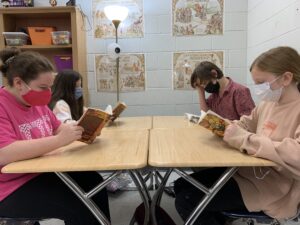
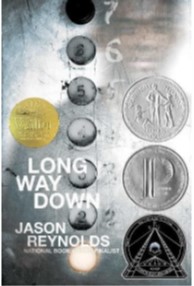
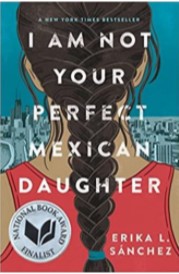
Our school has a high population of English Language Learners (ELLs), so I added in books that brought in their cultures and made sure that some of these were Spanish versions for those who are still learning the basics of English. I also used conversations with my students to determine what other types of books I wanted to include. The images you see throughout this post include some of the books I bought when I first started intentionally buying culturally relevant books. It is important to note that each classroom is different; the best way to determine what books to buy for your classroom library is to have intentional conversations with students that allow you to get to know them beyond an academic level.  

Students need to see themselves or parts of themselves in the books they read to make real connections. When this happens, they can see that you not only value them as students but also as who they are as human beings. This often means more to them than academics. On that same note, it means even more to students if you read the books that relate to their cultures. Students see that we care about them and want to know them, not just their academic abilities. I love to see students’ faces light up when I can introduce them to books that I know they will love and relate to because I have also read them myself.

4) Be Intentional in book Selection for your Library

I had one student who had some struggles about fitting in and being her true self, and she seemed down a lot in class on top of slacking when it came to school work, which was not at all like her. I asked her about it, and she told me about how she was struggling to figure out who she was and did not know what to do. I was able to recommend a book to her that I had just read. This book is light-hearted but also touches on a breakup and how to keep going, which I knew this student had recently gone through. I recommended the book What if it’s Us? by Becky Albertalli and Adam Silvera in hopes she would see that even when life is hard, good things can still come. As she was reading, she would note certain aspects of the novel that she could relate to and wanted to read more books like that one after. This led to me wanting to be able to recommend more books to not only her but my other students as well. I then decided that I not only need to build my classroom library intentionally, but also read the books I picked out as well. This student felt cared about and represented because I was able to give her a book that she could relate to and see parts of herself in. This mattered more to her than anything else. 

You see, the bottom line is that when students feel they are represented, they are more likely to invest in whatever the activity is, and in this case, it is reading. Incorporating students’ backgrounds and cultures into the curriculum can be challenging. If you do not feel like you are ready for that challenge, start small. Be intentional with the books you put in your classroom library. Choose books that represent the students in your classroom. Let them know that you care about who they are and where they come from. 

The more you show that you care about students, the more likely they are to read something if you ask them to, and the more students read, the more likely they are to improve overall academically, even if they are just reading books that they can relate to. They may even begin to enjoy reading. I always say, “Students don’t actually hate reading. They just haven’t found the right book yet.”

About the Author

Lexie Hendricks has been teaching for five years at Palmetto High School. 

Photo by J on Unsplash

Lotería: The Reimagining

Blog, Teaching

By: James Campbell, South Carolina High School Spanish Teacher

Students were arriving to their first day of AP Spanish class, some timid and some visibly relieved to be in a familiar classroom. Many had taken a Spanish-for-heritage-learners’ course with me, most had experienced being in a Spanish class designed for students well below their proficiency level. We discussed their academic experiences a little to start the short semester. We all listened quietly while students took turns telling stories about how they were called “cheaters” for knowing Spanish already, how they had all been approached to “share” their work with other students, how other students were surprised that they could speak English, and how they were always tasked with the “Spanish part” of any collaborative project they were doing. After hearing them describe the antiquated academic requirements in a system not designed for them, I stared blankly over the silent classroom into the painting on the back wall. “We should go over the syllabus,” I thought. “We only have a few months before the exam and we have a lot to cover,” but I just couldn’t get myself to say it out loud. One student said, “Well, those students aren’t going to get college credit for knowing Spanish,” keenly aware of the irony. “When are we going to play Lotería?” we heard from a quiet student in the center of the room. The room exploded with excitement.

The Original Game

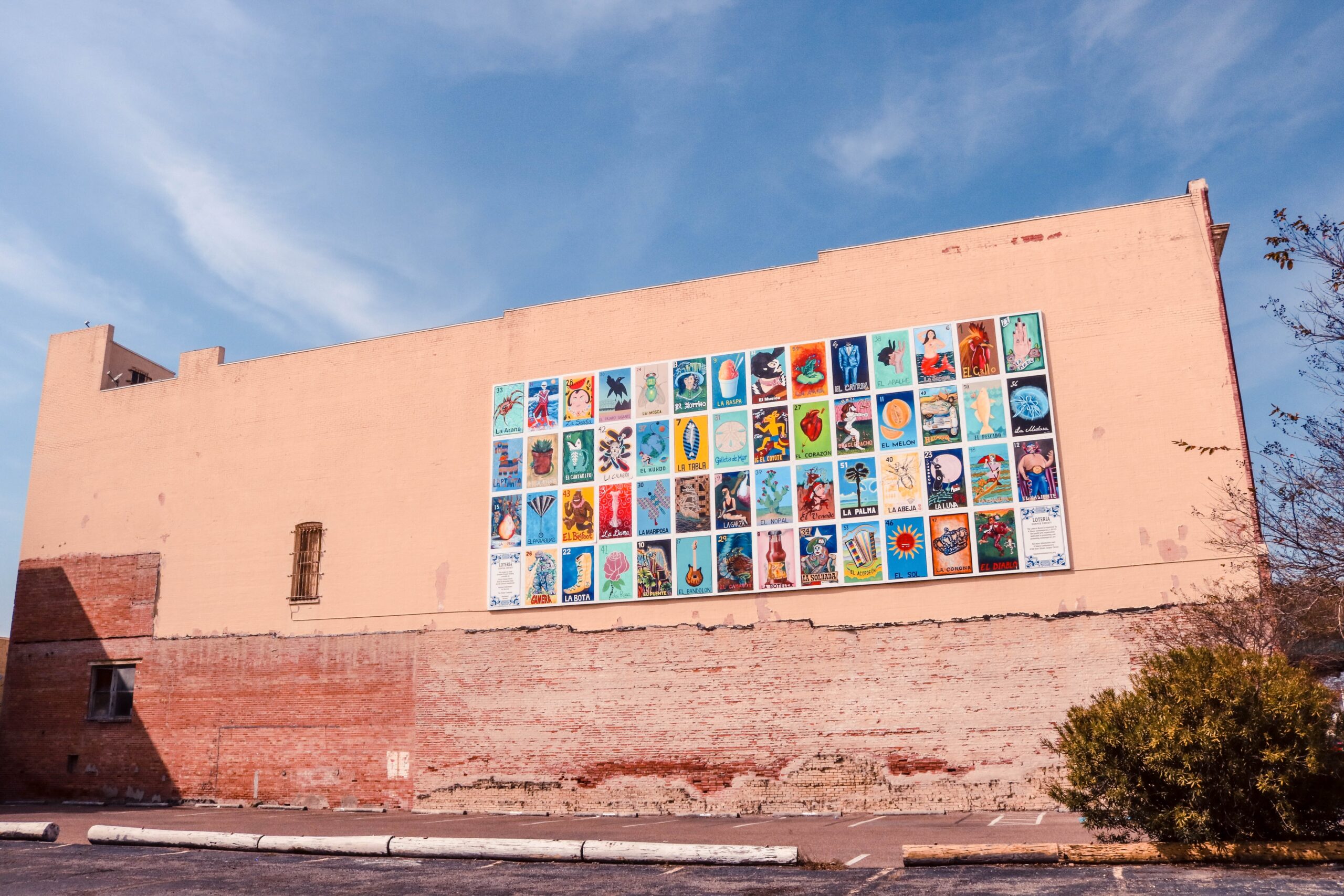
Lotería is a bingo-like game with images that represent different elements of traditional Mexican culture, though the game is not only played in Mexico. I am not Mexican or Hispanic but I love seeing the nostalgic mood rush over many of my Spanish-speaking students who almost hum hearing the short verses on the back of each card, who argue over how to play according to their family’s reglas, and who have memorized an entire tabla (a 4 x 4 grid on which the game is played). It is a great listening game with the entire room silent until someone calls out “¡Lotería!” with a full tabla. It is an authentic game that everyone can play. It does, however, have some problematic elements. 

One day, after one of my Spanish 3 Honors students asked, “Are we going to play that racist bingo game again?” I thought more about the disclaimer I give about some of the images in the game. I never tried to explain them away but challenged them to research where they came from and how they ended up in the game. I discussed this some more with my AP students that next period, and it hit us almost simultaneously – we should update some of the images for our classes.

The New Game

So, we began our year-long journey to re-imagine a highly recognizable piece of Mexican culture. As with any project that begins as organically as this, their trajectory almost immediately began to shift from changing just a few of the images on the board to a weeks-long brainstorm on reimaging the entire gameboard to represent the diverse Hispanic experiences in the Upstate of South Carolina. The students drew from a seemingly endless mental library of personal and familial experiences to create a list of over 200 people, animals, places, foods, clothing items, and more. The students, from different parts of the Spanish-speaking world, began to see how similar some of their experiences were as Hispanic students and how unique they all were at the same time, not just the stereotypes others had for them or that they might have had of each other. After much discussion and debate, the students were able to reduce their ideas to the standard 54 images, which they divided amongst themselves. Each student produced a visual concept and a catchy phrase, poem, or quote for their peer-assigned tarjetas. 
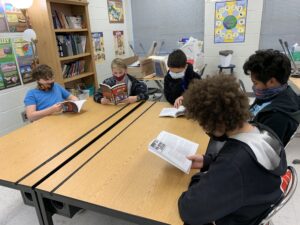
Student sample.

They then presented them to the class, one-by-one, each fielding questions and feedback from their critical peers. The students took the feedback seriously, not personally. Our classroom artists decided on a cohesive theme for the boards. Our creative writers went to work rewording some of their classmates’ verses on the back of the cards. Other students spent time making sure not to repeat the reason they started this whole thing and took votes on replacing some that may unintentionally perpetuate unhealthy stereotypes of themselves. They spent the last 20-30 minutes of each 90-minute class in a buzz of “do this,” “don’t forget to mention that,” “should we add this?” and “who was in charge of these?” completely owning what would become a way to tell the story of their community. I, their teacher, had become a giddy observer, fully convinced that they could produce and distribute their version of this game to the community.

In what I can only describe as a completely serendipitous moment, I ran across a painting done by an artist in South Carolina that told the story of an immigrant girl in the format of a Lotería tabla. It was a moving piece with an even more incredible story behind it. I talked to the artist and set up a visit for later that month. In the meantime, I showed my students the painting, at which time they immediately wanted to drop everything and make their own. “Working together is just too exhausting,” one said. After a couple apologies and recommitments, everyone was back on board. A week later was our last day of the semester together due to COVID-19 (I just checked, and the Google Doc we were working on was last edited on March 13, 2020). The biggest and most exciting project that my students had ever come up with was over. Or so I thought.
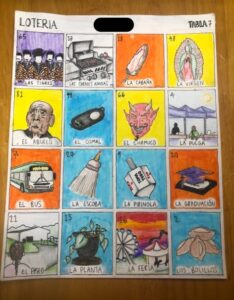
After a few weeks of figuring out eLearning and doing what we could to prepare for who-knows-what the AP test would look like, we had our first virtual class meeting. After getting updates from everyone and going over their virtual assignments they all wanted to know what would become of their Lotería project. Not wanting to stress students out any more than I needed, I sadly told them I had no plans to continue it collaboratively but they were welcome to continue it on their own. “It’s just too hard to facilitate such a big project together right now,” I said. Then, without hesitation, a student suggested they all make their own board, “You know. Like that artist did”. 

The Final Product

Photo by Christy Ash on Unsplash

Over the last two months of the semester, as the students prepared for an abridged AP Spanish exam, they drew, took pictures, wrote reflections, and all designed a tabla that told the story of their own journey of how they got to where they are now. During this time, we hosted virtual visits with Hispanic community members, writers, artists, and teachers from across the Carolinas. The students’ voices grew more confident with each new guest and, since I got to hear them repeat their stories multiple times, I noticed them embracing images that told stories of deep, personal sorrow and joy. Their classmates noticed this too. One of my younger students, in tears, shared at the end of the course how glad he was to be a part of listening to his classmates’ stories even when he wasn’t as comfortable sharing his at first because he thought it wasn’t as cool as the others’. “No, no, no,” an older classmate chimed in, “we couldn’t have done it without you.”

I think about this project almost every day. Even though they all designed and presented individual products, there was a sense that this was a complete group effort, even in its final iteration. It makes me wonder how I could ever again do a project in my class where a student says (or even thinks!), “we couldn’t have done it without you” at the end of it to another student. But, I know that something like this will never happen again if I can’t learn to listen to and trust students. It won’t happen again if I don’t find space in my curriculum for students to find their voice. And, students will never have as big an impact on each other’s learning and emotional well-being as they did with their Lotería boards if they don’t feel safe enough to share their voice. They did this and proved this together and I couldn’t have done it without them.

About the Author

James is in his 14th year as a Spanish teacher and is the 2020-21 Teacher of the Year at Carolina High School.

Seeing Themselves in the Text: Exploring How Critical Literacy Aids in Student’s Examining Their Position in the Spaces They Occupy

Blog, Teaching

By: Steven Jernigan, South Carolina English Language Arts Teacher

Photo by Nicholas Beel on Unsplash

In her 2021 inaugural poem “The Hill We Climb,” poet Amanda Gorman says, “We, the successors of a country and a time where a skinny Black / girl descended from slaves and raised by a single mother can / dream of becoming president, only to find herself reciting for one.” The quote establishes Gorman’s position in the pageantry as the public figure representing art and youth and diversity, while also fully cementing that position in the context of the arduous journey it took to get there – her personal history and the country’s alike. There’s more in that poem – and moment – that is worth dissecting and poring over, but it is that line specifically – high visibility and positioning oneself within the narrative – that there lies a connection between culturally sustaining pedagogy and student’s emotional wellbeing. Author Jennifer Buehler (2019) writes, “We are always making sense of our own and others’ lives in terms of storylines that tell us what to expect in social situations” (pg. 12). Here, Gorman is providing the narrative and the storyline wherein Black children – Black girls specifically – can be seen and heard and admired. One must ask however, what happens if that narrative is not the dominating one in the classroom? It should lead to educators asking questions of their practice such as: What storylines and narratives are we presenting to our students? Furthermore, what are these stories conveying about a student’s own position in the classroom and the world around them? 

Narratives in the ELA Classroom

Photo by Brad Neathery on Unsplash

During my time as an English teacher, these questions have served as the basis for most of the teaching decisions. The texts we choose to read in class, if not directly offering students the ability to see themselves in the classroom, are often centered around discourse and writing where students examine and analyze their position both in the classroom and broader society as a whole. Authors Baker-Bell, Butler, and Johnson (2017), in their article “The Pain and the Wounds: A Call for Critical Race English Education in the Wake of Racial Violence,” highlight how English teachers “invoke racial violence when we don’t cultivate critical media literacies that Black and Brown youth can use to critique, rewrite, and dismantle the damaging narratives that mainstream media has written about them” (pg. 124). While the call here is to provide students with the tools and knowledge for how to identify and rectify the power structures they are subjected to and perhaps even uphold, the consequence of not doing so should not go unnoticed – the continued upholding of a system that enacts violence on the bodies of Black and Brown youth. And while that consequence provides enough justification for critical examination in the classroom, it is worth noting that research (Andolina & Gonklin, 2019; Scriuba, 2014) suggests engaging students in such practices promotes the building of empathy, importance of community, and need for equity within our students. 

Creating a Culturally Sustaining ELA Environment

In specifically addressing these questions and concerns in my classroom this year, I and the other English 2 teachers have centered our world literature curriculum around the pairing of whole class text with student choice, YA novels. As a whole, our school has actively engaged in students doing some version of self selected, independent reading. At its best, this practice was used to dedicate one day a week to sustained reading with perhaps a whole class discussion follow up. At its worst however, it was used to fill time after quizzes and tests. While there is nothing inherently wrong with using time after assessment as an opportunity to get students to read, we felt that this year there was something more we could do. So, we went about finding YA books that fit with the more traditional texts that had been a part of the curriculum for years. In our reading of Shakespeare’s Othello for example, we are having students choose from a selection of works that sit systemic racism as a central conflict in their narratives. We are then setting aside one day a week to the readings of these choice texts. During these readings, we will also be breaking students up into groups where they will participate in conversations around text-to-text, text-to-self, and text-to-world comparisons. In addition, the students will be maintaining blogs as a space to talk about their conversations and overall impressions from their study of the two works of literature. A project similar to this – students created text sets that related to central ideas of their two novels – was done with the reading of Achebe’s Things Fall Apart; those projects allowed for some excellent conversation around the ways in which societies – both our own and others – struggle with progress and tradition. 

Photo by Seven Shooter on Unsplash

Aside from fully revamping a course’s entire curriculum however, there are other ways to get storylines and narratives into the classroom that have students examine, critique, and see themselves in the world they occupy. In my English 3 American Literature course, this has been done by examining poetry like Amanda Gorman’s. In looking at poetry as both a form of argumentation and as emotional expression, students are reading Gorman’s and Angelou’s inaugural poems to see how poets – Black poets specifically – were using their craft to discuss and critique American society. The students are to not only examine the argument present in both these works, but to identify challenges and obstacles that are present in their own lives and communities that could be addressed with poetry too. While the dream would be to have a room full poet laureates that all have my class to thank as their genesis, the overall goal is for these students to see themselves as agents of change in their own world – to position themselves in places they are heard, seen, and appreciated. 

The specific practices offered here sit not as quick fixes to systemic, holistic problems, but rather as a push to get educators to acknowledge the narratives and stories elevated in their classroom. As noted in Kristina Montero’s book review of Paris and Alim’s Culturally Sustaining Pedagogies: Teaching and Learning for Justice in a Changing World (2017), creating a more equitable world for our students means rooting out the white supremacist and colonial practices that have and continue to pervade our field. Doing so, requires self-examination and identification of our own role in the maintenance of a system that oppresses and silences. In other words, the work is inward as much as it is outward. As noted by Gorman however, “For there is always light / If only we are brave enough to see it / If only we are brave enough to be it.”

References: 

Andolina, M. W., & Conklin, H. G. (2020). Fostering Democratic and Social-Emotional Learning in Action Civics Programming: Factors That Shape Students’ Learning From Project Soapbox. American Educational Research Journal, 57(3), 1203–1240. https://doi.org/10.3102/0002831219869599

Baker-Bell, A., Butler, T., Johnson, L. (2017). The Pain and the Wounds: A Call for Critical Race English Education in the Wake of Racial Violence. English Education, volume 49 (2), 115-129. Retrieved From https://library.ncte.org/journals/ee/issues/v49-2/28917. 

Buehler, Jennifer (2019). Positioning Theory: Exploring power, Social Location, and Moral Choices of the American Dream in American Street. In R. Ginsberg and W. J. Glenn (Eds.), Engaging with Multicultural YA Literacy in the Secondary Classroom (pp. 11-21). Taylor and Francis Group. 

Montero, M. (2019). Creating Cultural Sustenance in the Classroom: A Review of Culturally Sustaining Pedagogies: Teaching and Learning for Justice in a Changing World. Journal of Adolescent & Adult Literacy, 62(6), 698–701. https://doi.org/10.1002/jaal.956Sciurba, Katie (2014).

Texts as Mirrors, Texts as Windows: Black Adolescent Boys and the Complexities of Textual Relevance. Journal of Adolescent and Adult Literacy, 58( 4), 308– 316. doi: 10.1002/jaal.358.

About the Author

Steven Jernigan has three years of teaching experience and is currently an English Language Arts teacher in Greenville, South Carolina and a Graduate Student in the Literacy Masters Program at Clemson University.

Photo by Jon Tyson on Unsplash

What’s in a Name?

Blog, Teaching

By: Antoinetta J. Rogers

“Schooling is the process by which you institutionalize people to accept their place in a society… Education is the process through which you teach them to transform it.”- Dr. Jeff Duncan-Andrade

What’s in a name? 

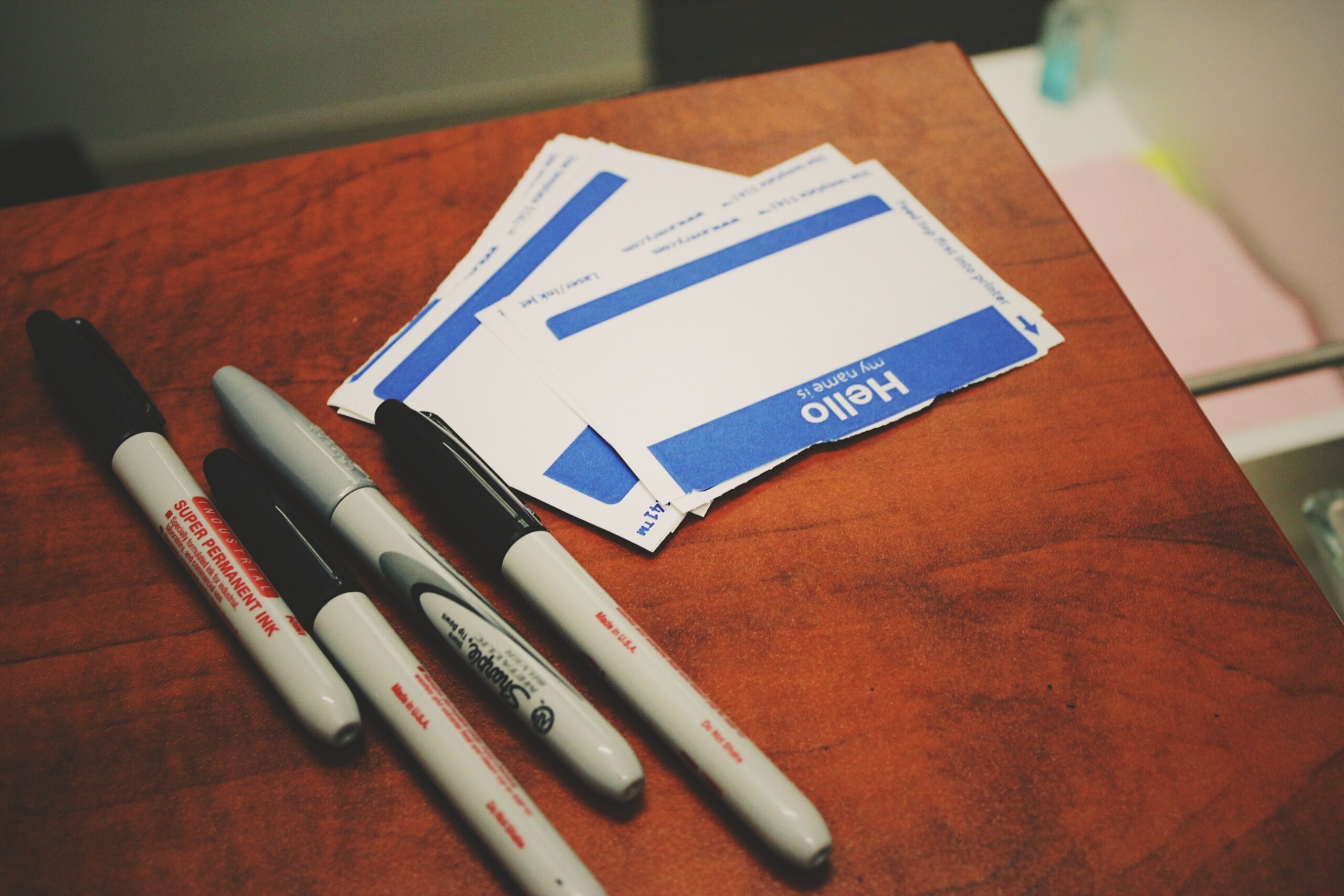
This is a very common and loaded question.  Asunción Cummings Hostin, Euphemia LatiQue Sumpter, Uzoamaka Nwanneka Aduba, and Antoinetta Jamika Rogers prove there is always a story behind a name.  

Asunción Hostin is an American lawyer and a very intelligent, articulate, and charismatic cohost of the Daytime Emmy Award winning talk show The View.  She is commonly known as Sunny Hostin.  During an interview with People Magazine, Sunny stated that when she began working on Court TV with Nancy Grace, the famed legal commentator, she had a difficult time pronouncing her name.  Acknowledging that Sunny was indeed quite talented, Nancy Grace feared that because most people may find it difficult to pronounce her name that she shorten it to make it easier to pronounce. So, instead of Asunción Hostin, Sunny Hostin is the famous household name.  Euphemia LatiQue Sumpter is an American actress.  Known for her flair, fortitude, and fascinating role on the highly acclaimed series Tyler Perry’s The Haves and Have Nots, she mentioned in an interview that although she was beautiful and talented the name Euphemia just was not “it.”  So, instead of Euphemia Sumpter, Tika Sumpter is the famous household name.

Uzoamaka Nwanneka Aduba is a dynamic, vibrant, and effervescent, Nigerian American actress who is best known for her roles in the Netflix series Orange is the New Black and the film Miss Virginia. She is commonly known as Uzo Aduba.  A video surfaced of Uzo stating that she hated her name.  The hate seemed to stem from other people having a difficult time pronouncing it. Growing up in a small New England town, she explained that there were not a lot of Nigerian Americans. Uzoamaka means “The road is good.”  What was quite noticeable in her candid oration was the visible mentioning of teachers finding it difficult to pronounce her name.  One day upon returning home from school, she casually asked her mom to call her Zoey. Her mom simply stated that if people can learn to say Tchaikovsky, people will and would learn to pronounce Uzoamaka.

So, what does an English teacher from a small rural town in South Carolina have in common with the aforementioned Hollywood stars?  Antoinetta Jamika Rogers is my name.  Nobody calls me by my first name Antoinetta, instead I go by Jamie.  Antoinetta has ten letters, four syllables and is often pronounced as (An-tw-un-Et) instead of (An-tw-un-Et-Uh).  So, growing up Jamie was more adaptable and easier than Antoinetta.  It became my nickname. Nicknames are convenient, but seldom created as a courtesy or in favor of the person in which the shortened name is given.  What’s in a name? Absolutely everything! A person’s name is a huge and important part of a person’s cultural identity; therefore culturally responsive teaching is very imperative and quite a necessity to say the least in an ever changing and evolving world.

Culturally Responsive Teaching

Photo by sydney Rae on Unsplash

Culturally Responsive Teaching is the practice of teaching cultural competence.  States and school districts already have educational standards and curriculums established that are usually adjusted and molded according to society’s norms.  However, in the classroom it is so important that teachers make it a norm to not only teach, but practice cultural competence. Cultural competence is the ability to understand, communicate with, and effectively interact with people across cultures. One’s own awareness of cultural competence includes developing positive attitudes towards cultural differences and gaining knowledge of cultural practices and world views. I realized that regardless of the demographics of students I teach, classrooms should be increasingly diverse with diverse teaching materials, methods, and strategies.  If the demographics are all the same, this does not mean that cultural competence and sensitivity should not be inclusive. All students should feel welcomed into a learning environment that celebrates diversity and multiculturalism. Most curriculums and lessons include an aspect of diversity, but it should be woven into the atmosphere of the classroom.

Real World Implications

Photo by Markus Spiske on Unsplash

According to the Center for the Professional Education of Teachers (CPET), school practices currently reflect the norms of monolingual, white, middle class students, which often excludes students who come from diverse cultural and linguistic backgrounds. Students who are excluded from these norms are often viewed through a deficit lens.  South Carolina College and Career Ready Standards are the standards that I am required to use as a certified classroom teacher.  So, the overall goal is for students to be prepared to enter an institution of higher learning, the workforce, and/or the military.  Not only should students be academically prepared, but students should be culturally prepared as well.  Thus, a simple yet complex task of accepting and pronouncing an individual’s name can possibly have an everlasting positive impact.

Society has a habit of associating certain sounding names with certain races and ethnicities. According to the National Bureau of Economic Research Issue No. 9. “Employers’ Replies to Racial Names,” a job applicant with a name that sounds like it might belong to an African-American – say, Lakisha Washington or Jamal Jones – can find it harder to get a job. Despite laws against discrimination, affirmative action, a degree of employer enlightenment, and the desire by some businesses to enhance profits by hiring those most qualified regardless of race, African-Americans are twice as likely as whites to be unemployed and they earn nearly 25 percent less when they are employed.  Pronouncing an individual’s name correctly and accepting that the name may have cultural attachment to it is important for the advancement of society. 

Classroom Applications

I make sure that I pronounce a student’s name correctly as well as the student’s peers in my class because names represent a heritage, a lineage, and a legacy. This is also common courtesy and a sign of respect.  A name is a representation that we should be proud of and not something that anyone, in this case specifically students, should have to worry about changing or shortening in the future, because we live and exist in a society where certain names make people uncomfortable for a quick minute or two.  If teachers discuss or present this topic in the classroom and really show and teach through experiments, instructional strategies, and projects, this can begin to turn the tide and become the norm therefore possibly preventing society from having a perception of “racial names.”   

 The world is a colossal entity that embodies diverse, multicultural, racial, ethnic, and linguistic backgrounds.  If students are taught to be culturally competent and responsible people, then as the world continues to progress and move forward, teachers will be a major part of molding and shaping well- rounded culturally aware individuals. Awareness promotes respect and acknowledgement.  In foresight, these individuals will not haste to say names such as Asunción, Euphemia, Uzoamaka, and Antoinetta because of their phonetic pronunciation, but make embracing and sharing the importance of all names and all things that represent heritage, culture, and diverse backgrounds the standard.

About the Author

Antoinetta J. Rogers has seven years of teaching experience and currently teaches Secondary English at Richland Northeast High School.