Photo by Volodymyr Hryshchenko on Unsplash

Data over Assumptions: Determining How Our Schools Engage in Family-School Partnerships

Collaboration

By: Dr. Jennifer D. Morrison

Photo by Dave Craige on Unsplash

In 2016, the University of South Carolina Language & Literacy faculty members decided to overhaul the Masters in Education degree requirements. The then current program was outdated and focused on very narrow conceptions of literacy, who owned it, and how it was to be taught. Because we all hailed from strong critical theory backgrounds, we knew a social justice thread was imperative. Through this lens, as we examined individual courses as well as the program as a whole, we began to ask questions such as: who owns literacy?  How do we want to present this? What about funds of knowledge and out-of-school literacies?  This line of questioning led us to realize that nowhere in our program did we account for parental and community involvement in students’ literacy learning.  This, to us, was a huge gap that needed to be filled. We decided to redesign a course entitled “Guiding the Reading Program,” changing it from a third assessment course to one on literacy leadership with a focus on developing skills that would assist teachers in employing community and family resources in school and district literacy practices and policies. I was the initial instructor for this course and looked to my experiences, as an instructional coach and administrative intern, to help me build the curriculum and key assessment experiences. 

Tough Conversations and Deep Reflection

When discussing family involvement, it is not uncommon to hear educators talk about how many parents attend PTSA meetings, come to Open House/Curriculum Nights, or support the band/athletic boosters. However, it becomes important to really consider which parents are involved and what percentage of the school they represent.  It is often eye-opening to realize large swaths of families are un- or under-represented at school events. For example, as the instructional specialist at a middle school in Maryland, I was part of a school leadership team who specifically sought to broaden our parent involvement, not only in how they were involved but also in who was involved.  We had a very active and invested community; so, when we collected data about who was coming into our school for social and academic activities and who was not, it was surprising to see we had almost no members of our Latino families represented. This required us to conduct deep reflection and address cultural divides. We thought we were providing appropriate communication with our families by sending home notices in backpacks and posting on our school’s social media and websites. However, when we asked members of the Latino community why we had limited attendance, they indicated to us more personal means of communication were needed. When we started picking up the phone and personally calling families, we found they were significantly more responsive; we had to bridge a cultural divide we did not realize we had built, to ensure all families felt welcome. This is not an uncommon experience that emerges once school leadership teams and teachers delve mindfully, deeply, and honestly into the degree to which families and community members are truly involved in schools. 

The Work
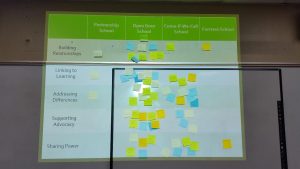
Figure 1

In my class, one of the early activities I ask teachers to complete is a pair of inventories regarding parental involvement practices.  The first is Salinas, Epstein, and Sanders’s (2012) An Inventory of Present Practices of School, Family, and Community Partnerships. It identifies six ways parents can be involved in schools (called “types” in this instrument) including: parenting, communicating, volunteering, home-learning, decision-making/leadership, and community collaboration. School members are asked to consider the degree to which statements listed under each type are true and in what grade levels. These responses help illuminate both traditional and nontraditional means of involvement and also show if there are patterns or trends in participation. I then pair this inventory with a second evaluation instrument from Beyond the Bake Sale (Henderson, Mapp, Johnson & Davies, 2007). This instrument uses five domains (building relationships, linking to learning, addressing differences, supporting advocacy, and sharing power) to help educators identify which of four versions of family-school partnerships best describes their school (partnership, open-door, come-if-we-call, or fortress). To help them to see patterns, I ask students to identify which version of partnerships their schools represent for each domain and place a sticky note in the appropriate location (see Figure 1). While most people would say they have a partnership school, especially at the elementary level, many individuals are surprised with the results of this survey.  There are areas suggested, such as including parents in curricular decisions, many of my students have not ever considered.
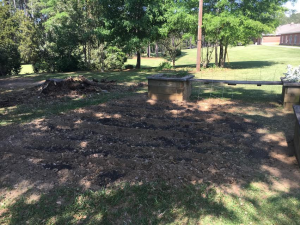
Figure 2

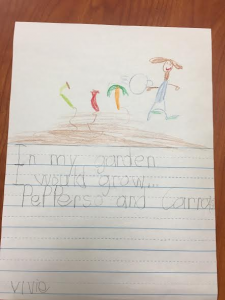
Between these two instruments, my students begin to get a clearer, and more accurate, picture of their schools’ strengths and needs with regard to parent and community partnerships. They are then asked to develop a family and community partnership grounded in the data they have collected from these two sources. I encourage them to think about how they can move their school to a higher version within one domain of the Beyond the Bake Sale rubric while also using some of the descriptors from the Epstein inventory to help frame goals and action steps. The projects that have emerged from this project have been organic, deeply-embedded in individual school needs, centered on literacy, and overall impactful. One resulting project was discussed in this blog by Hannah Kottraba in June when she wrote about her family heritage project. Other examples have included virtual science activities where parents and students engage in disciplinary literacy to solve scientific problems; pre-k students engaging in pen pal writing and subsequently building a garden with members of an assisted care facility (see Figure 2); online interactive math resources (focused on literacy needed for word problems); workshops that coach family members how to support reading with all ages of students; family culture exhibits; writers’ gallery celebrations; and international student shadowing days where high school students serve as hosts for international graduate students learning about America’s education system. Many of these projects addressed family and community populations who are often underrepresented in schools, and several have become multi-year or ongoing events.
It is important to remember that such projects are many times singletons, snapshots that occur once as a result of a course; the impetus being the need to complete a class assignment. I am not so naïve as to think these class assignments have suddenly made every school my students teach at a Partnership School. What is important is the paradigm shift that occurs as teachers undergo this process. They begin to seek out ways to better meet the criteria established by these two inventories; they become more attuned to cultural differences that may be acting as a barrier to some families and making them feel unwelcome with the school space; and they become more appreciative of the funds of knowledge parents and family members bring with them.

About the Author

Dr. Jennifer D. Morrison is an instructor at the University of South Carolina. Her experiences include being a middle and high school English teacher, gifted education resource teacher, and instructional coach.  She earned her Ph.D. at the University of Nevada, Reno, in Language, Literacy, and Culture.  She is a National Board Certified Teacher (AYA/ELA), an alumnus of the Teaching Shakespeare Institute at the Folger Theater in Washington, D.C., and has won multiple awards for teaching and writing including NCTE’s Paul and Kate Farmer English Journal Award and AERA’s Dissertation Award in Research on Teacher Induction. Currently, her research focuses on adolescent, digital, multimodal, and disciplinary literacies as well as narrative and qualitative methodologies.


We Need S’More Literacy from the Library!

Collaboration

By: Amanda Harris, South Carolina High Media Specialist

I love reading books, cataloging and shelving books, shopping for books, and placing books in readers’ hands, but as a high school media specialist, all that fun with books is only a small portion of my actual job. As a highly qualified educator who shares my literacy instruction skills with students and colleagues every day, my role goes far beyond the library stacks.

Since it’s summertime and I’m a girl who loves chocolate, indulge me for a few minutes and let me explain the library’s role in school-wide literacy instruction as an ooey, gooey, warm, melty, delicious s’more. 

The Graham Cracker

The foundation of a s’more is the graham cracker, providing support and structure on both sides to hold the entire concoction together. My goal as a media specialist is to provide resources and support for all content areas so that all teachers can be more effective in guiding students to content-specific literacy. Even though my district has 1:1 Chromebooks and students may think they can just Google everything for research, someone still has to teach them how to wade through their search results! One of the most important items on my to-do list in this graham cracker part of my job is to actively recruit teachers to share their classes with me. Once I have led them to realize how desperately they needed to schedule time for co-teaching (sometimes with free coffee involved in the persuasion), I make a point of threading my info literacy standards and skills over and over through every unit I teach across the curriculum. 

When I’m handing out the metaphorical graham crackers for the s’mores, I have to be intentional with teacher relationships, creative with my curriculum ideas, and even a little bit repetitive with teaching the skills to students, but without these graham crackers, the whole s’more falls apart and students lose opportunities for big-picture literacy application across the curriculum. 

Mmmm…Chocolate

My favorite part of the s’more, of course, is the chocolate, and my favorite part of being a school media specialist is definitely the fun library offerings: student book clubs over Chick-fil-a lunch boxes, faculty book clubs with grown-up conversation over breakfast snacks, author visits, makerspace crafting days, games and Legos out on the tables, and independent choice reading checkouts. These are the pieces of the school-wide curriculum puzzle that make the whole idea of literacy more enjoyable. 

Photo by Allie on Unsplash

The obvious sticking point here is that by the time students reach high school, very few of them are going to seek pleasure reading opportunities or spend their free time hanging out with a book club. How do I offer chocolate for the s’mores of students who are reluctant readers? I’m grateful to have some fantastic colleagues (not just in the English department!) who value choice reading enough to bring their students to me for independent reading checkouts. Sometimes they have target genres, sometimes they have target themes, and sometimes they want students to just pick anything that looks interesting.

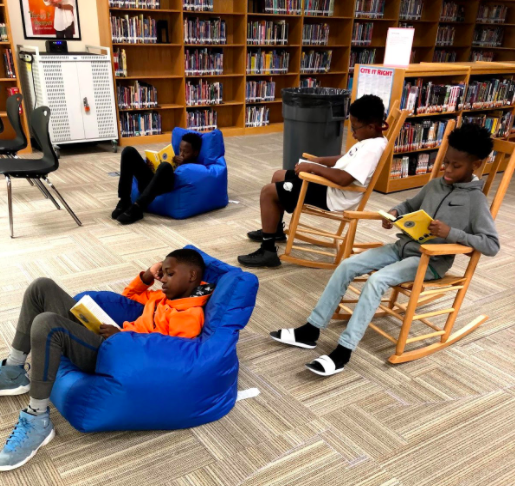
During this past year, we blocked off a weekly time with some of the English 1 and 2 classes to just come into the library for a routine sustained reading period. Their classroom teacher, my fellow media specialist, and I all sat down with them on the couches and modeled reading for fun, too! (Well, that was the plan. I actually spent more of my time up out of my seat, in the stacks, helping students find their next books to read, but that was fine with me!) When we suddenly switched to distance learning, I missed all of my students, but these two classes were the ones I most desperately wished to see.

Pleasure reading and finding a book to enjoy is the chocolate in the middle of the school-wide literacy s’more, and while I do love chocolate with all my heart, seeing reluctant readers find books they like and seeing students come to the library for fun in their free time brings me more joy than an entire one-year supply of my favorite Harry & David dark chocolate truffles.

Sticky Marshmallows

Photo by Rebecca Freeman on Unsplash

Finally, I must address the sticky, fire-roasted marshmallow that holds everything together between the graham crackers. At my school, this is the part of my media specialist role that doesn’t exactly fit the typical mold, but it just makes sense. If the library is the heart of the school and the media specialists should be dabbling in teaching with every department in the building, why not have your media specialist(s) serve as writing instructional lead teachers? 

I’m on a flex schedule and my teaching calendar does fill up with research projects and other library lessons. However, because there are two of us serving as full-time media specialists, we are able to schedule time to actively help teachers with writing instruction. We conference with teachers during their planning periods, or we go to their classrooms and help with a writing lesson or student writing conferences. The best part about this role is that sitting down to brainstorm a writing assignment with a teacher gives me an easy opportunity to market the library’s resources. 

I’ll be honest: Writing can sometimes be the stickiest part of school-wide literacy. Sure, everybody can fit more reading into their classrooms, but writing? Writing takes time to assess! Writing takes time to actually do in the classroom, precious time that is also needed to teach content-specific skills! Some students just don’t want to write, and it’s just more painful for everyone involved! Yes, yes, and yes. I totally get it, especially after 10 years in the English classroom and many hours of sleep lost to essay grading, but that doesn’t mean that writing instruction can just be swept aside. Writing = thinking, and it’s a critical part of the learning process.

Photo by Josh Campbell on Unsplash

Helping teachers regularly include more quality writing in their daily classroom routine has challenged me. I have had to study and learn more about how content literacy should look different across the departments, and I have had to lead some tense meetings, but I have also been able to see the exciting success my colleagues are having. To return to the marshmallow comparison, sometimes I accidentally drop my actual literal marshmallow in the fire, so I have to toss it and try again. Sometimes I don’t leave it in the fire long enough, so I have to try again. In the big literacy picture, writing instruction is the marshmallow, and sometimes we have to toss what we did and try again. Isn’t that what drafting and revising is all about? In the end, while the marshmallow is challenging to get just right, the finished s’more just isn’t complete without it.

Are you ready to go make some s’mores yet? If you want to get started on some figurative s’mores, go ahead and email your media specialist to get started on ideas for collaboration this year. If you want literal s’mores, keep the campfire far, far away from the library books.

About the Author

Amanda has twelve years of teaching experience and is beginning her third year as a high school media specialist at Walhalla High School.

In the Middle of It All

Collaboration

By: Cynthia Johnson, SC Media Specialist

“How do the narratives shape or create our understanding of mortality? Cynthia, would you like to respond? “

I froze. 

Was it my daydreaming gaze that gave away that I had not read a page or line from Hamlet?  I never read any of the classics while matriculating through High School, where the classics were deemed an important rite of passage which could not be avoided. I managed to bob and weave through them as an active listener, a benefit in the battle with books by a self-declared non-reader. 

As I entered Spelman College, I realized that it wasn’t reading that I hated. It was the selection of text and, more specifically, the absence of my voice and my perspective within the selected texts. I am not ashamed of my lack of knowledge in classics like To Kill A Mockingbird, Hamlet, or “The Iliad.” It shaped me into a better literacy instructor and more relatable librarian, someone both students and teachers alike could seek out for authenticity in thoughts and suggestions. 

Literacy Instruction Begins With Choice 

Photo by kazuend on Unsplash

When I became a school librarian, I wanted to introduce students and adults to reading in a way to make them realize that we are all readers. We just need the right book that sparks our interest. “Reader’s choice” became my mantra for increasing students reading in and out of the classroom. I intentionally created class activities to share with teachers to show that when we provide students options, they will and can read text to master and accomplish skills they seek. 

Coffee, Cake, and a Cool Takeaway

Initially, I enticed teachers with “Coffee, Cake, and a Cool Takeaway.”  In order to share what I can offer and how Media Center resources can be used. I invited teachers and staff to come to the media center during their planning periods to enjoy coffee, juice, and cake. It didn’t hurt that I had Media Center resources set out for viewing and interaction, too. I began with content collection development, using various multimedia, public library resources, websites, and primary sources. Many teachers create their own collections; however, in a very short period of time I was able to show how I could help. 

I also shared the newest information on our state virtual library and its various databases in order to offer resources to engage students in diverse texts. Overall, I was able to sell my services and the media center resources for teachers to use as they facilitate lessons for students to master standards. 

The Roots of My Beliefs Concerning Literacy

I believe that literacy needs to be deeply rooted in personal experiences. This allows students to examine their own histories as they make choices and connections in literacy. For the past two years, I have shared this belief in my collaboration with two teams of teachers. One team was the 6th grade English Language Arts teachers. We selected books from various time periods, but each narrative was told through the lens of an African American perspective. Students were allowed to choose which book interested them and we formed student cohorts based on the books chosen by the students. Each teacher, including myself, taught one book to a cohort of students. During that time, students received literacy instruction based on the book of their choice. 

Suggesting reading materials and teaching materials are two completely different experiences; therefore, I immersed myself in weekly, if not daily, conversations with my team as we moved through our books to ensure standards were mastered and engagement was maintained. We concluded the unit by hosting author, India Hill Brown, who spoke about writing and the history of unmarked graves and cemeteries in South Carolina. 

Creating literacy rich environments requires collaboration, as well as choice. I have discovered that in order to collaborate, you must build relationships. My teachers have come to trust my expertise based on my actions and not just my words. Whether it’s having a school wide read using diverse texts like Kwame Alexander’s Crossover or House Arrest by KA Holt, picture book Read-Alouds and discussions, specifically highlighting Black, Indigenous, other People of Color and LGBTQA in the books, in advisory classes, or Book Tastings focusing on challenging or interesting themes (e.g. George by Alex Gino), I always provide choice. I learned from one of my most avid readers while we discussed books one day. She informed me that she had a goal to read 100 books in 1 year. She was 76 books in! Clearly, this was a student who loved to read. She revealed to me, though, that the moment her teacher told her she had to read a specific book, whether it was an excellent read or not, she was unmotivated. That conversation drove me to examine teaching literacy even more closely, as I changed lenses to look through the eyes of the ever-changing middle school student.

As I looked at my own relationship with students – and, in turn, their relationship with reading. I realized that my practice of always offering choice has made book talks and other various activities an easy sell because the children knew my intentions were pure, and I was advocating for them. They trusted the suggestions and practices I brought them. They could relax, knowing that I wouldn’t battle them on content. I just want them to read a book.

About the Author

Cynthia Johnson is an 8-year veteran school librarian at Longleaf Middle School, Columbia SC. She is a Member at Large for the South Carolina Association of School Librarians.