The Millennium Project

Teaching

This post is written by Miriam Necastro. Read more about Miriam at the bottom of this post.


They say you can’t go home again. However, in the case of myself and some of my colleagues, we did by returning for round two at Brookfield Middle School; this time as teachers. At the beginning of the previous school year, our principal had set a goal for us to conduct more cross-curricular collaborations. When we were turned loose for common planning time with our grade-level teachers, we began brainstorming what we could integrate seamlessly across the curriculum divide. My colleague Brad, who teaches 7th grade World History, is also an alum of Brookfield. We started to reminisce about the different cross-curricular projects we completed during middle school. We both agreed that it was as if most of our classes back then were involved in these instructional projects. The other element we remembered was the excitement–our teachers were excited, which made us excited.

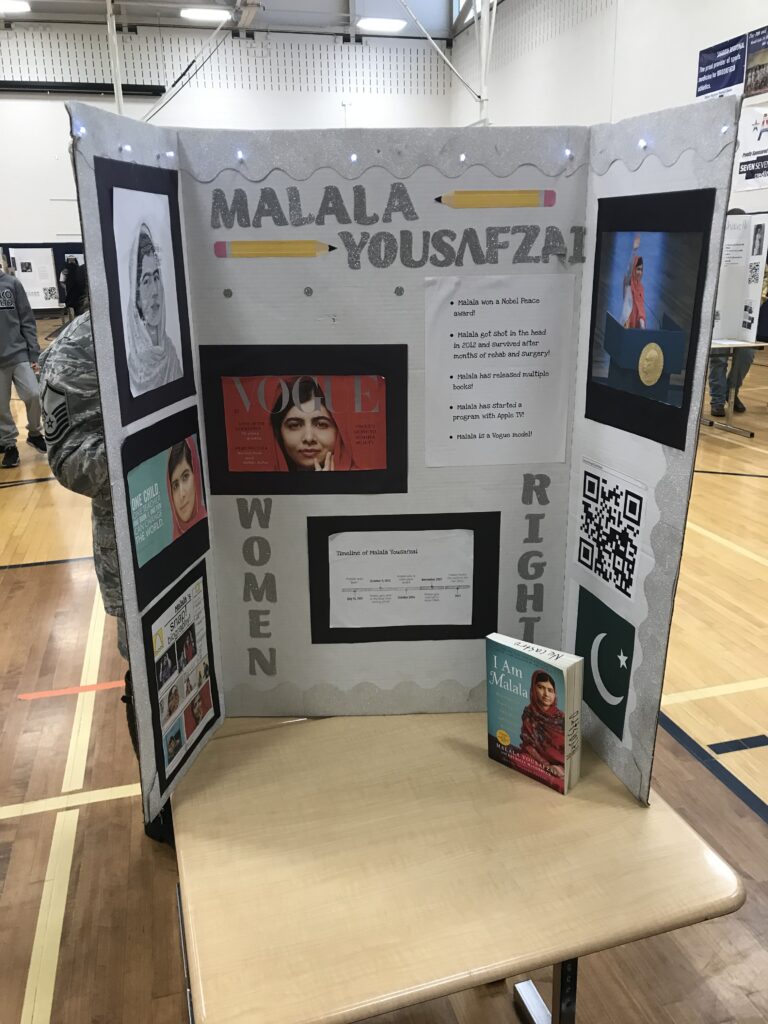
The project in question was known as the “Millennium Project.” At this time, during the early 2000s, A&E Biography released the program “100 Most Influential People of the Millennium.” In our World History class, our teacher wrote each of those individuals on slips of paper, and during class, we drew a name out of a cup. The name of the influential person we drew was the person we would be researching during classes, writing an informational essay, first-person biographical speech, creating a visual display, and portraying this person during the Night at the Museum presentation. What if we brought this project back to life after a seventeen-year hiatus?

We started by creating a dual Google Classroom page where we sectioned off different topics for all the project materials, examples, and assignment drop boxes. He covered the history assignments while I did the Language Arts ones. For example, areas of historical research would be covered by history, while ELA would cover the biographical essay. Based on the event date that was scheduled on the school calendar, we then collaborated on due dates for essential project assignments, agreeing that these would be flexible, if need be, once the unit got underway. Since the students had never completed a large project of this nature, covering two of their core classes, we knew this would be a learning experience for everyone. The fun part came first– having the students select the influential person they would be portraying for the project. The list of influential people ranged from Gandhi to Diana, Princess of Wales to Jane Goodall, Tomoe Gozen, George Washington, Jackie Robinson, Neils Bohr, Dolly Madison, and others.
The best collaboration tool we utilized was Google Classroom. Creating a joint classroom page specifically for this project assisted us in making sure that all students had the same information and materials in one central location. For example, research database websites were organized in their separate section, and my colleague and I would add links if we found a new site that would benefit student research. From an ELA and World History standpoint, we emphasized the importance of credible resources for research, especially when in seventh grade, Wikipedia is so convenient. Our students knew the ‘Research Resources’ section of Google Classroom as their one-stop shop. In an effort to not only conserve paper but also lessen the chances of lost materials, everything was digital. Students printed out their visual presentation text elements when constructing their museum board. As with Google Classroom, we could see student progress on the different parts and pieces of the project, so we could differentiate our instruction in our respective classrooms.

We know students always like to ask the question, “when am I going to use this outside of class?” We felt this project was the perfect opportunity to answer that question and put it to practice. Even though this was considered a history project at first look, the majority of the project was rooted in ELA. Without the Language Arts/writing skills, the students would not have been able to complete the project. The biographical essay that the students completed for their influential person aligned with the Ohio State Test Informative Writing Rubric, and used the research they completed in history class. In both classes, we expressed the importance of not just copying and pasting information from their research sources into their essay; they must use their personal voice. In doing so, not only did it save them from plagiarism, but it also proved to us that they understood the information. They read the information, processed it, decided how it fit into the boundaries of the project, then, put it in their own words. Historical research plus writing and grammar skills combined in these areas of the project: historical research outline, biographical essay, visual display title, biographical timeline, key facts, word cloud, and fake social media page. ELA standards also include goals for speaking and listening. Students fulfilled this standard by using points from their biographical speech to write a speech from the perspective of their historical person to deliver during the “Night at the Museum” event when someone came up to their station.
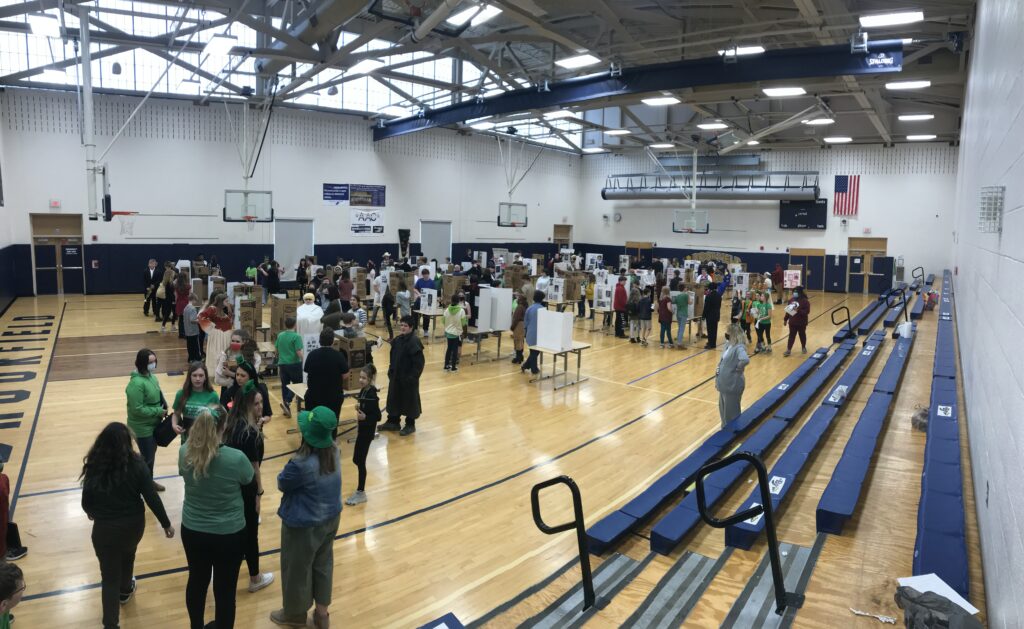
The culminating event took place during school hours, where our seventh-grade students dressed as their historical person, stationed in front of the visual display they created, celebrating and sharing their knowledge acquired in both history and ELA over the last months. This project proved that lines between curricula don’t have to be so definite. If we combine our areas of expertise as teachers, we can maximize student learning.
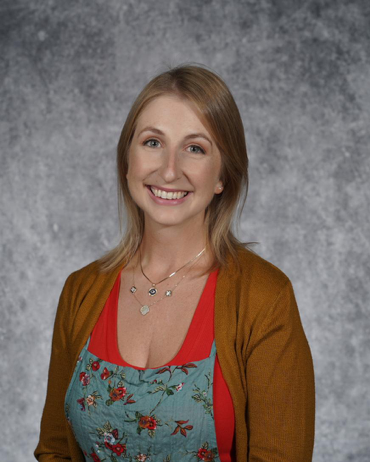
Miriam Necastro has 6 years teaching experience and is the 7th grade ELA & Reading teacher at Brookfield Middle School; Brookfield, Ohio. She is currently pursuing an M.Ed in Literacy from Clemson University.

Photo by Skye Studios on Unsplash

The Power of Parallel Reading

Teaching

This post is written by Charlene Aldrich. For more about Charlene, please visit the bottom of this page. The webinar recording for this material is embedded at the bottom of post.


How do we get students to read at home? We probably have to require it. We know in lower school, students are asked to read 15-20 minutes every evening. Students have free choice; parents monitor the requirement by initialing a document. But how can that requirement morph into a habit that positively affects the student’s academic future?  “Let them choose” becomes the mantra. When given open choices, it’s human nature to struggle. 

BUT when we provide themes, topics, or text sets to choose from, we make a choice manageable. It’s then that students fulfill our targeted purpose for outside reading. It’s then that students look at titles as a way of previewing the content of the text. It’s then that they engage in ‘reading to find out.’ It’s a win-win.

“I don’t have time to hunt down reading selections and/or books!” cry many content-area teachers everywhere.  And maybe teachers won’t have the extra time during their first or second year of teaching. Or the first or second month of the year.  HOWEVER, when teaching and planning become automatic, time becomes available to investigate the themes and text sets curated and available online. Content-area teachers can introduce reading selections of all genres; these support the ELA curriculum and provide background, cultural understanding, or applications of specific content-area curriculum.  This is where the idea of parallel reading emerged – collaborating across the content areas in ways that grow overall literacy proficiency AND reinforce content-area learning.

Parallel – side by side, never touching. Reading – the crosstie that connects content areas. Juxtaposed with another discipline, text is a way to connect things that would otherwise run side by side. Through parallel reading, teachers approach their content from a literacy mindset. Take math, for example.  One might say that reading is not necessary to do the math.  However, knowing ‘pi’ is essential, but where did it come from?  WHO first used it for achieving a measurement?  WHEN did it come about? WHY was it necessary? A planning question becomes, “Who were the movers and shakers beginning at the onset of mathematical thinking and going forward?”

How do you implement your new mindset?

  1. Review the major topics of your curriculum.  OR
  2. Look at the calendar for events or holidays. OR
  3. Look at the school calendar for half-days and identify a theme, especially those that are more social than curriculum related.
  4. Ask students what ideas they would like to explore, then factor their ideas into your curriculum and text set search.
  5. Ask the librarian to identify a wide range of texts and genres that connect to your theme or topic. 
  6. Search in the following text set resources for reading selections connected to the theme or topic.
  7. Construct your curated list for your students to choose an interest to read and share.
  8. Most of all, limit the rabbit holes that you might find yourself in as you realize the plethora of choices that you can provide to your students.  

Arousing curiosity and satisfying it with reading develops a positive attitude toward reading.  It empowers students to read to ‘find out why’. While the answers to those questions are easily found with a Google search, connecting to the culture of the times happens best when biographies or primary sources are available for reading.

Text of all kinds becomes the primary connection between every content area. Students who read first-hand accounts of the Jim Crow era have a deeper understanding of the literature of that time. The struggle of the Indigenous people has a more significant impact when seen through their eyes in diaries, songs, and poetry. Understanding the building process of the pyramids or the Roman aqueducts connects math with sociology or history.

I alluded to curated text sets above and encourage you to investigate some of my favorite resources. NewsELA, ReadWorks, CommonLit are just a few places to find digital text sets created and classified by readability, theme, topic, holiday, and current events. One of my favorite articles is in NewsELA regarding Halloween and how much money is spent: nine billion dollars in 2018! Each of the above resources contains a wide variety of stand-alone reading/writing projects for those short classes on short days where there’s no time for an entire lesson!

Your teaching librarian can also curate book sets that support your curriculum. Other grade-level teachers may welcome the opportunity to collaborate on reading and writing assignments. Making connections across content-areas strengthens learning and increases the likelihood of creating lifelong learners.

Ponder my truisms about lifelong learning:

  • Learning requires reading from diverse perspectives.
  • Linking new learning to prior learning lays a foundation for future application.
  • Social consciousness is developed when empathy is aroused.
  • Citizenship has a whole new meaning when students discover that the ‘yous’ of this world are more important than the “I”. 

Parallel reading projects grow a body of students who will begin thinking outside of their high school, content-area silo. That is certainly how they will live upon graduation. Stereotype book reports don’t have to be the outcome of parallel reading. How would your students like to communicate their reading experience to others? Encourage them to move beyond summaries (which can be found online) to how their perspectives have shifted because of the reading selection.  

Try it. Identifying the selections is half of the fun! What’s the other half? Sharing them with your students.  Through themes and topics, students can connect with text in ways outside of a required curriculum text. They can take ownership of their reading which just might result independent readers and learners.   

Photo by Johannes Plenio on Unsplash


Charlene Aldrich is an instructor in the Office of Professional Development at the College of Charleston. While content-area literacy is her specialty, she also teaches Assessments in Reading, Foundations in Reading, and Instructional Practices as required by South Carolina for recertification. She serves as the Treasurer of LiD 6-12.