A Case for Music as Mentor Text Across the Disciplines

Teaching

This post is written by Melissa Wrenn. You can learn more about Melissa at the bottom of this post.


In recent years, I became a music student. I don’t mean in the way I took piano lessons through middle and high school, but something else. I study the craft—the process of writing songs, creating music, publishing, etc. This is a multi-genre effort. I have watched documentaries about Eric Clapton, Linda Ronstadt, Christopher Wallace (The Notorious B.I.G.), The Avett Brothers, Jason Isbell, Tina Turner, Joan Jett, Tupac Shakur, Bob Dylan, Taylor Swift, Selena Gomez, The Bee Gees, and countless others. I couldn’t even begin to count the hours I have invested in listening to podcasts about music development and music history. I follow the paths of the writers, the producers, the record labels, and the ranking process, not just the artists. In short, I am a student of the discipline.

Music offers classroom teachers powerful tools for foundational literacy skills when used as a mentor text for writing (e.g., rhyme, figurative language, genre, tone, mood, word choice) and reading (e.g., fluency, author’s purpose, inference). As a discipline, music can also be used to teach students about community, belonging, history, and advocacy. I vividly remember getting a set of CDs with the new social studies curriculum that my district adopted when I was a fifth-grade teacher. The CDs had songs that were written at various points in history and included diverse perspectives and voices.  As I explored the things I could do with them, I began to integrate the CDs into my literacy lessons. Thus, I found that music was a way to help students make abstract ideas more concrete and to say things they didn’t know that they also had the power to say. This shouldn’t be surprising, as adults use music for the same reasons, which can be heard in music across genres or seen in any music documentary.

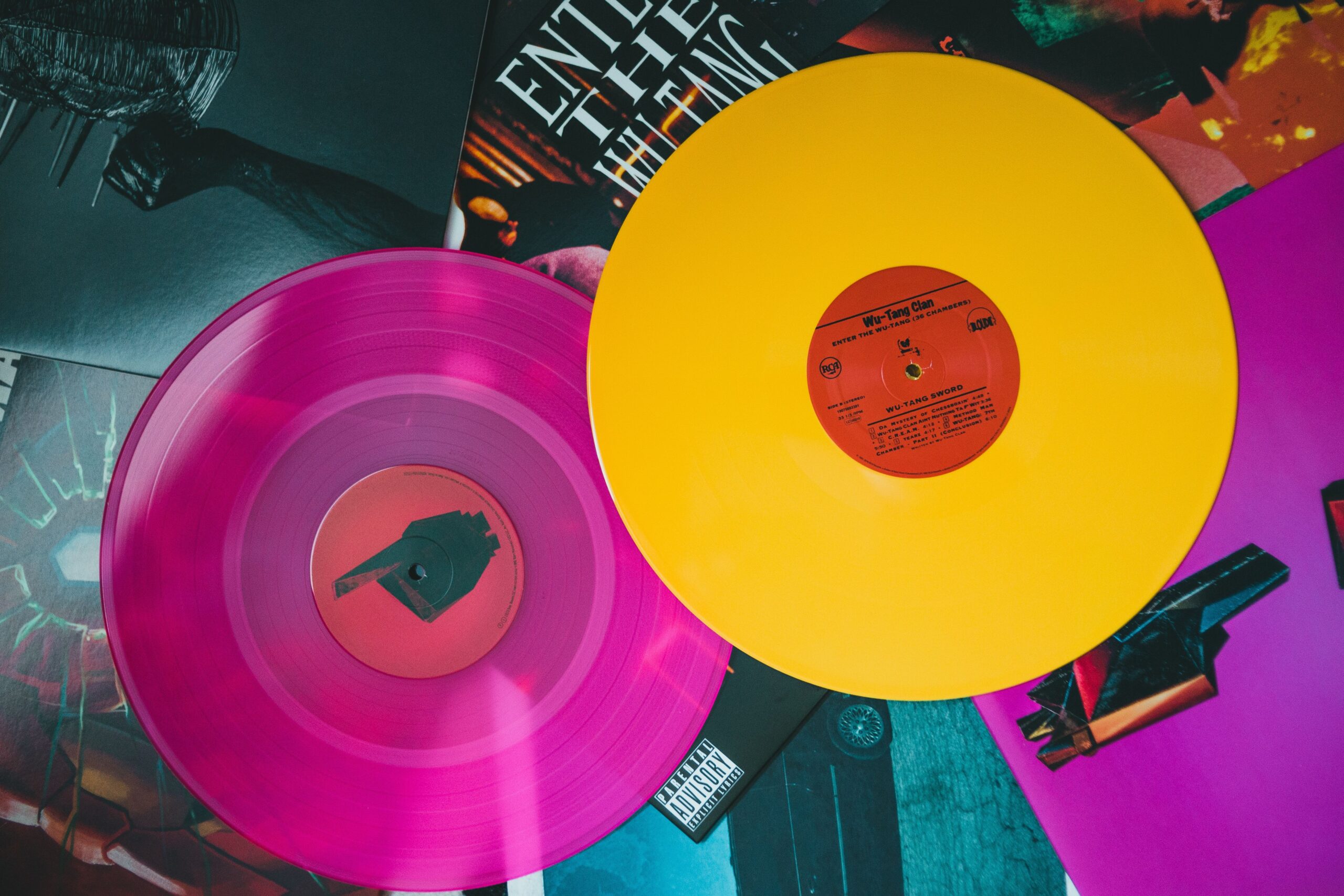
The most recent documentary I watched was Jelly Roll: Save Me1, which aired on May 30, 2023, via Hulu. In this documentary, I saw one of the most transformative disciplinary literacy practices I have seen or heard about in my extensive music studies. Jelly Roll donated $400,000 to be used for youth projects, including music studios at the juvenile detention center, where he spent several years of his adolescence2. In the documentary, Jelly Roll talks about the detention center’s proximity to the music industry, and the importance of supporting young people on the path to success instead of returning them to the streets without skills. Music speaks to people of all ages, including those who are creating, sharing, and consuming music within the prison system.

The same can be said for people who are experiencing the push and pull factors of other forms of trauma. Tina Turner3 and Nina Simone4 repeatedly performed immediately following domestic violence. In a 1985 documentary, John Bailey5, captured Amir Mohammad’s experiences of creating, sharing, and consuming music as an Afghan refugee. More recently, Amanda Shires6 explored the trauma that she experienced, which became the lyrics for the song, “Cover Me Up,” which was written by her husband, Jason Isbell. This song was re-recorded by Morgan Wallen, and his album with the song about Amanda Shires’ trauma spent more than 100 weeks on the Billboard charts7. There are probably as many examples of this type of relationship between the impact of trauma and music as there are artists.

For classroom teachers, elevating music as a discipline for students to use when sharing their experiences and knowledge may be a powerful, yet under-utilized tool. When I was a fifth-grade teacher, I had a student who needed support with reading, and he was a devout Avett Brothers’ fan. He had worked so hard and made so much progress that I reached out to the Avett Brothers’ manager (you can literally find anything online). About a week later, Grammy-award winning Seth Avett recorded a special, encouraging message for my student, who had developed fluency by reading Avett Brothers’ lyrics.

So, as we are all reeling from the COVID recovery and other global and local tensions surrounding what education means, Jelly Roll serves as a disciplinary literacy model. He illustrates the connection between industry and community in the acts of creating, sharing, and consuming music. His efforts to build the musical disciplinary literacy capacity of youth who are incarcerated, those who may be at their lowest points, and those struggling with mental health, addiction, and more, highlights what one needs to be successful, and sometimes that starts with someone who gives us the tools and models to help us tell our stories in the discipline that speaks to our hearts.

References

  1. Pearlman, B. (Director). (2023). Jelly Roll: Save me. [Documentary]. Hulu.
  2. Newman, M. (2023, June 1). From prison to no. 1: Nashville rising star proves that ‘losers can win.’ Billboard. https://www.billboard.com/music/features/jelly-roll-whitsitt-chapel-interview-1235343219/
  3. Lindsay, D., & Martin, T. J. (Directors). (2021). Tina. [Documentary]. Home Box Office.
  4. Garbus, L. (Director). (2015). What happened, Miss Simone? [Documentary]. Netflix.
  5. Bailey, J. (Director). (1985). Amir: An Afghan refugee musician’s life in Peshawar, Pakistan [Documentary]. Documentary Educational Resources.
  6. Jones, S. (Director). (2023). Jason Isbell: Running with our eyes closed. [Documentary] Home Box Office.
  7. O’Connell, M. (2023, January 8). Two years ago: Morgan Wallen releases record-breaking ‘Dangerous: The Double Album.” Country Now. https://countrynow.com/two-years-ago-morgan-wallen-releases-record-breaking-dangerous-the-double-album/
Melissa Wrenn, PhD, NBCT

Melissa has been an educator for over 20 years. She is a faculty member at East Carolina University in the Elementary Education and Middle Grades Education Department; she studies disciplinary literacy, teacher education, and classroom discourse. Melissa is also a fan of great documentaries and great coffee.

Cover Photo by Erik Mclean on Unsplash
Overcoming writer’s block with free-verse poetry

Teaching

All writers are familiar with the brain-freezing sensation of staring at a blank page or screen without the slightest clue of how to start a daunting writing task.  This writer’s block symptom is intensified for struggling writers such as multilingual learners, students with un/diagnosed reading/writing disorders, or speakers of dialects who experience Standard English as a foreign language. When they consider themselves writing failures, free-verse poetry writing opportunities in any subject area are one effective way to remediate the problem and release debilitating emotional stress (Bullock, 2021). Most striving writers battle: (1) what to write about; (2) how to structure ideas for longer, multi-paragraph texts; and/or (3) how to use academic language structures in full sentences with grammatically and linguistically correct word use, grammar, and punctuation.

What is free-verse poetry?

Free-verse poetry writing does not present these challenges. It allows for associative writing with spoken language characteristics of words, phrases, or sentences without specific rhyme schemes or metric systems. There are no rules for line breaks, stanza divisions, or paragraph structures. Some free verse poetry looks like narrative writing without having to follow syntactic rules or to require punctuation. Free-verse poetry often creates images and focuses on sensory detail with figurative speech like similes (i.e., water as soft as coconut oil), metaphors (i.e., rain comes down in spaghetti strings), or idioms (i.e., fluttering butterflies in my stomach) (Craven 2021).

The following is a free-verse poem to remember that Natrium Chloride is salt:

Nate and Claire and NaCl

                        Nate Natrium wants a girlfriend

                        Through his binoculars from his Natrium castle

                        He spots Claire Chloride

                        In a hammock

                        Reading a romance novel

                        Humming a song

                        Nate’s heart bursts

                        His feet fly down the hill with a drumming heart

                        To Claire

                        And the rest is history

                        They have children

                        All with salty lips and skin

                        This family helps us spice our food

                        And give minerals to animals, humans and plants

                        Their license plate says NaCl-Salt

What makes free-verse poetry beneficial for striving writers?

The features of free-verse poetry described above allow writer’s block moments to gradually diminish because students can concentrate on what they have to say without grammatical and syntactical confinements of text passages. Students engage in short, creative writing tasks that provide them with growing confidence to express knowledge or feelings without being judged for writing conformity errors, especially when spelling errors are not considered. Consequently, students can creatively and meaningfully play with language and enjoy the process while engaging with content in a pressure-free, reinforcing way (Bullock, 2021).

When to implement free-style poetry writing?

At any time in any content area, teachers can implement 5-15 minute free-verse poetry writing opportunities: (1) prior to a topic to activate pre-knowledge and motivate for a topic; (2) during a unit/lesson; (3) after a unit/lesson to assess gained knowledge; or (4) as a general writing task with prompts such as a title (i.e. mountain bikes, my favorite singer), pictures, or music to engage students in free-verse writing to express their feelings and thoughts stimulated by the prompt.

What are some ideas for grades 6-12?

Providing routine writing opportunities with appropriate support while integrating students’ interests, strengths, and knowledge is crucial in breaking down writing barriers. When first introducing free-verse poetry writing, teachers use ‘think aloud’ techniques to model how to write such a poem. Then, students work in pairs to create a free verse poem before creating them individually. Students can compare each other’s poems and discuss what they learned from different poems. This reinforces the purpose and versatility of free-verse poetry writing in content areas. Students collect their free-verse poems in a writing journal or keep them with their content topic to help them study.

Additionally, a cloze text with open spaces to insert an association or sentence frames along with vocabulary banks can assist striving writers in focusing on writing free-verse poetry.

The following concrete suggestions for different content areas can be supported by thought-provoking pictures, video or film clips, or music to foster paired-up or individual free-verse poetry writing.

English Language Arts:

  • Relate to/ describe a character in a book.
  • Reflect on characteristics of a literary feature or term (i.e., idiom, climax), or jobs/functions of punctuations, capitalizations commonly mis/used.
  • Characterize features of standard English, dialect, or code-switching along with when each is beneficial.

Science:

  • Summarize characteristics of chemical procedures or elements such as H2O (water) or NaCl (salt); or components/purposes of cells or body parts.
  • Describe/reflect on the importance of the processes of the water cycle, polarity, electricity, or planetary systems

Mathematics:

  • Summarize the sequence of steps to take for a certain operation.
  • Describe the characteristics, roles, or properties of concepts or terminologies such as common denominators, geometric structures, or negative/positive numbers.

Music education:

  • Characterize/compare famous musical periods, instruments, musicians, or songs of certain periods.
  • Describe strategies to play certain instruments or to be successful in a choir or band.

Physical/health education:

  • Reflect on the benefits of particular nutrition items (i.e., protein, carbohydrates, water, food pyramid).
  • Describe the interaction of certain nutritional components in the human body or the benefits of exercise and the dangers of sedentary life.

Social Studies:

  • Reflect on/describe the roles of historical characters or their emotions and feelings during a time period (i.e., Anne Frank, Harriet Tubman, Malcolm X).
  • Reflect on/describe the roles of government branches or features of democratic, authoritarian, fascist, or socialist government structures
  • Present a timeline of events that lead to a certain historical event

Conclusion

In sum, brief, free-verse poetry writing is one creative, student-engaging approach to help promote a sense of growing confidence and creativity among striving writers at a low-risk level in grades 6-12. Nobody can go wrong. Every creative contribution counts and matters. Success at that level encourages students to tackle longer writing tasks while also reinforcing the disciplinary content they need.

References

For some examples of free-verse poetry by established authors, see:

Bullock, O. (2021). Poetry and trauma: Exercises for creating metaphors and using sensory detail, New Writing18(4), 409-420,  DOI: 10.1080/14790726.2021.1876094.

Craven, J. (2021, February 15). An Introduction to Free Verse Poetry. Retrieved from https://www.thoughtco.com/what-is-a-free-verse-poem-4171539.

Bullock, O. (2021). Poetry and trauma: Exercises for creating metaphors and using sensory detail, New Writing18(4), 409-420,  DOI: 10.1080/14790726.2021.1876094.

Craven, J. (2021, February 15). An Introduction to Free Verse Poetry. Retrieved from https://www.thoughtco.com/what-is-a-free-verse-poem-4171539.


Macintosh HD:WINTHROP:FALL 2022_classes & tasks:IDA proposals for F22:BIO PIC Elke.png

For the past 20 years, Dr. Elke Schneider has been a professor of literacy, special
education and multilingual learner education at Winthrop University, Rock Hill, South Carolina.