Strengthening the Generations Through Agricultural Literacy

Collaboration

By: Alonzo McDonald, South Carolina High School Agriculture Teacher
Photo by Jed Owen on Unsplash

Everybody knows the song, “Old McDonald had a farm.” Well, that song is about my dad. He’s the McDonald that had the farm…and the cows, and the peacocks, the ducks, the hogs and the mules. I’m the McDonald that took my passion for agriculture, which developed at a young age, and turned it into a career as an agricultural education teacher. Often, people believe teachers of elective courses are not concerned with literacy; however that is not the case. When teaching an elective course, you have to come up with creative ways to motivate students to engage in content literacy. I have found that I can foster student literacy through the community engagement of my students. 

One of the cornerstones of agricultural education programs is the desire to create productive citizens who serve their community. Through the Agricultural Education Program and Future Farmers of America (FFA) at Manning High School, students are molded into being model citizens that willingly give back to their community through various events and community partnerships that continue throughout the year. The motto of FFA reads “Learning to Do, Doing to Learn, Earning to Live, Living to Serve.” The last line, “living to serve” is one that I think the students grasp without even realizing it, because it becomes so embedded in our work in and out of the classroom. When you connect the last line of the motto with the first line, “learning to do,” students are equipped with the tools needed to successfully give back to the community that made them.
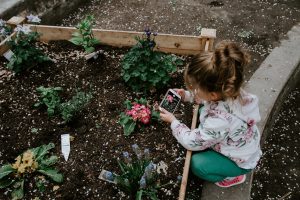
Photo by Kelly Sikkema on Unsplash

Through various in class activities, articles from agriculture magazines, and hands-on experiences students gain content knowledge they can put to use and pass on to younger students, in one of our strongest community partnerships, at Manning Early Childhood Center (MECC). Students within the agriculture program are able to explain the content that they have learned throughout the semester in a way the younger students are able to understand and use as they work on the raised bed garden at MECC. My students are able to teach these younger students how to transfer this knowledge into a useful skill (i.e. seed depth and spacing, watering needs, pollination, importance of fertilizer, plant parts, etc.) that can be used in the school garden. When my students are explaining to four and five year olds the needs of plants, and seeing that the younger kids are actually understanding it, brings me joy. As a teacher, being able to see the products of our toil is always rewarding. 
Photo by Cathy VanHeest on Unsplash

Having good role models for students to emulate is important. Through a consistent partnership with the Clarendon County Master Gardeners, my agriculture students have learned ways to pass on agriculture knowledge to others. The master gardeners model the ways in which experiential knowledge can be transferred through shared gardening experiences. My students then use what they have learned in their interactions with the master gardeners, with the students at MECC. The master gardener volunteers are able to bring in their real-world knowledge and experiences to help enhance the students understanding of not only the task-at-hand, but meaningful life experiences. Through this partnership, students are able to experience what it feels like to have someone giving back to the community and investing in the students at our school. As a result, students are more willing and eager to gain a better understanding of agriculture so that they can pay it forward.

Several students have gained a new appreciation for different aspects of agriculture because of these partnerships and have taken additional steps to further enhance their knowledge through research. Students are more willing to engage in learning, because they want to be able to share their knowledge with younger students and understand the information they learn from the master gardeners. As a result of community partnerships, students learn to use the agriculture content vocabulary, which supports their learning in my class and future agricultural classes they may take in the future.
Photo by Dan Meyers on Unsplash

Agriculture is an important part of today’s society that is sometimes overlooked. As the global population increases, we need to make sure that our appreciation for what agriculture provides continues to increase, so that we have future generations who are interested in agriculture and want to contribute to the field of agriculture. There are many initiatives and programs that are in place to encourage the younger generations to be more interested in agriculture. Through partnerships with different agricultural organizations, the youth are being exposed to the many different aspects of agriculture. My challenge to you is expose your students to some of the many different avenues that lead to the wonderful world of agriculture.

About the Author
Alonzo McDonald is an Agricultural Education Teacher at Manning High School, in Manning, South Carolina. Alonzo earned his Bachelor of Science in Agricultural Education from Clemson University. He also holds a Masters of Education in STEM Leadership from American College of Education.
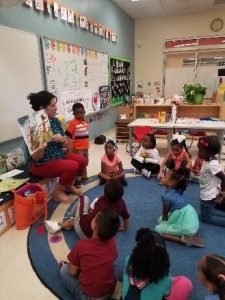
Photo by Tyler Nix on Unsplash

Learning about our families through the Family Heritage Project

Collaboration

By: Julia López-Robertson, University of South Carolina and Rocio Herron, Jackson Creek Elementary School

Last fall I taught a Family Dynamics course and was searching for a way to engage my undergraduate students in meaningful experiences with children and families; the course carries a community service component that is left up to the instructor to design and implement. I sought to involve my students in experiences that would help them develop strategies for authentic family and community engagement that they could later draw upon when they became classroom teachers.

I am very fortunate to be able to spend time in a local Pre-K classroom with a teacher, Rocio Herron, who willingly shares her students and families with me. Rocio has taught at Jackson Creek Elementary School since the school opened three years ago; the majority of the school population is African American (73%), followed by Latino students (13%), and 100% of the students receive free/reduced lunch.

Rocio and I have a history; she was my youngest son’s Pre-K teacher a few years ago (he is now 15). Rocio and I share similar views on teaching and learning and family engagement; we believe that children have a right to their language; children must be actively engaged in their learning; teachers must learn about their children lives outside of school in order to better teach them; and that trusting relationships with families are the cornerstone of teaching.

Family Heritage Project

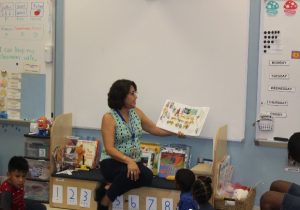
I spend Friday mornings in Rocio’s classroom engaging the children in bilingual (Spanish/English) read alouds, songs, dances, and games. One Friday I mentioned to Rocio that I was teaching a course with a community service component and wondered if she had any ideas for my class. I explained the time commitment and my goals for the project and she excitedly exclaimed that she had a Family Heritage Project she was looking to do that would involve all three Pre-K classrooms.  

The purpose for the Pre-K Family Heritage project was to get to know the children and their families by engaging them in a project about their family. Rocio explained that she also wanted the families to know that they all had things to be proud of and to contribute to the school and society in general; too often our immigrant families and families of color are made to feel insignificant and that they have nothing to offer our schools or their children. Through the project, the families would investigate their heritage, family, and culture and uncover for themselves the tools they possess that can be used for helping their children learn; i.e. language, sewing, gardening.  I wanted my students to view the families as contributors of knowledge and see them through an asset-based lens where their funds of knowledge, their community-based ways of knowing (Moll, Amanti, Neff, González, 1992) are recognized as valuable instruments for school learning.  

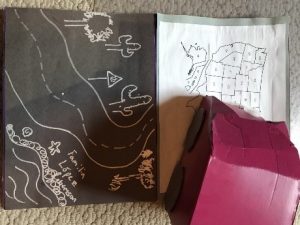
The Family Heritage Project spanned a few weeks in the fall semester. Families were asked to come to school on three evenings; my students and I participated in all activities that took place over the three visits. The first evening was spent getting to know each other; Rocio engaged the families in a read aloud followed by a discussion, families sang songs that the children did in school, families played school games with the children and we all got to know each other. We expanded the view of ‘family heritage’ to include things that you do together as a family because we wanted to be inclusive of all families. Rocio asked them to think about things that they did together and gave the example of her spending time at the beach while in her home country of Costa Rica; she showed her beach bag and other artifacts. I shared that my family enjoyed going on road trips and explained that my artifact would be a car and a roadmap.

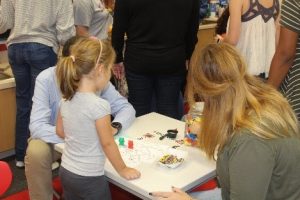
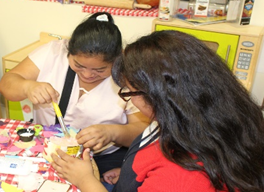
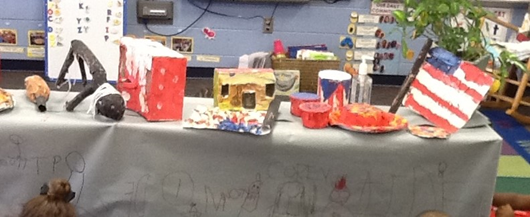
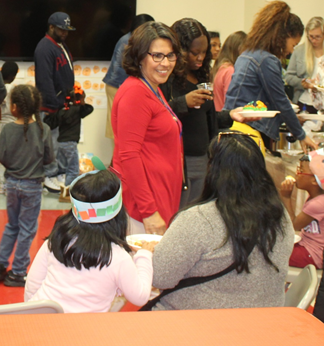
The second evening the families worked on creating a physical representation, an artifact, of their family and/or family heritage using supplies we had at school; paper, cereal boxes, soup cans, etc. The only rule for the artifacts was that they had to be handmade, nothing could be store bought. There was so much excitement, so many conversations and a busy hum filled the room! The third and final evening was a potluck celebration where each family shared their artifact and story with the group, the children presented a song, and we celebrated with a meal. I shared my car and road map representing our love of road trips, my students also shared their various artifacts as did all of the teachers. Artifacts were displayed on tables for all to see.  Once everyone shared, we had our meal which was the annual Thanksgiving celebration.

As I walked around, I heard laughter, families making connections with one another and sharing stories!   It was truly joyful!

What would we do different?

We were so eager for the project that we held the events in one month! We realize that having the meetings so close inhibited attendance, especially for the second meeting. The next time we do this, we will space out the meetings over a couple of months or over six weeks. 

Closing thoughts

As noted above immigrant families and families of color are often viewed through a deficit lens where what they do not posses is highlighted, for example; families do not know English or they live in a high poverty area. One of our main goals for the Family Heritage Night was for families to uncover their own riches and recognize that they indeed posses knowledge, skills, and strategies that will help their children succeed in school.  Engaging the undergraduate students helped them see this firsthand and also helped them see that family engagement is not scary. Finally, if we approach our families with love and respect and demonstrate that in everything that we do and say, our families begin to trust us and a trusting relationship with families is the foundation upon which everything is built.

References

Moll, L. C., Amanti, C., Neff, D., & González, N. (1992). Funds of knowledge for teaching: Using a qualitative approach to connect homes and classrooms. Theory into practice, 31(2), 132-141.

About the Authors

Julia López-Robertson is a Professor of Instruction & Teacher Education at the University of South Carolina.

Rocio Herron is a Pre-K teacher Jackson Creek Elementary School.